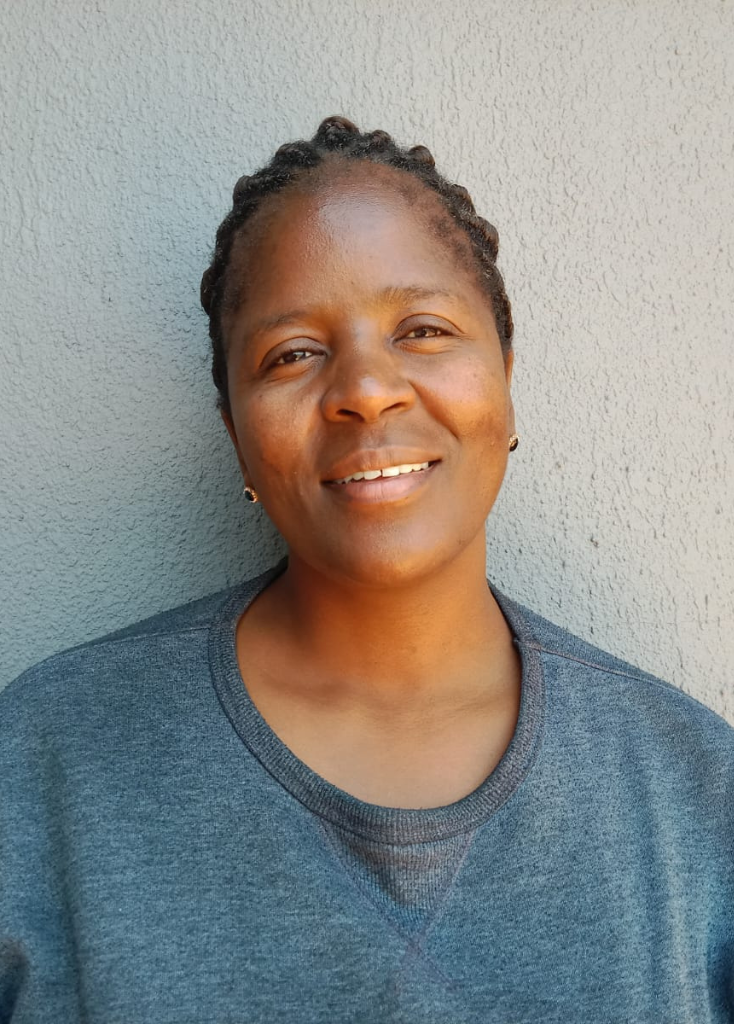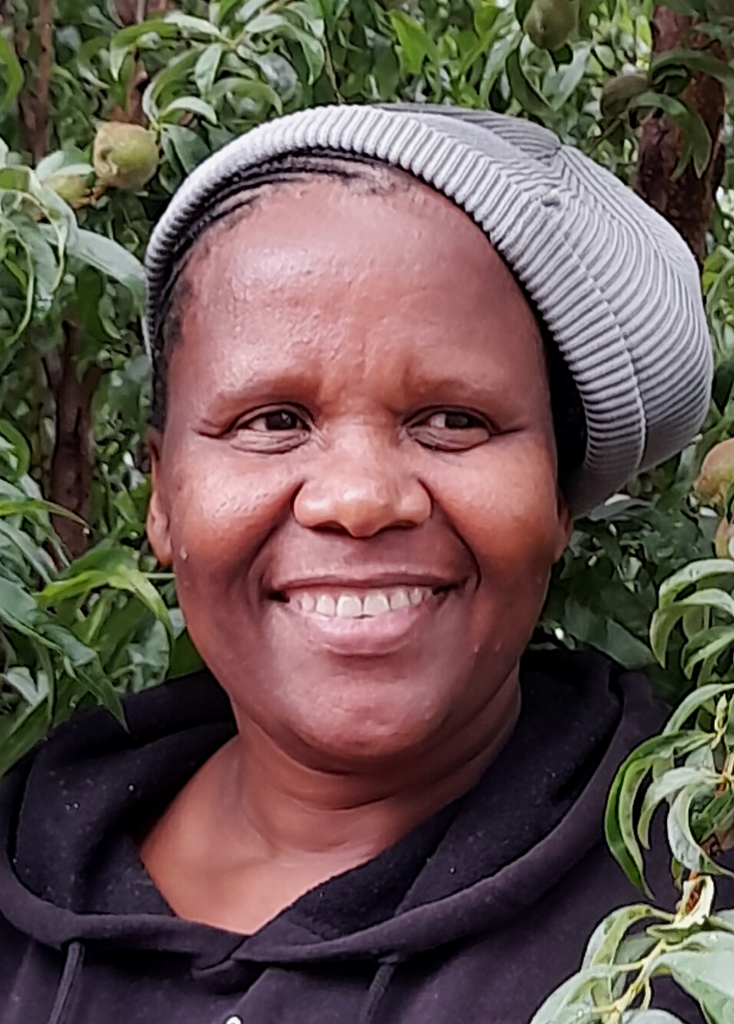
BBL PARTICIPANT: Lily Sambula, Swaneville, Mogale City, Gauteng
In a Nutshell
Through their participation in SocioTech’s Broad-Based Livelihoods (BBL) strategies to stimulate personal economic activity, Lili Sambula has learnt the money management skills to support her family and follow her dreams. Through Lily’s example, her son is gaining life skills and a positive expectation that he has the power to shape his future.
She says…
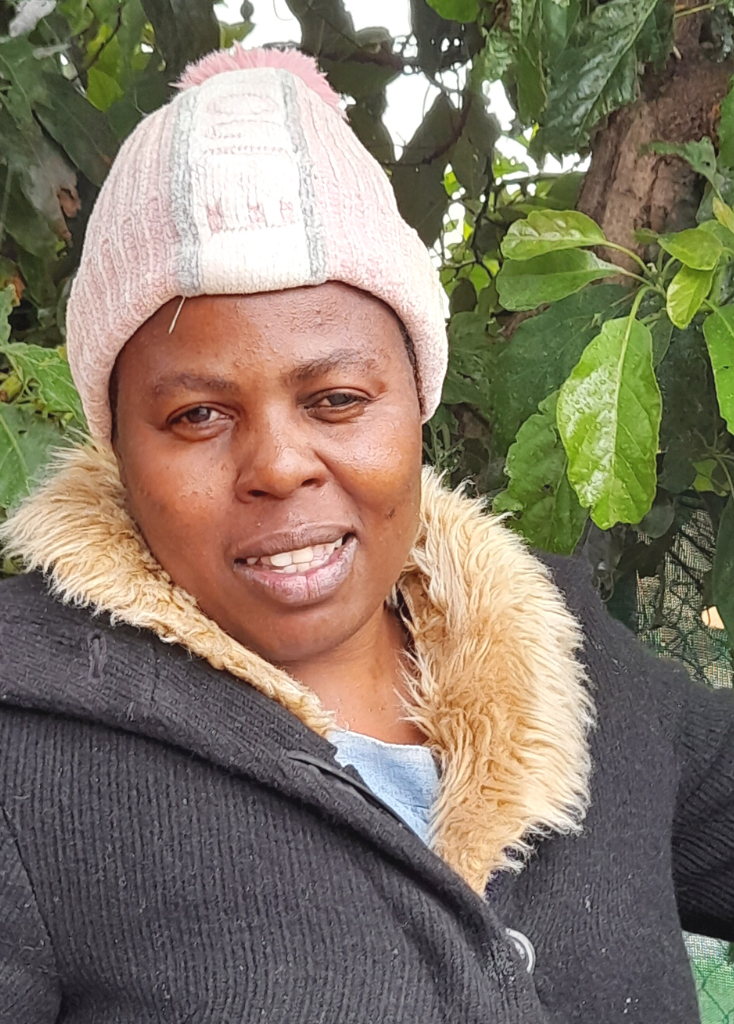
I grew up at Duthuni in Venda. The climate and soils there are perfect for farming. Everything grows. When I was a child we had mangos, bananas, avocados, and litchis in our yard. It wasn’t a big space, but it produced a lot of fruit! We had wonderful vegetables too. It is about quality as well as quantity. The flavours were wonderful. The pumpkins were so good. Not just the pumpkin, the leaves too. There was this dovhi recipe that my mother made with pumpkin leaves and peanuts and some of the small pumpkins and pap. Even something as simple as pap tastes better when you grow the maize. We always took our maize to the mill and the tshigayani machine would grind it until it was fine and light like flour. It is that grinding that makes Venda style pap is so soft and smooth.
My late father worked in Gauteng but every year he would come home for holidays and to set up the family food garden. He would dig in new manure and plant and then he would give us children instructions on how to look after the garden. After that he would go back to the city leaving us in charge. We didn’t disappoint him. Even now I feel like one of the reasons I garden is to honour my father.
My dad was such a wise man. I miss him every day. Some of the things that he tried to teach me I am only beginning to understand now. I remember that when he came home, he always brought sweets and biscuits and clothes and also a little plastic bag with money in it. One bag for each child. And he would tell us to save that money. He would say: “I want to know your balance when you are 16”. When I turned 16, he gave me 500 Rand to open a bank account. He wanted me to learn good saving habits. At the time I didn’t listen to his advice. I regret that now. I was so young. When I made some money, my dad would tell me to put it in that bank account and to show him the slip. I did that but the next day I would take the money out again without telling him. He passed away thinking that I had money in my account and that my future was secure. That wasn’t the case. After doing the SocioTech training I began to understand what my father was trying to teach me. He was trying to teach me about saving and budgeting.
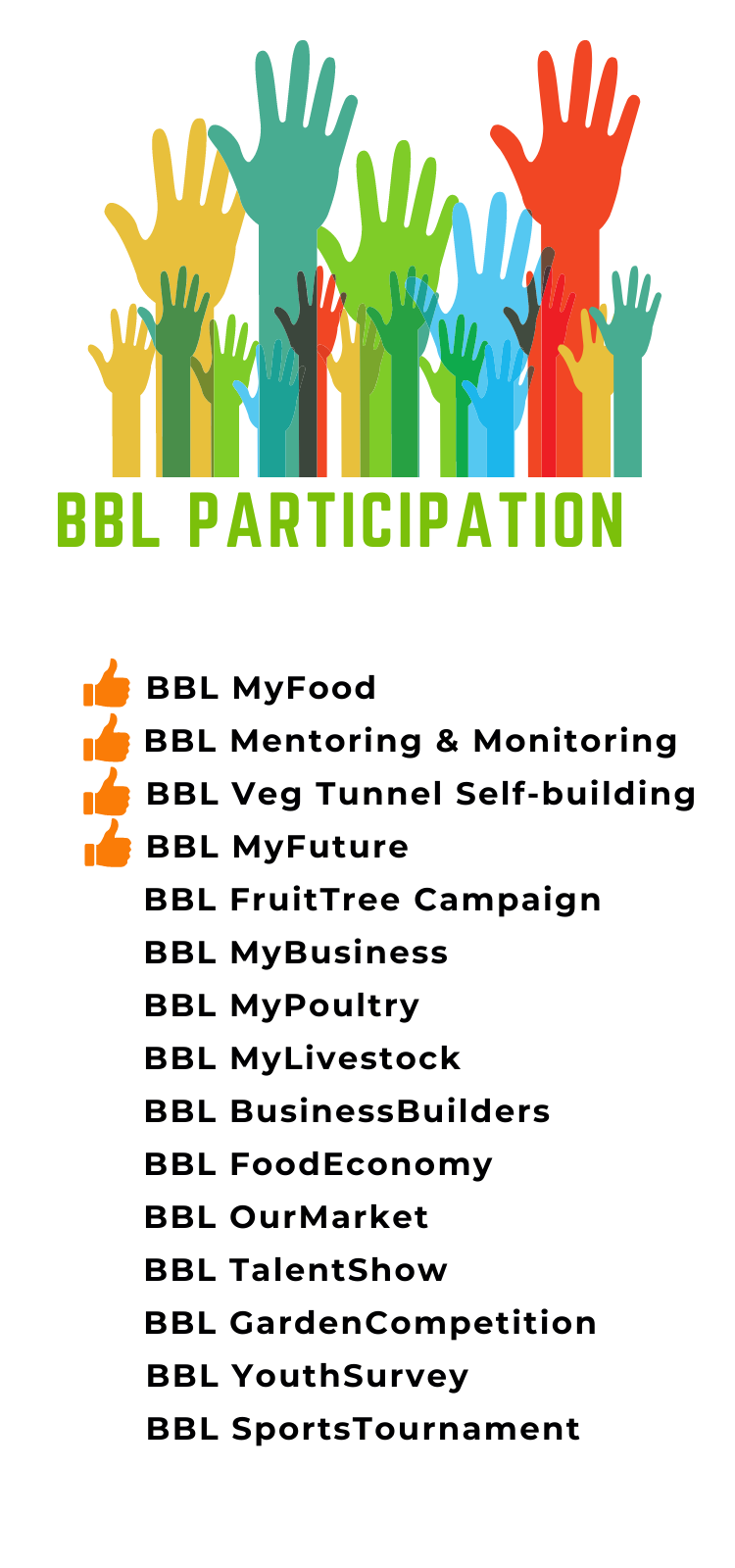
When I first started the MyFood training I wasn’t sure about the tunnels and tins – I worried that those tins would burn my crops but I thought the only way to learn is to try something new and so I did the work and the results have been good. My soil is so rich and the garden is flourishing. People who used to walk past me when I was first digging and tell me that I was wasting my time, are now buying from me. The growth of the business means that I can start to think about how I want to move forward in life. I have goals for my children and for myself. I need to increase the amount of land I am farming so that the business can grow and make our goals become a reality. To do that I need fencing. At the moment, anything that I plant outside the tunnel can be taken by goats and cows and human thieves.
"Some of these can be small but if you work, they can grow and grow.."
My grade 9 son is serious about school. He has chosen his subjects and he wants to work in IT. He studies hard and a combination of his efforts and the money I make selling from this garden can take him to university and on to the life he sees for himself. I wake up every morning and I go straight to my tunnel. My son helps me carry buckets of water and as we do that together I see how the garden is making his dream come true.
He is not the only one with dreams. My daughter wants to work in hospitality and that training costs money. Myself, I want to get qualifications to teach agriculture. I discovered that I love teaching as a result of SocioTech. In order to get a tunnel, you have to train others and I really loved doing that. I am still doing it. I want to see our location become like a fresh vegetable market. We need to be teaching our children about the importance of land. At the moment, any empty space there is, people put a house on it. It is not just urban areas. This is happening even in Venda. I understand that people need shelter but if there are only houses and no food gardens, how will we eat?
One of the most important lessons that I learnt from the MyFuture training was that I must always be looking out for opportunities. Some of these can be small but if you work, they can grow and grow. I have been thinking about the mango atchars that I used to make with my mother when I was a child. When you meet people selling atchar in Gauteng and you say to them: “what kind of atchar is it?” they just say: “atchar is atchar”. They only know one type but there are so many different types. You can make it shredded, diced, garlicky and so on. There are different methods too. We always used to clean and dice and put in a bucket with a lid and leave it for a week before adding the oil. The way I see it, the atchar story can mean two things. Either I can be sad that there is no good atchar to buy, or I can see it as an opportunity for a business...


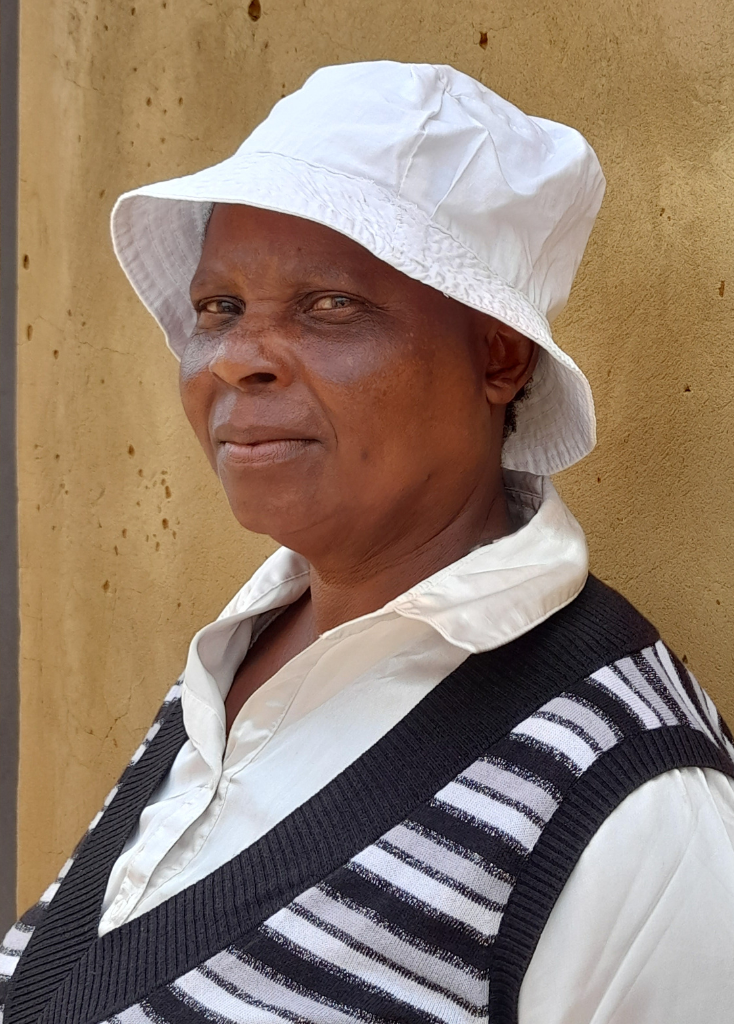
BBL PARTICIPANT: Elizabeth Sekote, Tsakane, Ekurhuleni, Gauteng
In a Nutshell
Through her participation in SocioTech’s Broad-Based Livelihoods (BBL) strategies to stimulate personal economic activity, Elizabeth Sekote improved her farming techniques and supported many others to do the same. She has a thriving healing, culture, and craft business. She hopes that her example will inspire her neighbours.
She says…
I grew up in Witbank. My father was a mineworker, and he did long hours underground, but he still found the time to garden. We always had seasonal fruit and vegetables. I remember being a tiny girl and trying to copy him by pulling out spinach and getting a slap from my mother for being so ‘stout’ (naughty). I understand her frustration. Little children go through that phase where they want to be helpful, and they really try, but they can be very destructive.
When I was older, I spent time with my grandparents in Sekhukhune where they grew mabele, mielies, pumpkins and all sorts of beans. Through working with my grandmother in her garden, I learnt about so much more than soil and plants. I also learnt about life. I learnt to work hard and that rewards take time. Plant today, work hard looking after those plants and only then do you eat. That is a good life lesson - even today, I make my granddaughters help me water and weed so that they can learn that lesson. These days youngsters want everything now, now, now but that is not the way things happen.
We did a bit of agriculture at school, but I don’t think I was a very conscientious student. I had a boyfriend and I left school as soon as I could. It was only after my husband passed away that I started to focus on food gardening again. I realised that I was on my own. I was a widow in a squatter camp. If I wanted my life to change, I was going to have to make that happen.
"I realised that I was on my own. I was a widow in a squatter camp. If I wanted my life to change, I was going to have to make that happen."
Before I met the people from SocioTech, my garden was doing quite well but the training they provided brought my productivity up a lot. Soil preparation was not something that I understood before. I did know about manure, but that trenching method was new to me, and it has made a huge difference. The quantity and quality of the product are both better if your soil has been improved. And water stays in the soil with mulching, which saves time and money too. When I got my tunnel, things really improved. A tunnel protects plants from sun and animals, so it makes a big difference.
Part of the SocioTech way of working is to teach and train and support those who come after you. I am always there, ready to help. When I explain to new gardeners how to prepare trenches with cans and bones, they often look shocked, and at the beginning some of them complain about the amount of work involved in that first step, but really in this area there are a lot of tin cans thrown away and the men who sell skop leave a lot of bones behind, so it is actually quite quick to get what you need. It is also good for the community to get that stuff off the streets. If all that rubbish just hangs around, it brings rats.
The people who stay with the training and do the trenches right, always see that it was worth putting in that effort. Especially when they are eating their delicious Sunday Kos straight from their own gardens. There is nothing like looking at your plate of chicken and pumpkin and green beans, and knowing you did that with your own efforts. And then, when the sweet peaches in syrup with custard come onto the table for dessert, that is the greatest joy. Not only because it tastes delicious, but also because it is healthy and saves money.
It is about motivating people to see that the future is theirs to change. When people have been unemployed for a long time, finding that motivation can be hard. Being unemployed makes you feel hopeless, but I remind the new gardeners that gardening can change your life. The garden is just the first step. It is the start to change. It is what lets you see that you have power to do something. Then you can become an entrepreneur. Start selling. Make a business. It is about knowing that no one needs to wait for a job. They can make their own money and be their own business. Start with carrots and lettuces and see where the future takes you. I let them know that I will always be available to support them. I am here to help.
One of the things I like about working with SocioTech, is that it is a programme that can grow as you do. It is also a programme that is flexible. Everyone has their own skills and interests. They don’t just say “here is one plan” and everyone must fit into it. In my case, I am very interested in African crafts and culture and traditional healing. Through the MyFuture skills training I have been able to grow businesses in that space.
The basic training is quite general and can apply to anyone. For instance, I learnt about saving and budgeting and serving customers and seeing where there are gaps in the market. Then they show you how to apply those basic skills to your life and talents.
My main business centres around African healing, arts and culture. I grow gourds to dry and make them into traditional bowls and spoons and pots. I make and sell a lot of Zulu and Ndebele beaded attire. I am not Zulu, but Zulu attire is where the market is. Those people are very committed to their traditional dress, and they buy a lot more of it than people from other communities. The market is in Zulu attire, so that is where I focus most of my time and energy.
I am proud of how far I have come. I have built a house in Sekhukhune with the savings from my businesses. I was a widow in a squatter camp, and I am now the owner of a 5-roomed house. That makes me so happy. When I think about it, I laugh.
BBL PARTICIPANT: Sphiwe Mdakane, Swaneville, Mogale City, Gauteng
In a Nutshell
Through her participation in SocioTech’s Broad-Based Livelihoods (BBL) strategies to stimulate personal economic activity, Sphiwe Mdakane has obtained business skills to grow her food gardening and livestock businesses.
She says…

I have been here in Gauteng for 13 years, but I grew up with my father and grandmother in Emondlo in KZN. I still miss it there every day. I still go home whenever I get the chance. My grandmother’s garden in Emondlo (and the way she thought about using land and providing for her family) still inspires me with my own garden.
When I was a kid, almost everything we ate came out of my grandmother’s garden. You name it, she grew it and cooked it – cabbages, spinach, sweet potatoes, carrots, beans, mealies, imbuya, pumpkins. Everything she cooked was simple and delicious. With vegetables that come straight from the soil you don’t need fancy cooking because they all taste so good. Just a bit of salt is all you need.
When I think about the way we ate when I was a child, nothing was wasted. Everything went into the pot. Nothing was wasted. When we ate pumpkin, we ate the leaves as well as the flesh. When there were beans in the garden that meant that we had two crops – the leaves for imifino and also the beans. I didn’t understand how lucky I was to have all that. I took it for granted. I helped in the garden when I was asked but if I didn’t love doing it. If my grandmother asked me to collect water, I did it, but I didn’t spend my time learning all the things I could have. I regret that now.
For a long time, I didn’t think about gardens or food production. When I finished school, I came to Gauteng and for 9 years I worked in retail. Only slowly did agriculture start calling me back. At first it was chickens – those hardbody, traditional chickens. I still have a few of those – they taste delicious but my biggest market for those chickens is the sangomas. They come and buy them for their rituals, and they always pick specific ones depending on what they are trying to do.
"...I can do that and still take my garden seriously as a business."
Then I added pigs – those are my favourite. I would like to get into piggery in a big way. That is my dream. There is good profit. They taste great. For a while the vegetables I grew were just for me and my family. Then when I started to get surplus, I began donating to vulnerable people in my community. We have a lot of child-headed households in this area, and I feel that it is my duty to support and protect them.
I still do both of those things. I am committed to feeding my family and to helping the child-headed households but the thing I learnt from the MyFuture training with SocioTech is that I can do that and still take my garden seriously as a business. I can focus on making a profit and donate. So, this year has been about trying to take myself and my business seriously.
My vegetables sell well. I now have employees taking those vegetables around the neighbourhood and selling door to door. What I want to do now is work out how to make my offering stand out. How to have a unique offering is my thinking now. Everyone growing vegetables has the same stuff. That same spinach. And it is also that same spinach that is in Checkers. If I want to succeed, I am going to have to be unique and different.
"You can't grow a business without experimenting and taking risks sometimes."
I have been thinking about ways to do that. Perhaps the answer is marketing – I want to try selling through social media. I have also been wondering if the answer might be to start growing different vegetables. Maybe those old-fashioned pumpkins – the ones that my grandmother grew in KZN – maybe I should get seeds from home and grow those. You don’t get those very often in town, but there are lots of people like me who grew up eating them and I think they would buy them. I want to try that as an experiment – I have lots of land here, so if I put a little bit aside to grow traditional vegetables it wouldn’t be terrible if it wasn’t a success. You can’t grow a business without experimenting and taking risks sometimes.
I have had my SocioTech tunnel for about 3 months now and it has made a big difference. I can see the difference because I grow spinach inside and outside my tunnel. The leaves inside are so much greener, so much bigger, so much more delicious. Outside the tunnel is nice but inside is gorgeous! Bigger, greener leaves are what brings customers and profits.”
The thing about working with SocioTech is that it is about more than training. It is about relationships. Ongoing relationships – they don’t just train and then disappear. If I have a problem, I know that I can call Charles and talk it through. So, it is about relationships with the people who trained me, and relationships with people I trained, and also the relationship with myself. I have learnt things about myself that I didn’t understand before. For instance, I have learnt that I really like teaching. With SocioTech, you are required to train three people in order to qualify for a tunnel, but I like it so much that I have kept going. I did my three and then I did more. So far, I think I have done about 20…
BBL PARTICIPANT: Angelina Nkosi, Magagula Heights, Kathlehong, Gauteng
In a Nutshell
Through her participation in SocioTech’s Broad-Based Livelihoods (BBL) strategies to stimulate personal economic activity, Angelina Nkosi from Kathlehong has grown in her understanding of interpersonal dynamics and she has applied this knowledge to her business practices.
She has a clear, comprehensive plan for future business growth and is reaping financial rewards through her work. Her sons and nieces have not only benefitted financially from her efforts, but also through her example and the positive expectation that they can and should shape their own future.
She says…
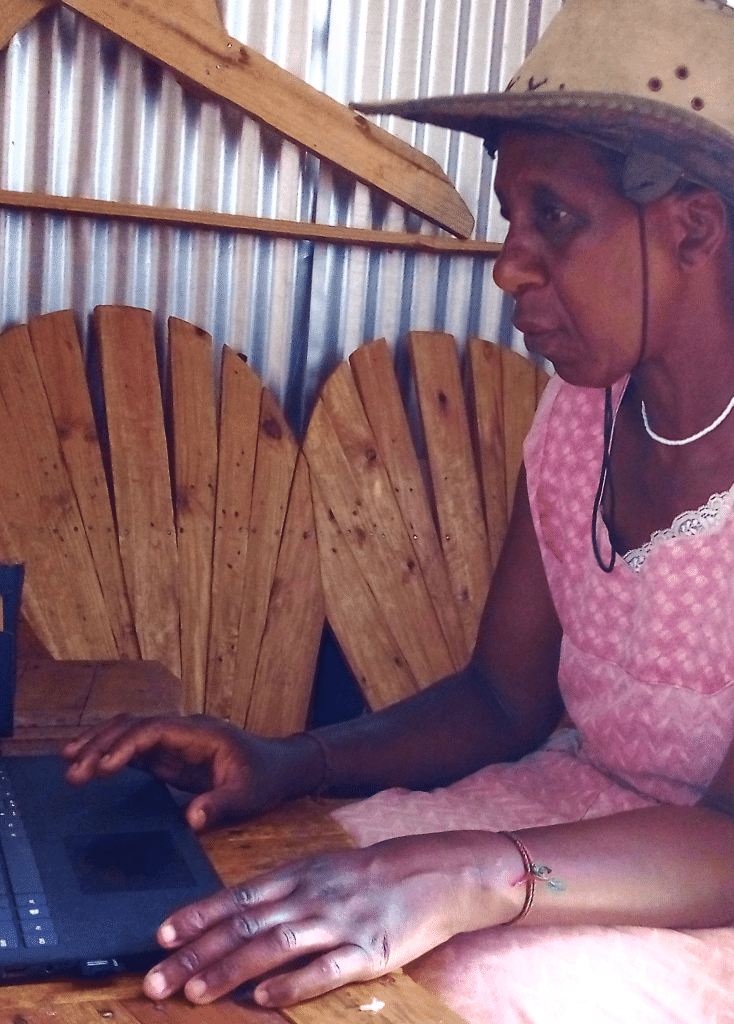
I first met the people from SocioTech in 2019. First, it was Lebohang (who taught me how to improve my soil with trenches and helped me to get a small garden net to protect my crops) and later Charles. In the time that I have known them both I have learnt so much. Some of the things I learnt are hands on practical things about growing spinach, onions, cabbage and lettuce and managing finances but other things are things you can’t see or touch directly but make a big difference to life.
I mean things about relating to people and understanding my purpose. There is so much to be learnt about the way we relate to each other within families and within communities. It is important to know how to respect others and be respected by others. Sometimes it is difficult to have patience with others and with yourself but it is important to do so. Through SocioTech I learnt to understand myself, my family, my community and how to make that understanding work for my business.
"it is important for a woman to work for herself and not wait for a man to provide everything."
Business is in my blood. When I was a little girl growing up in Mpumalanga (I was born in Wakkerstoom) my grandmother sold cigarettes and African beer and she always used to tell me that “it is important for a woman to work for herself and not wait for a man to provide everything.” My grand-mother lived by that rule – she had her own cows and built her own home. I got married and moved to Katlehong but later, when I got divorced, I remembered those wise words. Especially after I lost my job and I had children to care for and no income. I tried many businesses and at the same time I was trying to study and also raise my two sons and my four nieces. I was 50 years old, and doing all that is not easy. Through all that hardship, my grandmother’s wisdom and example helped me press on.

Looking back on those days, even though they were very hard, I think my children learnt valuable lessons. I think it is important for children to see their parents working hard and persisting – it teaches them what being an adult is all about. I see many young people nowadays who don’t want to work and who don’t follow through on promises. They say yes to training and then they don’t arrive on the day. Even those ones who want to work don’t seem to understand that they could work for themselves. They don’t think about starting their own business, they want someone else to say “here is a job. Here is the money.”
My oldest son is in business for himself and doing well – he has five employees now - and I think part of his motivation and skill comes from his childhood when he saw his mother starting a business and working for herself. From his earliest days he knew this was something adults did. It shaped his mindset. My younger son is the same way – he has registered 15 companies, including a small NPO.
At the moment, I have two main income generating projects. First is my food garden. I love working in my food garden but it is not always easy. My main problem is with illegal dumping right next to where I am trying to work. I cleaned the whole area before I started, so the dumping makes me really depressed. Dumping brings rats and other pests. When they dig holes to put the rubbish in, it damages the soil quality and makes it difficult for a tractor to go in. My dream is to expand that plot and I am looking forward to growing more body and soul with agriculture but that would need a tractor to prepare the land so you can see why the dumping makes me so sad.
There is also the problem of where and how to sell. This is a poor community and there is not a lot of money to buy. It is very difficult to make the pricing work. When you go to the tuck shops, the owners say that they can buy tomatoes cheaper elsewhere. You try to explain that these tomatoes are better but they don’t want to listen. I have been talking with other food gardeners in my area and we think it would be a good idea to try and start a small market so that we can sell crops all together. Our other thought is to combine our products so that we have a larger amount - I met a guy who has a market in Wakkerstroom and he says that if we small growers come together he will buy from us and collect to take to his market. These are ideas that we are talking about and trying to think how to turn them into reality. Such ideas take careful planning but we will make it work.
My other project is a small internet café and printing service that my younger son and I run from my home. School children come to us to print out homework and adults do things like print CVs. I charge R4 per page. This project was not my idea. The idea came from my son – he registered the company and set things up but I can see now that it really helps the community and fills a big need. It isn’t easy – when you work with computer equipment something is always needing to be repaired! Learning how to save so that there is money for repairs has been one of the main things I got through SocioTech.
Charles is a great teacher and conversations with him are always very inspiring. It is very helpful when he tells Bible stories that show me God’s purpose within everything I do. When he describes the work of other SocioTech participants and how they have achieved success it increases my confidence to move forward with my business.
As you can probably see, I love working with SocioTech. The only thing that makes me sad is that while I am benefiting here in Magagula Heights, Kathlehong, the people in Mpumalanga where I come from are not getting the same service. I have been talking to Charles about seeing what we can do to get SocioTech to them too!
BBL PARTICIPANT: Zoliswa Malata, Diepsloot, Soweto, Gauteng - MamZoli
In a Nutshell
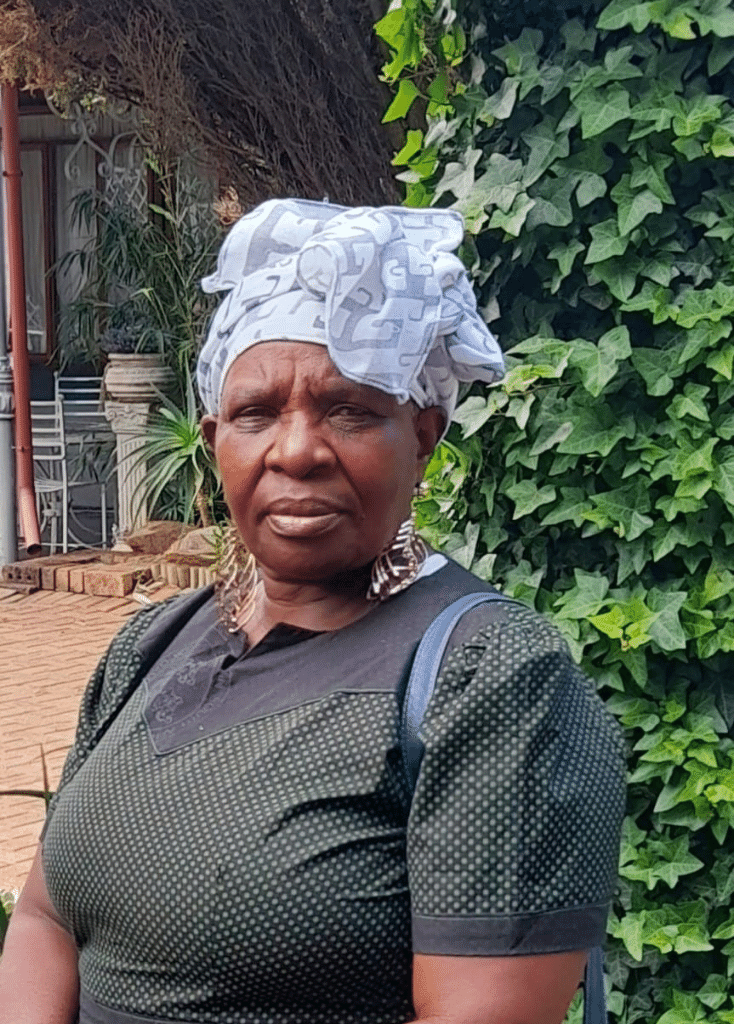
Through her participation in SocioTech’s Broad-Based Livelihoods (BBL) strategies to stimulate personal economic activity, Zoliswa Malata learnt the skills to become a successful urban farmer. She donates 10% of her harvest to needy children.
In 2021, MamZoli joined SocioTech on a trip of a lifetime to Pofadder area in Northern Cape, where she inspired the BBL communities there as an excellent judge in their BBL GardenCompetition.
She says…
I come from Umzimkhulu in the Eastern Cape. My father’s eldest brother brought me up, and I often worked in his food garden. He had a small amount of maize, pumpkins, beans – just enough to feed our family. In the school holidays I sometimes went to stay with my mother’s family, and my maternal grandfather had quite a lot of land with cattle, orchards and fields full of crops. He was so strict that he had us kids working from early morning up until 3am the next day! I remember finding those visits somewhat overwhelming.
So, I became an urban teacher, not a rural farmer! For thirty years, I taught geography in Diepkloof, Soweto. I grew a few roses in that time, but that was about it. I think though that the pull of the land was always there, and while I was still teaching, I did a diploma in environmental studies at RAU which underlined for me that ecological issues and the way we humans work with the earth, are important to me.
Because I taught for so long in Diepkloof, I had been with and around the families who live there for a long time. I saw that two key problems were drug abuse and poverty, and that they were often interconnected. I saw families dependent on handouts for food, and young people who had been A-students roaming the streets and falling into drug abuse. It troubled me that people who had great potential had somehow succumbed to the blows of life. I thought, perhaps a waste recycling initiative and a gardening project that helped people put food on their tables, could provide nutrition and dignity. I also saw that it had the potential to create small food gardening businesses, and act as a diversion strategy for those struggling with addiction. And that is how the first garden project, DK Magesig Urban farmers, was born.
"..first grow to feed their families, and then expand enough to feed others."
DK Magesig started in 2019. Our garden is based at the Thabisile Primary School in Zone 5, Diepkloof. The aim is for participants to first grow to feed their families, and then to expand enough to sell to others. We have 11 consistent, committed members and 10% of the harvest goes to needy children at the school. The rest we sell to the local community at very reasonable prices. Our biggest customers are the local crèches. We deliver a box of fresh vegetables once a week, and they pay us at the end of each month.
At first, I was very nervous, because I thought I didn’t know anything about growing vegetables but, you know, quite a lot of that early childhood training started to come back to me. It was almost like a muscle memory. Even so, the first few months of DK Magesig, we were fumbling around, not really sure what to do.
It was then that Kgothatso from SocioTech came into our lives. Wow, wow, wow! For those who believe in scripture, let me say that he was placed on our food gardening path by The Provider. It was Kgothatso who really got us on the right track. He saw that we were floundering, and he invited us to a training session. He taught us about how to build deep trenches – who knew that tin cans could be so useful! Or bones! Those trenches have been amazing. They are so good that we did them once in 2019, and since then we haven’t had to fertilize. He also taught us about healing the soil with beans and peanuts and polished my understanding of crop rotation. We used to practice crop rotation in Umzimkhulu, but through Kgothatso, I got a more refined understanding of the issues. We worked hard. Even during the COVID-19 lockdown, we were in our garden every day, and by the end of 2020 we were not only feeding ourselves, but bringing in a significant profit.
Our only real problem has been with pests. Kgothatso has helped us with the cutworm problem – he showed us how to make a potion from aloe and chili that keeps most of them away, but the birds are a big problem. What I have learnt is that urban birds are so clever. Much more so than rural birds. They have to be, because we humans have destroyed their habitat. I know when I was a child that scarecrows did the trick, but not with these clever, brave Soweto birds. They are fearless.
Because we are working on the school site, the students often come and watch what we are doing. We can’t let them help because we don’t have safety equipment, but we do take them round the garden and show them what we are doing. Many of them know nothing about how vegetables are grown. They see potatoes coming out of the ground and they are shocked. They are excited by it. It makes me so sad that they don’t have agricultural science in their school curriculum. It seems silly not to include it in the LO (life orientation) syllabus, because growing food is the ultimate life skill. Without food, there is no life to orientate.
I know that the children would benefit from working in food gardens as part of their education. I know from personal experience that gardening can be so empowering. Where there was nothing, consistent hard work and applying teachable skills brings vegetables and nutrition and potentially also income.
DK Magesig Urban Farmers worked well, but food gardens require space and many more people were also interested in participating. So, in 2020 we formed the Reja Mobung Farming initiative which works from land that was previously a vacant lot full of rubbish and rats. Reja Mobung means ‘we are eating from the soil’ in Sesotho and that is how it is. We cleared the rubbish and the rats away, and now it is a beautiful, productive space.
At Reja Mobung the people who help in cleaning the area and weed removal get given vegetables. Those who don’t, buy at extremely reasonable prices. “Nothing for mahala” is our policy. As long as a person has hands, no dependency syndrome is tolerated.
"The gardening makes me feel healthy, happy and stress free."
I work in both DK Magesig and also Reja Mobung because I have the contacts to act as the connection between the two farming initiatives. I have relationships with the parents at the primary school (many of them were my students when I was a teacher) and also sound connections with the community at large.
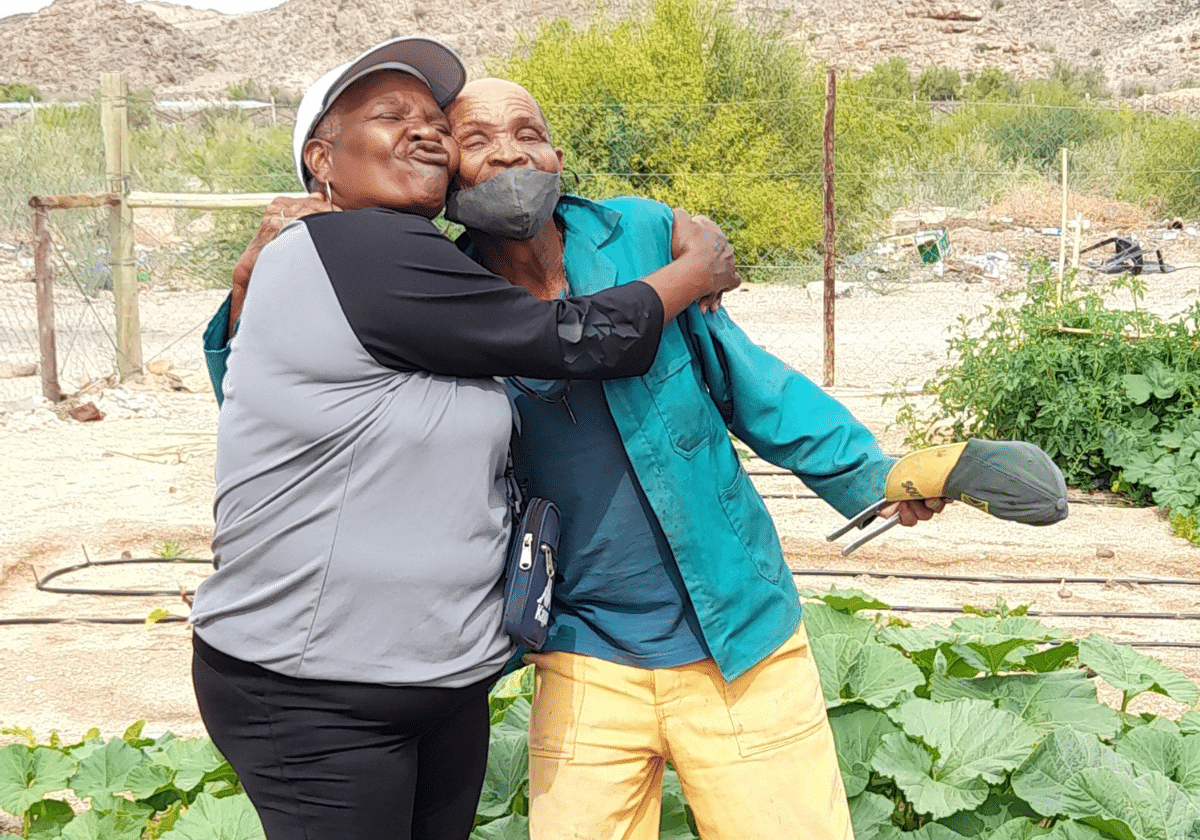
The gardening makes me feel healthy, happy and stress free. I don’t have time to think about my problems when I get home in the late afternoon. I used to lie awake at night worrying and getting headaches, but not anymore. Now I think about what I need to do in the garden tomorrow and then I fall into a deep sleep for at least 8 hours. I wake up full of energy and keen to get back to the soil.
BBL PARTICIPANT: Makhosazana Hazel MtshalI, Tsakane, Gauteng
In a Nutshell
Makhosazana Hazel Mtshali lives in Extension 10, Tsakane, Ekurhuleni, Gauteng. Through SocioTech’s Broad-Based Livelihoods (BBL) programme she has added to her horticulture and bookkeeping skills. She experiments with a diversity of creative and business initiatives to multiply her family’s income streams. Beautiful handmade cardigans and stunning bespoke shoes, healthy herb products, tasty treats…
Her fruit and vegetable enterprise with her husband, Bheka-Makhosazana, is thriving. She has a clear, comprehensive plan for future business growth and profitability. Her children are benefiting financially and nutritionally from her efforts, and learning from thier parents' example. She says…
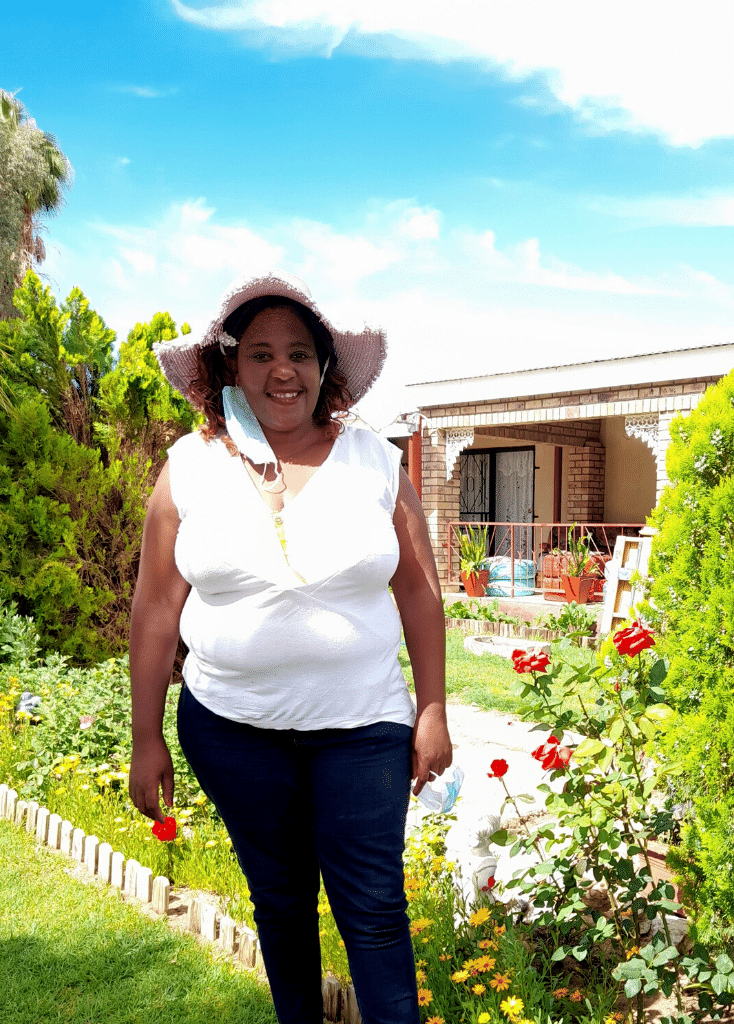
Roses are my passion. When I was a little girl, growing up in KwaMashu, my mum liked to grow roses. I have inherited that love of roses. I am absolutely committed to vegetable gardening and I appreciate where it has taken me, but it is roses that speak to my soul.
If I dream about where I want my life journey to take me, I see a farm with vegetables stretching out for many kilometers into the distance. I know that the vegetables are how I will support my children and my children’s children going on into the future but, in the foreground, I see a farmhouse with a shaded veranda and a garden full of roses. I hope that when I am an old lady I will be sitting on that veranda, sipping lemonade made with my own lemons or wine made from my own grapes, admiring my lovely roses.
The key thing is to work out how to get from where I am now in a shack in Tsakane to that farmhouse veranda and those roses. I think that the answer to my prayers lies in my trench beds and vegetable garden tunnels.
"The answer to my prayers lies in my trench beds and vegetable garden tunnels."
My journey to vegetable gardening started with an NPO, Mduduzi Memorial Organisation, that my family set up in 2004. We decided to help people who are infected and affected by HIV because we had been impacted directly by this terrible disease. My brother, Mduduzi Mtshali, died that year and it was so difficult in those days. Remember, there were no HIV medicines available then and my mother (who had a nursing background) said to us: ‘Let us mourn in a positive way.
Let us help other families that are experiencing the pain that we have known and through our work we will honour our loved one. So, that is what we did. The NPO has gone from strength to strength and grown because there is a great need. Since 2006 we have been partly funded by Department of Social Development.
Right from the start of the NPO we grew vegetables because we wanted to provide monthly healthy food parcels for orphaned, vulnerable children. Our first vegetable gardening was before we had training and it went okay – things grew and we got food to the needy – but when I look back now I think that early success was all about beginner’s luck! We didn’t know how to prepare soil or irrigate to save water. We knew nothing about mulching!
Our first crops were pretty good. I think that can be attributed to two main reasons. First, it was our sheer passion to succeed. Second, the soil here is relatively good, so even before we knew about soil preparation things grew quite well…
We came into contact with SocioTech in March 2016. My husband, Ben Kubheka, was walking past one of our neighbour’s shacks and he saw the BBL facilitator installing a SocioTech tunnel there. My husband got talking to him and pretty soon came home very excited, telling me that we were dismantling part of our shack so that we had space to put up a tunnel. I wasn’t pleased. Not at all. But in married life you have to know which battles to pick and I could tell that this was not one I was going to win…
Before we could get the tunnel, we had to do some training with SocioTech. One of the main things we learnt, was to that there are ways to work efficiently that take less time and effort. Good trench beds and mulch mean you can do things once and see your garden flourish rather than endlessly working and watering and wondering why you don’t make progress.
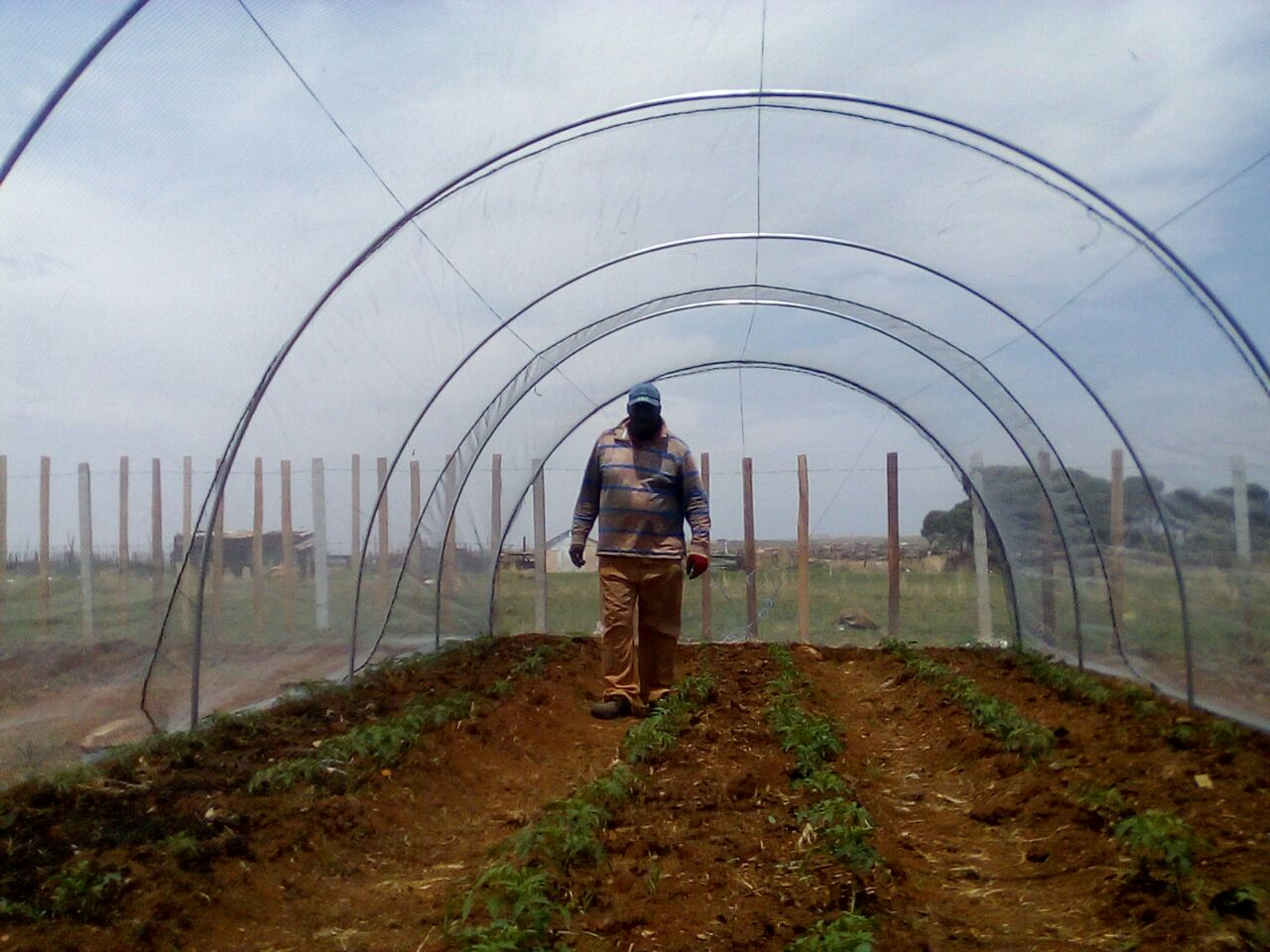
We had that first 6-meter tunnel for a few months and pretty soon we could see that this was really working well. The first thing we did was spread into our neighbours’ yards on both sides. Even that was too small and we had to find more ground. So, now there is one garden where we live and also a plot a few minutes away. Where we are now we have 37x 12 meter long trench beds with tunnels, and eight trenchbeds without tunnels – half of them are 20m and the other half are 30m long! I have fruit trees (some of which I grew from pips) including figs, pears, apples, lemons, peaches and grapes.
"They know that if you start small and work hard you will get joy and pride and rise above!"
"I still want to hone my skills to make sure that everything is perfect."
We grow so many different vegetables depending on the season but at the moment there is spinach, beetroot, eggplant, chilies, green peppers, sweet potatoes, cabbages, tomatoes and lettuces. We also have fruit like strawberries and watermelons. Herbs like parsley, rosemary, mint and thyme. I have recently started with ginger and garlic. And of course, in addition to the vegetables and fruit, I have my beloved roses (mainly white and yellow) interspersed with lilies and ferns and succulents.
I feel good about the fact that we are a local supplier selling fresh food at reasonable prices to a poverty-stricken area. If people buy from us close to where they live, they don’t have to spend money on transport to get to far away shops. It also works well for us because selling locally reduces our need to pay for storage, packaging and transport.
We also still give a portion of the produce to the NPO. Every month my mother distributes 100 food parcels and I am proud to say that my vegetables are in each and every one of those parcels.
I adore my roses but everything in the garden must pay its way. My plan is to make even my roses work for their place in the garden – I have started experimenting with rose water and fragrant oils so that I can build my business even further. The fragrant oils are part of an idea that I have to add value to everything the garden produces. I love making jams and pickles and I see that there could be a market to sell those too.
I still want to hone my skills to make sure that everything is perfect, but I have a dream to create a little shop to sell the treats that I make from my garden. I also have a passion for handwork – especially making beaded shoes – so I want to include those in my future shop. I am not rushing into anything but I think in about 2-years I will have this aspect of the business up and running.
Our involvement with SocioTech has changed every aspect of my life and the life of my family. My husband Bhekani and I were unemployed and now we are running a small but successful business. My children, 14-year old Sphesihle and 12-year old Aphelele, have learnt a respect for nature and have gained an understanding of how a bonded family can work together to change their future. They saw us starting small and gradually building to where we are now. I see it in their school work and their general attitude to life: they know that if you start small and work hard you will get joy and pride and rise above.
We have expanded in stages and been sensible, not rushing into anything. Right now, we are seeing if we can manage the plot before we move on to something as big as a farm. We aren’t spending money unnecessarily. I still live in a shack and I am not ashamed of that. I am proud to be putting all the money we make back into the garden. We are literally ploughing it back into the business!
According to my calculations we will be able to reliably supply larger businesses in the next 18 months. We still have a long way to go to get to the farm with the veranda but it is getting closer every day. In my dream I can already smell those beautiful roses…