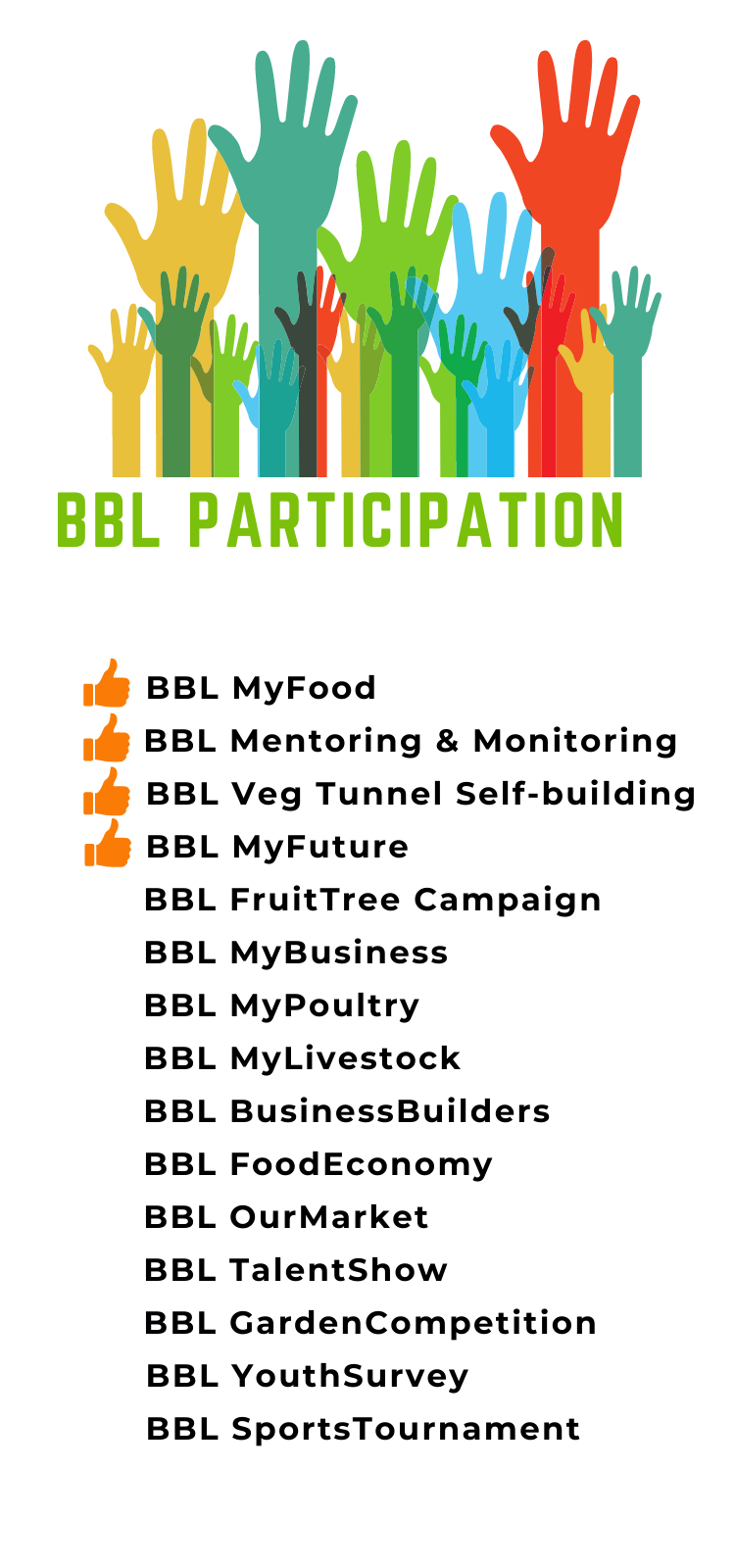
BBL MyFood
BBL Mentoring & Monitoring
BBL Veg Tunnel self-build
BBL FruitTree Campaign
BBL MyFuture
BBL MyBusiness
BBL MyPoultry
BBL MyLivestock
BBL BusinessBuilders
BBL FoodEconomy
BBL OurMarket
BBL TalentShow
BBL GardenCompetition
BBL YouthSurvey
BBL SportsTournament
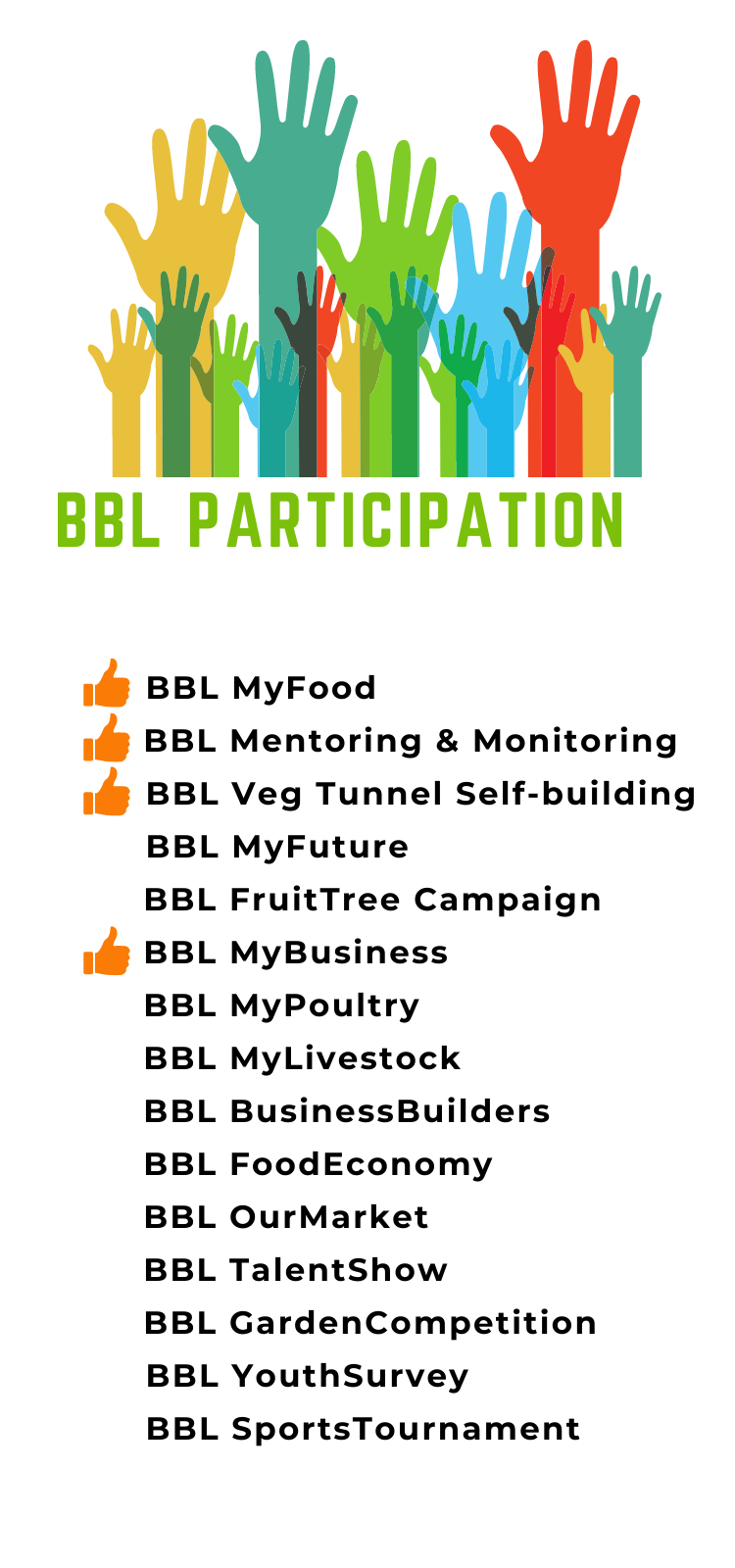
- Money management skills
- Business diversification
BBL MyFood
BBL Mentoring & Monitoring
BBL Veg Tunnel self-build
BBL FruitTree Campaign
BBL MyFuture
BBL MyBusiness
BBL MyPoultry
BBL MyLivestock
BBL BusinessBuilders
BBL FoodEconomy
BBL OurMarket
BBL TalentShow
BBL GardenCompetition
BBL YouthSurvey
BBL SportsTournament
- Money management skills
- Business diversification
BBL PARTICIPANT: Leah Monayai, Rietvallei, Mogale City, Gauteng
In a Nutshell
Through her participation in SocioTech’s Broad-Based Livelihoods (BBL) strategies to stimulate personal economic activity, Leah Monayai from Rietvallei has acquired business skills. She has launched a food business and a pig farming business with this new knowledge. She is budgeting, saving and planning for the future.
She says…

I grew up in Meadowlands and came here to Rietvallei in 2008. Meadowlands is a fast-paced place, whereas here is super quiet and super slow. It takes time to get used to that, but my life is here now, and I like it. It is a close-knit community. People know each other. Knowing each other builds trust and trust is a big thing - especially if you are selling food as I do.
I met the team from SocioTech and did the MyFuture training in 2022. It was then that I became open to the idea of having a side hustle business of my own. I had done commerce at school, so I knew some of the principles of business accounting, but I still found the idea of actually having my own business frightening. I was very hesitant at first, but Charles was very helpful and encouraging. There was also a story in the MyFuture manual that gave me courage and confidence.
I thought about it for a long time. I did my research to see who else might be selling in this area. I could see that no one else is selling in this street and that there could be a wide range of potential customers - children coming home from school, neighbours who have no time to cook, and right next door to me there is a guy who fixes cars, so all the people who come to him could be customers too.
Once I was convinced that there was a market, I started to save so that I could buy stock. I also work as a security guard, so I put aside some of my wages each month. Earlier this year, in April 2024, I thought, it is now or never, I have done all the planning and saving that I can do, let me just go for it. So, I bought R2000 worth of stock using my savings and I started my business; Tete and Son.
I sell kotas. My most popular item is the R10 Kota. It has polony, atchar, sauce and chips. I make the chips with real potatoes. The first week was wonderful. I did a lot of business, so it came as a big shock when things slowed down. I didn’t know about that period in the month between the 10th and the 15th when no one has money. They call it Mampara Week! Now that I know, I can plan for it but the first time it happened, I was really confused. The other thing that I hadn’t been prepared for, was how many people would try and buy on credit. They come and say to me ‘borrow me the money for a kota and I will pay you on the 25th’. At first, I found those requests for credit really hard. I knew that I had to say no, but I worried that potential customers would be offended by my refusal and that they wouldn’t come back.
"....I can see that this business is going to work."
After a while you see them coming back, and you realise that they aren’t offended. They know that a business can’t run like that. They are just taking a chance. So, they forget all about it. I practice what I preach. I know that it is important not to eat the stock. I love kotas but I only have one a month and I pay for it. If you eat, you must pay. That applies to everyone.
I also have seven pigs that I keep in a field behind the Rietvallei library. My plan is to start a buy and braai butchery. I have learnt that animal farming is not simple. The biggest challenge I have is that my pigs keep having miscarriages.
The kota side of the business is easier to manage. I can see that it is beginning to grow. I am planning to add plates, drinks, popcorn and ice cream to my offering. I am saving and building business finances to buy a popcorn machine and a freezer. Our soft launch was April but now that I can see that this business is going to work, I am having a proper launch on the first of December. There will be a DJ and a professional photographer. I have advertised on Facebook. I have put it on my WhatsApp status. I have printed pamphlets. People must know all about what I do. My business is ready to shine!
I want this business to grow. When my son grows up, he must know that he was raised from this business. When he starts a family, his wife and his children must know that their family was made from this. I think it is good for him to grow up around business. He is only 5 years old but already he helps me. As small as he is he carries bags of potatoes to make chips! Although he does want to be paid R2 for his efforts. I can’t really complain, I taught him that you can’t give away kotas. He heard me say that if you want to eat a kota you must pay.
I would say to anyone thinking of attending the MyFuture training that they must be clear in their minds that they are ready to work hard. Don’t go to the classes if you aren’t going to implement and give it 100% effort. But I would also say don’t let fear stop you. Do it and don’t be afraid to try. It is never too late.


BBL PARTICIPANT: Jacob Hlongwane, Tshepisong West, Soweto, Gauteng
In a Nutshell
Jacob Hlongwane from Tshepisong West, Soweto, has learnt about soil improvement and is planning for a future in food gardening.
He says…

This is
I come from Giyani in Limpopo and my family were subsistence farmers - mostly pumpkins and maize. As a child, I observed their planting but I was born disabled and so I couldn’t help work the land very much. Occasionally bird scaring but that was it.
In 2003 I came to Gauteng to complete my matric, after which I started a business studies course at South West College in Krugersdorp. That is how I ended up in this part of the world. After two years, I had to drop out because of a lack of finances but I liked the place, so I stayed in the area. In 2007, I asked the councillor for a stand which is when this land that is now my home was allocated to me.
There are many good things about this place. My children were born here. I have good friends here. On weekends we go to Kaizer Chiefs games together. My friend Justice spent his holidays helping me to dig my trenches – he had his own work to do but he took time out to help me.
I am not saying that things are perfect. One of the big challenges is the lack of tarred roads. When there are water leakages or heavy rains the roads get muddy. This wheelchair that I am using is not battery operated so I have to use my hands to push the wheels. Sometimes I don’t know what is in the mud and that is very unpleasant on my hands. I did have a battery powered wheelchair, but the batteries have been recharged so many times that they are now beyond recharging. I took it to the repair shop, but they say it can’t be done. I was quoted R4000 for new batteries so I am stuck using my hands until I can save that money.
I know that there are challenges in my life, but I can’t let them stop me from making progress. I am a husband and a father. I have responsibilities. My children need me to earn a living. I saw my friend farming and I asked him about it. He told me about SocioTech, so I went to the training. So far, I have done MyFood, MyFuture and MyBusiness. I took the training seriously and I have learnt many things. I loved all the new information.
In terms of the MyFood I was very interested in the health information. As a father, I want to ensure that my kids eat right. I keep and sell chickens – people buy these traditional chickens that I have for their ceremonies - but I never sell the eggs, because my little boys love eggs.
"....that won't be a problem for me."
All the eggs belong to my boys. I lived on my own for a long time before I married, so I can cook – simple things, but delicious things. I know that my wife will probably go on doing most of the cooking, but I am really looking forward to having more fresh vegetables and being able to follow The Food Robot teachings. Everyone in this community deserves easy access to vegetables, but for me, with my mobility issues, the change in my life is especially great. Getting to the supermarket from here is expensive and time consuming. Soon that won’t be a problem for me.
The information in MyFuture and MyBusiness is easier for me to apply directly than those teachings that require digging and mobility. I was impressed by the emphasis on taking responsibility for our own actions. It is important to stand up for myself. The money management training was very useful. How to sell. What to sell. How to save and budget.
I can’t physically dig trenches, collect tins or bones and my sons are still too young (11 and 3 years old) to help, so I had to employ an older boy to dig for me. It is an investment, but I know that once the trench soil is rich and fertile, it will last for a long time. Maybe as long as ten years – by which time both my boys will be big and strong enough to dig for me. Once my 3 trenches are complete, I hope to receive a SocioTech vegetable tunnel. The practical information on what to plant and when to plant was new to me.
I have been thinking about how I could be more hands on involved with the farming. I recently saw raised beds on the internet. If they were at the height of my chair, I could do more of the work myself. They could be layered with bones and tins and grass in the same way as the SocioTech deep trenches. I was wondering if perhaps farming inside old bathtubs might work as a raised bed for me. I was also wondering if there was a business opportunity in making raised beds. Not only for farmers in wheelchairs but also for elderly people with bad backs and painful knees. Perhaps SocioTech could train us how to make raised beds? That’s the thing about the SocioTech training, once you have got the right mindset, you start to see business opportunities everywhere.


BBL PARTICIPANT: Josphina Mamacebo Matolo, Tsakane, Gauteng
In a Nutshell
Through her participation in SocioTech’s Broad-Based Livelihoods (BBL) strategies to stimulate personal economic activity, Josphina Mamcebo Matolo from Tsakane has regained her health and confidence in the future. She is a great believer in the power of gardening to make boys into good men.
She says…
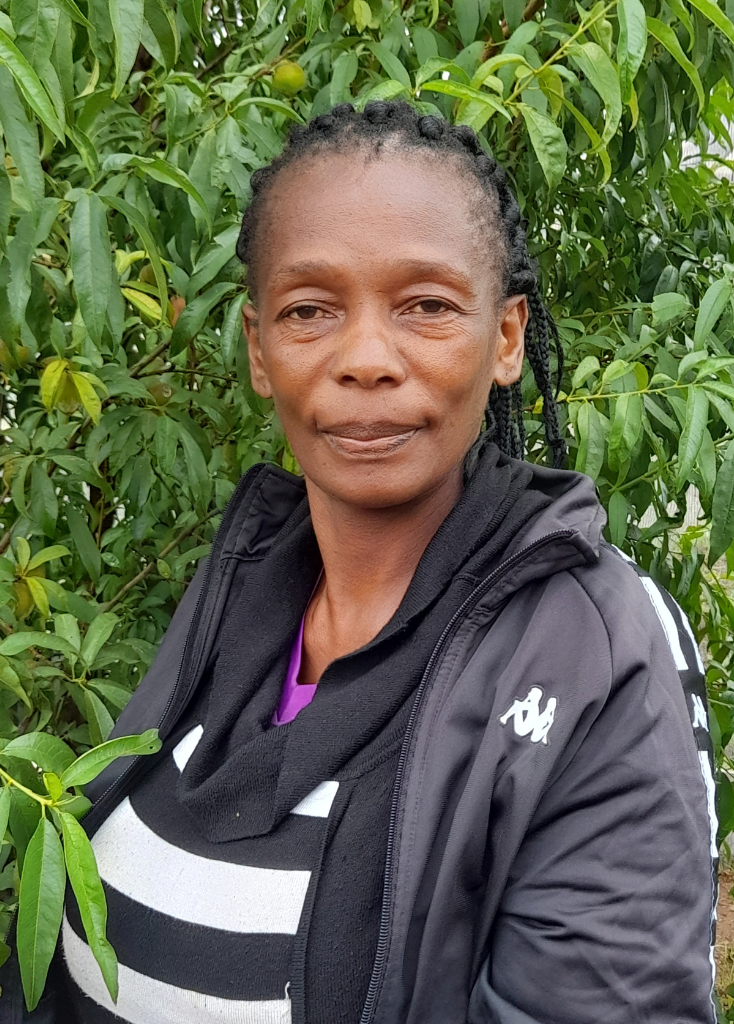
I grew up in Parys. When I was a child, my mother’s garden had pumpkins, beans, mielies, spinach, beetroot, carrots, tomatoes and so much more. I remember loving being in that garden with my mum and my two sisters. While we worked, we would sing gospel songs.
When you have a garden, cooking becomes a pleasure. Vegetables from the shops are okay, but straight from the garden tastes better. My mum used to cook potatoes and morogo bean leaves and a little sprinkle of white pepper together – it is such a simple recipe, but when those vegetables are picked from your own earth just before cooking, it is beautiful.
I came to Gauteng in 2002 and for many years I didn’t garden. I came back to gardening when I was struggling to survive. When you are in the middle of a terrible time, you have no choice but to keep going, so I did keep going, but it was very difficult. I look back now and I wonder how I did it. I was sick and I had small children who needed me. I had no support, and I was pregnant. I started to garden because I was trying to improve my health. I was living in Brakpan, and I was very thin and unhealthy, so I started growing China spinach which I made into tea. That tea soothed my stomach and put vitamins into my body. That was the first step on my road back to gardening and my road back to health. I am feeling much better these days, but I still drink spinach water. I sometimes mix it with mint too. I dry spinach and other leaves too so that I can make those teas all year round.
"I started a garden because I was trying to improve my health."
"I know that my sons will be better men..."
I came here to Tsakane in 2016. My neighbours told me about SocioTech and the training I got from them helped increase my yields. Good soil is so important and the knowledge of how to make great soil was what I got through my training. My boys are now 12 and 14 so they are a big help. They dig and plant and water the garden with me and when the crops are ready, they walk around the streets selling from a plastic bath. My younger son likes to play, and I can see that he is not so keen, but my 14-year-old says that he wants to be a farmer when he grows up. Who knows what the future will bring.
I got my tunnel in April. It has made a big difference. Sun, rats, hail, birds all those things can attack plants, so having a tunnel to protect against those elements is a big deal. I have planted peach trees and apple trees. The peaches are ready and in summer I like to can the fruit. The apple tree is still small and young, but I see it as an investment in the future.
I cannot properly express how important my garden has been in my life. It has taken me from hunger and allowed me to build the foundations of a better life. Even if you have no money in your purse, so long as there is a garden, you know that there will be something to eat. And while there are crops you can sell, you know you can save money.
I know that my sons will be better men because they have had the experience of working with me in the garden. That work is teaching them to be men. They understand self-sufficiency. They know not to ask for handouts. They know to work for themselves. This means they will never need to feel shame
BBL PARTICIPANT: Koketso Thulare, Relebogile Education Centre, Masobe, Gauteng
In a Nutshell
Through her participation in SocioTech’s Broad-Based Livelihoods (BBL) strategies to stimulate personal economic activity, Koketso Thulare from Masobe near Rust de Winter has been inspired to further education and follow her dreams. She has realised that to be more you have to do more and she is eager to continue building a bright future for herself.
She says…
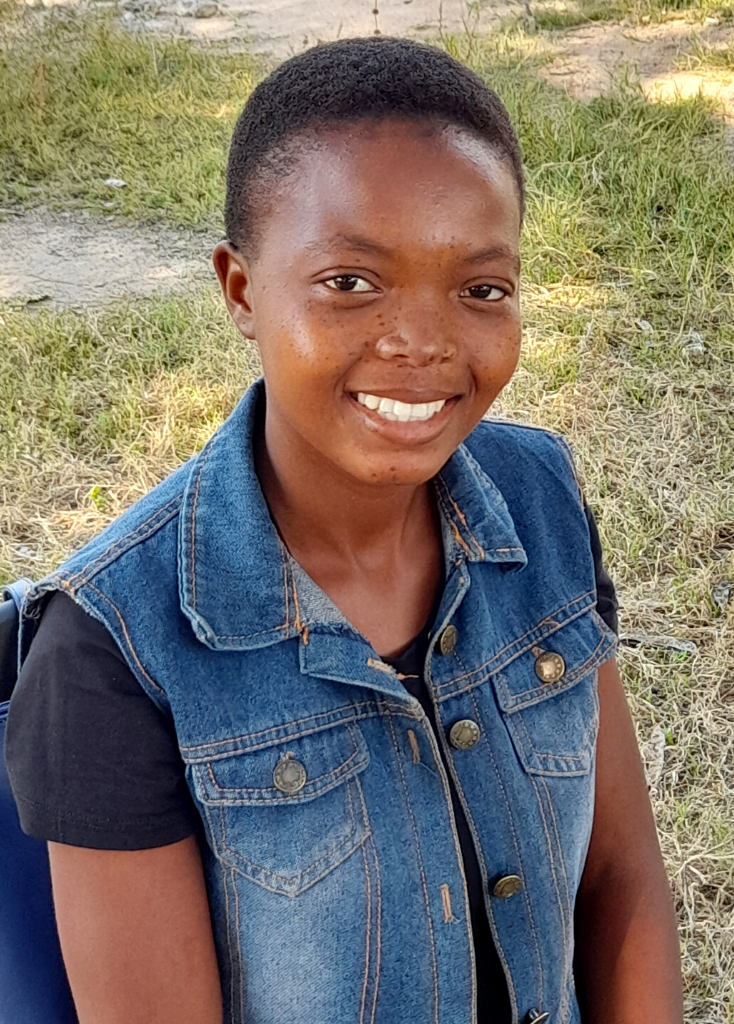
I am a level 4 student doing computers at the Relebogile Education Centre. I like this place much more than school. At school they were strict but not that informative. Here, they are less strict and more open. Thanks to what I have learnt here, I am inspired to try and go on to college to do IT. I think it could help me on my way to a better life.
I was recently introduced to the BBL MyFuture training programme. This teaching method reminds us that we must all invite God into our lives and think carefully about the talents He has given us.
The MyFuture teachers tell us that we must budget carefully, buy only what we need and create side hustles to get money that we can then save. They showed us that even a little step forward is important, and that each step gets you closer to a better future.
Before I did the MyFuture training, I knew that other people had side hustles and made money, but I hadn’t thought that I could do it. I didn’t really understand how making money works. Now I see that I can do stuff like that.
"...each step gets you closer to a better future..."
"...I want to do more and be better.."
I have a plan. I am saving up to buy a bucket of atchar. I am going to sell that atchar door to door and make a profit. With that profit I am planning to buy a laptop. The laptop will allow me to do research and apply for jobs. I would also like to get a sewing machine. I like designing and sewing dresses. That is my big talent, so, if I can earn money and get a sewing machine, I can grow myself into a person with two side hustles: atchar and sewing.
My hope is that in 5 years-time I will be an IT professional. I know that there are special dress design programmes that you can use on the computer. I am hoping that I might be able to combine my two talents: IT computer work and sewing. Maybe I can be an IT professional who works in the fashion business. I would love that.
Thanks to MyFuture I have a much better sense of how I can change my life. I am beginning to think that I want to do more and be better. This is just the start. If I work hard and stay focused, then my dreams can come true.
BBL PARTICIPANT: Fikile Ndlovu, Tsakane, Ekurhuleni, Gauteng
In a Nutshell
Through her participation in SocioTech’s Broad-Based Livelihoods (BBL) strategies to stimulate personal economic activity, Fikile Ndlovu has improved her soil and her crop yields. She has obtained business skills that she is using to develop innovative business strategies.
She says…
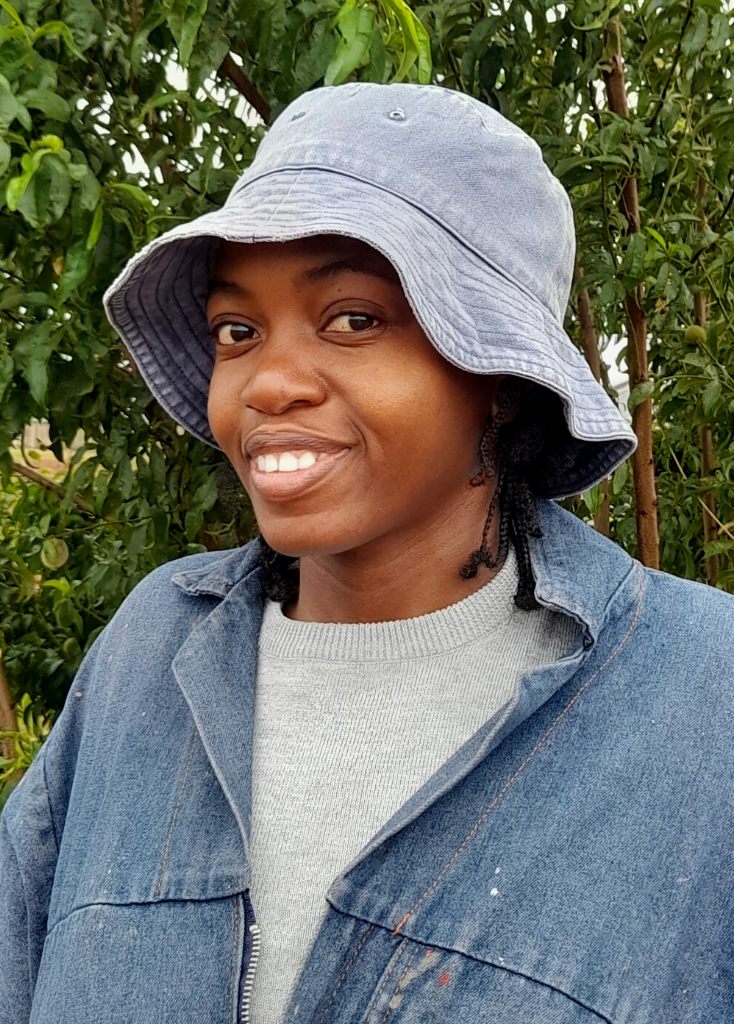
When people see me, a young woman, working on this land, dressed like this, they don’t understand why I do it. They don’t understand that farming is a business and that you can make money this way.
That attitude is so wrong. I have done other work – I used to work at the ambulance call centre – and this way of living and working is so much more profitable. It is also much more emotionally fulfilling.
Part of what I like about this way of living and working is that I feel part of a line of family stretching back across time. Farming is all about family traditions. We need to reach out and reclaim that heritage of African farming. Words like organic sometimes confuse people because customers don’t realise that this is the way that traditional farming has always worked.
My most immediate connection to that heritage is through my grandmother. I grew up with her in Pongola in KZN. As I work here, I often think of her. She had an amazing garden. Pongola is a wonderful part of the world for farming. The climate and the soils are so good. My grandmother also had a river at the back of her property, so water was never an issue.
My grandmother’s garden had everything. Mangos, pumpkins, guavas, they were all there. As kids, we were outside all day and I remember I ate those flavourful, firm, white sweet potatoes straight from the ground. I ate them raw – as if they were apples – that is how sweet and juicy they were.
When I came this side to stay with my parents I became quite cut off from that side of life. As I said, I worked at a call centre and it was all about modern rush, rush sort of city life but my dad has always wanted to farm and he eventually managed to secure a lease from the council for this land so I gave up my call centre job and came to work here with them.
Through SocioTech, I have done both the MyFood and the MyFuture training. Thanks to the MyFood training, we have managed to improve our soil. Our soil now is so good that it retains water and we don’t need to water every day. And it is so rich and nutritious that there is an obvious improvement in the quality of the vegetables we are producing. The problem with having great soil is that it is so good that the weeds are very happy too! Some of those – like thepe for instance – are edible and we can sell them but others are not. But because the soil is no longer so hard, even when we do need to pull up weeds it is much easier to do that than it used to be.
"Like I said, when people see a young woman in farm overalls, they don’t understand it, but I do, and that is all that matters."
And when we got the tunnels… that was a big break through. We have had this tunnel for about 3 months now and the difference is clear to see. Around here, cows, goats, birds, rats and rabbits do so much damage. Especially the rabbits – they are choosy, they always take the best crops. The sun is so strong. Even rain sometimes does damage. This tunnel has allowed the hard work my parents and I do here to show to its full extent.
I am not saying that everything is perfect. For instance we are still having some problems with worms and pests (and as I mentioned, some of the birds in this area are clever about getting into the tunnels) but I can see that we will reach a stage where we might have to split the business and have one section that is aimed at providing vegetables to local families and another section that has a single crop focus and sells to big business – for example maybe we could grow potatoes for McCain or something like that.
The MyFuture training was also very helpful. I have realised that we need to segment our market and understand what different types of customers want. The Zimbabwean customers for instance, they like peppery tasting leaves. They want chomolia and rape but they don’t like spinach. South Africans seem to like that smoother, gentler, less peppery taste of spinach. The Swazi and Mozambicans like okra. I have been talking to the Mozambicans and they say that their pumpkins are different to ours and that they miss those vegetables from home. I have asked them to bring me seeds and I am hoping that in the new year I can start growing to meet the needs of those customers.
It is not just about nationality. It is also about understanding what people of different ages want. For instance, young South African women buy okra from us, but they aren’t really cooking with it. They are buying it to make conditioner for their hair. That sticky, slimy liquid that comes out when you put okra into water makes a wonderful conditioner. I use it myself. It makes hair so strong, and it means that dreadlocks don’t break. I am thinking that there might be a business opportunity in growing okra for hair care. I am thinking that maybe I can dry the okra and bottle it so that I can sell all year round.
There are so many opportunities. Like I said, when people see a young woman in farm overalls, they don’t understand it, but I do, and that is all that matters.

BBL PARTICIPANT: William Ndabazipheli Skosana and Simphiwe Skosana, Swaneville, Mogale City, Gauteng
In a Nutshell
Through their participation in SocioTech’s Broad-Based Livelihoods (BBL) strategies to stimulate personal economic activity, the father and son team of William Ndabazipheli Skosana and Simphiwe Skosana have improved their farming techniques and gained the understanding of the money management strategies necessary to transform a family food garden into a commercial farming enterprise.
They say…
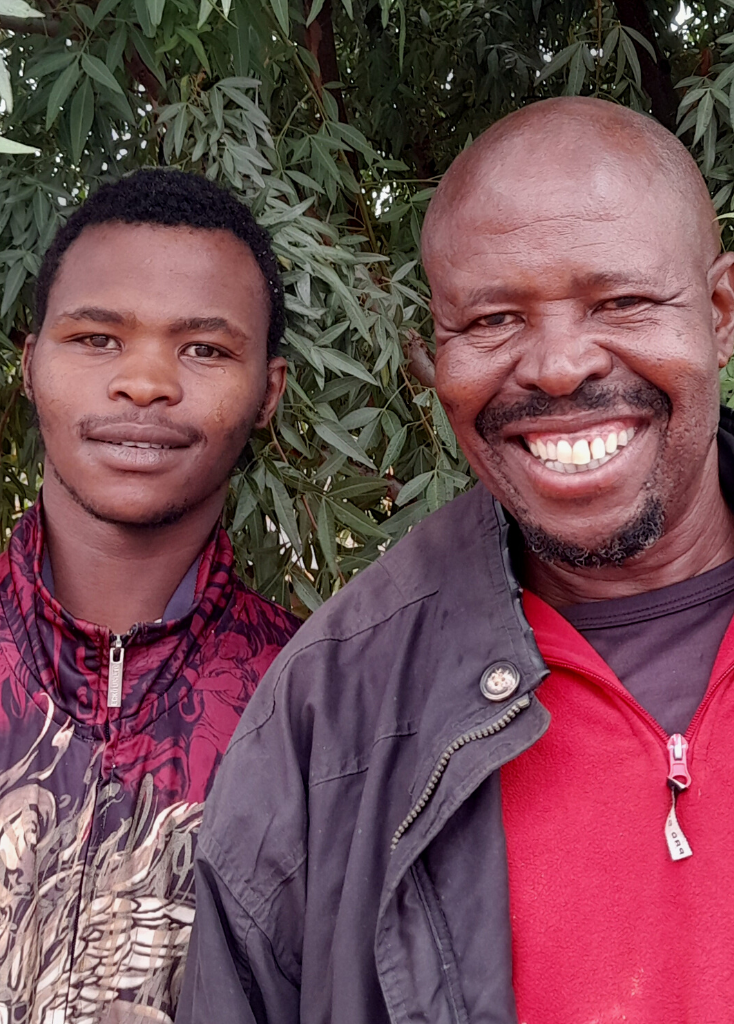
William (father): I used to have a business collecting, cleaning, and reselling used oil back to industry, but this economy is very difficult and even though I worked hard, it was not successful. Now that I have done SocioTech’s MyFuture business training, I can see where I made mistakes. Basically, I wasn’t working with money properly. Customers would pay me and so money would come in but then it went out again without much thought. I had no clear strategy, no budgets. I wasn’t investing in the business to generate more money. I was paying high bank charges. I can see now that I didn’t have the financial knowledge I needed.
About a year ago that business failed, so I decided to get serious about farming. It is no good just sitting in the location doing nothing and asking for money. That is no way to live. And I have always enjoyed growing vegetables, so I decided to try and turn a hobby into a new way of life. I have always grown a few mielies and maybe some beans and tomatoes in the garden around my house. In the old days I did that I found it relaxing and I preferred the taste of homegrown ingredients. Even if all you do is boil a green mielie and have it with a bit of salt, it tastes so sweet compared to ones you buy in the shop. Now I am taking food gardening more seriously and seeing it as a business not a hobby.
This new way of life is not just for me. My son Simphiwe finished school two years ago and I wanted to try and start something that we could work on together. This location is dangerous for young people. There is a lot of nyaope and violence. Through farming together, we are creating a family business and I am keeping him away from all that nonsense.
Simphiwe (son): We did the MyFood training together in June of this year and we both learnt a lot. Before, when we grew vegetables at the house, we just cleaned the area and put a bit of manure down and planted. We didn’t know about trenching. We didn’t know about irrigation. We didn’t really mulch the soil. Through the training I have come to understand that the biggest investment a farmer can make is in his soil.
"The biggest investment a farmer can make is in his soil. "
William (father): Our plan is to grow gradually from our small farm into a big commercial enterprise. It won’t be easy but I think we can do it. Nothing worth doing comes easy. When we first started with these trenches, finding all the bones and tins seemed so difficult and I got so sore and tired from digging but after a while it gets easier. We now have six trenches (12 metres by 2 meters). There are different kinds of fitness and we are now farming fit. I don’t just mean strong muscles. I mean that our minds and eyes have been trained and strengthened for the task. At first it is quite hard to find enough cans and bones but once you get used to that way of thinking you can’t stop. Once your eye is trained to seeing tins and bones, you start seeing them everywhere.
Simphiwe (son): The trenching method made a big difference to the quality of the vegetables. We built our tunnel about two months back and that has also been a big help. This environment is tough on plants. The sun is fierce. The rains can wash crops away. We are lucky that our land is next to the river but there are still problems. There can be problems with animals. In the past my dad has had to punish the owners of animals because they let their animals damage our crops. But he managed to get them to compensate us for losses and they haven’t done it again – they are now looking after their animals better.
William (father): The tunnel has been a big boost to productivity. In fact, our vegetables have grown so well inside that tunnel that we currently have a problem with too much spinach and not enough customers. It’s a problem when the customers sense that you have to sell and they start naming their own prices because they know you need them to buy. I suppose this is a life lesson in ensuring that there are enough customers for a crop. We need to be considering different ways of selling – perhaps selling to larger customers like supermarkets, schools or hospitals. Perhaps having a different approach to advertising our produce.
Simphiwe (son): I have been thinking about ways to bring in more customers and also different kinds of customers. Our goal is to be selling in bulk to shops rather than one bunch of spinach at a time. I do videos at church gatherings and parties so I was thinking maybe I could use that skill to put out advertising videos on social media. I haven’t worked out all the details yet but a marketing strategy that makes us stand out is what we need if we are going to get to our goal of a big, commercial farming enterprise. Having a goal and focussing on it is the way to make this work. Because I am young, many of my friends think this farming thing is nonsense. They think I don’t know what I am looking for in my life, but they are wrong. This is the start of something great.

BBL PARTICIPANT: Tsegofatso Mafatlha, Tsakane, Ekurhuleni, Gauteng
In a Nutshell
Through her participation in SocioTech’s Broad-Based Livelihoods (BBL) strategies to stimulate personal economic activity, Tsegofatso Mafatlha has registered a company to sell value-added products from her agricultural production. Her success inspires the next generation to shape their own future too.
She says…
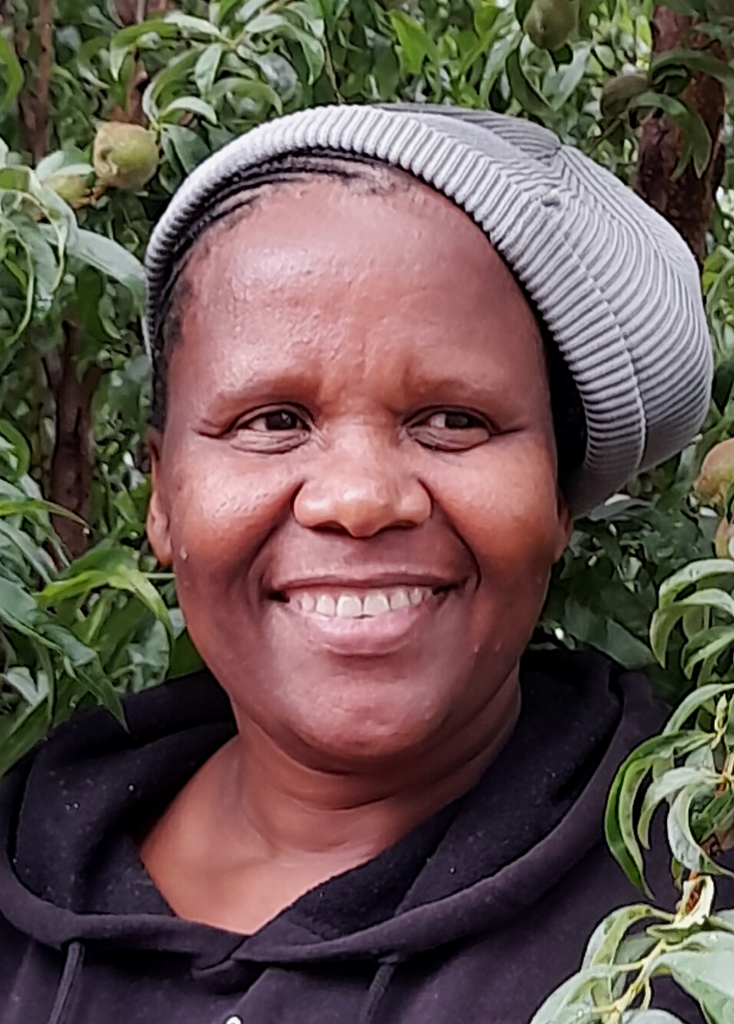
My father (who lives in Zeerust) has always been a very good food gardener. He is 78 years old now and he still grows almost everything he needs. And does almost all the work himself. When I was a child, we had all the fruit and vegetables we needed. There were mielies, wheat, sugar cane, green beans, peaches, apricots, nartjies and oranges. The only things we bought from the shop were meat and oil. My mother used to can those peaches in old mayonnaise jars so that we could have jelly and custard with peaches even in the winter. She would also make us delicious dikgobe from the beans and mielies.
As a little girl my job was to water. I know some children also had the responsibility of bird scaring but not in my home. My dad had this great way of keeping birds away. He had an old cow bell attached to a rope. He sat under a tree, and he pulled that rope if birds came near his crops. If he went out my mother sat with that rope.
I first met the people from SocioTech in 2016 so my garden is now quite mature. I have trained lots of other people since then. Maybe as many as 70! I am always on hand when there is a new training session to help those people who are having problems. It is such a wonderful feeling when you see someone who was struggling start to thrive through growing, eating and selling vegetables.
The first step on the SocioTech journey is getting healthy. People on chronic medication must eat before taking pills. Getting the right vitamins and minerals is so important. And there are so many healing remedies that can come out of a garden. Recently there was a granny with painful feet and heart problems, so I brought her celery leaves, and we made tea to relieve her symptoms.
I built my tunnel in April of this year and I love it. I grow chilies in my tunnel and process them into a delicious peri-peri sauce which I sell for R50 a bottle. It works beautifully as a marinade for meat as well as a table sauce. I market through a local whatsapp group, and I have registered a company, ‘Tshwaro and Kids’. My daughter, Bonolo, is 10 years old. She sees my success and she asked for a corner in the tunnel. This season she grew strawberries in that corner. She took them to school and sold them for 50 cents per strawberry! ” Sometimes children are the best teachers. I did the MyFuture training, and I have explained some of it to my daughter. As young as she is she has taken in the message. If customers ask for credit she says: “no Mama”.
I recently sent my dad some photos of the tunnel and my crops growing inside it. He was so impressed. He wants a tunnel too. When it comes to keeping birds off crops, it works even better than a cow bell and a rope…
BBL PARTICIPANT: Rirhandzu Mushwana, Tsakane, Ekurhuleni, Gauteng
In a Nutshell
Through her participation in SocioTech’s Broad-Based Livelihoods (BBL) strategies to stimulate personal economic activity, Rirhandzu Mushwana from Tsakane has acquired agricultural skills and applied this knowledge to creating a food gardening business. She has also trained many of her friends and neighbours.
She says…
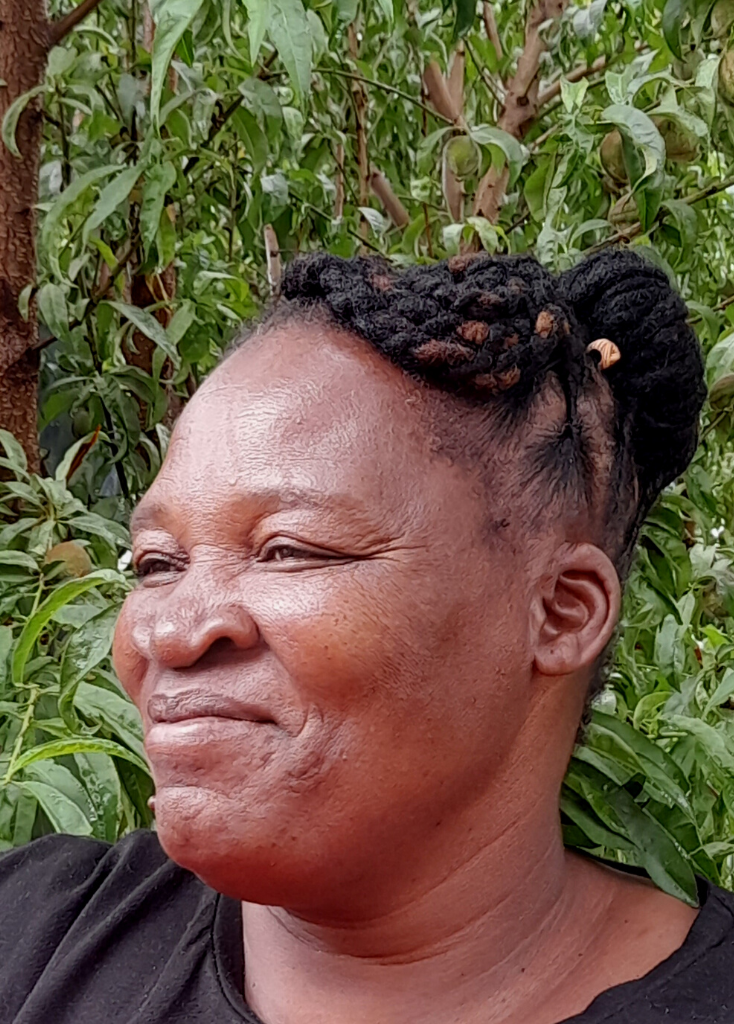
I have always been a food gardener. I used to help in my grandmother’s garden in Bergesdorp Village, Tzaneen. We grew all those traditional Limpopo-style vegetables – matàmbala, tindluwa, those multi-coloured, old fashioned mielies, timanga (peanuts). We used to grind our own pap which tastes so much better than the kind of pap we buy in the shops these days. When I think back to that lovely dikgobe (stamp mielies and peanuts and dinawa beans), my mouth waters.
My grandmother taught me never to waste anything. If there were beans growing that was two plants because it was the actual bean and the leaves. If there were pumpkins we made recipes with the leaves and recipes with the actual pumpkin – and best of all those recipes where you cook the young pumpkins and the pumpkin leaves together. Delele (okra) leaves were made into a green relish to have with pap and also made into tea. That tea is good for joint pain. I still make it if I have had a long day working in the garden and my knees are painful.
We used to collect and cook with wild plants too. There was a recipe for bogobe porridge with motsukubele (a plant that is like a very sour wild tomato). It grows even here in the township and when I see it, I still pick it and cook it for my kids. I want them to know about those wild foods from their heritage.
For a long time after I left Limpopo I didn’t garden. I came back to it when times were very tough. I remember that we would go to bed without eating and I would lie awake worrying that there was no money for transport to get my children to school. Gardening can free you from that fear. It puts food on the table and if you sell what you grow it can put money in your purse too. `There is a sense of peace and pride that comes from being tired from working hard and knowing that things are better at home because of it.
"I am just saying let us wake up, stand for ourselves and work hard to create the lives we want."
I got my tunnel about 3 months ago and it has made such a difference. It is very depressing when you see birds eating your crops. Now that I have protection my crops are big and delicious with rich tastes and bright colours. I am starting how to plan the next stage in my business. Now I sell on a small scale to my neighbours, but I want to grow this business and sell to supermarkets and local stores. I am thinking perhaps forming a cooperative is the right way to go so that we can sell in larger amounts. The problem with that is the potential for some people to do more work than others. That can create tension. I am still trying to think through how to move forward, but I am confident that solutions will be found.
When I first met the SocioTech team, I already had some basic skills because I had done that gardening at home with my grandmother. The training took me to the next level. Now that I know about soil preparation and irrigation my garden is looking beautiful. I feel strongly about giving back and passing on that new knowledge. Part of what makes this SocioTech system work is that we train each other. I have now trained over 30 people. Most of those I have trained are in Tsakane, but some are from further away. I trained someone from Thokoza recently. I always stay in touch with people I have trained. I help and monitor so that they can more forward through problems. It is so lovely when people I trained come back to see me and I can see how their lives have changed for the better.
The thing about training and mentoring is that you can only help those who can help themselves. No one can do the work for another person. With these tunnels of ours, they get distributed to those who have put in the effort and shown that they can work hard. Sometimes poverty can cause people to get lost and confused in their thoughts. Worrying all the time can cause a person to lose focus. They say things like ‘we are not working and that is why we are hungry’ but I say to them that while they have minds to think and hands to garden there can be food and food business. I am not judging, and I am not saying that it is easy. I am just saying let us wake up, stand for ourselves and work hard to create the lives we want.


BBL PARTICIPANT: Pimville Farmers, Soweto, Gauteng
In a Nutshell
Through their participation in SocioTech’s Broad-Based Livelihoods (BBL) strategies to stimulate personal economic activity, the Pimville Farmers from Soweto discovered shared values and aspirations, and respectfully crafted a mutually supportive alliance. Through their BBL Circle of Friends, they support each other with knowledge sharing, and pull together when hard work is needed in their respective gardens.
Their plan is to jointly fill big orders for large customers. They also share a passion to help youth to discover the power of self-reliance so that they too can carve out their own independent and successful futures.
They say…
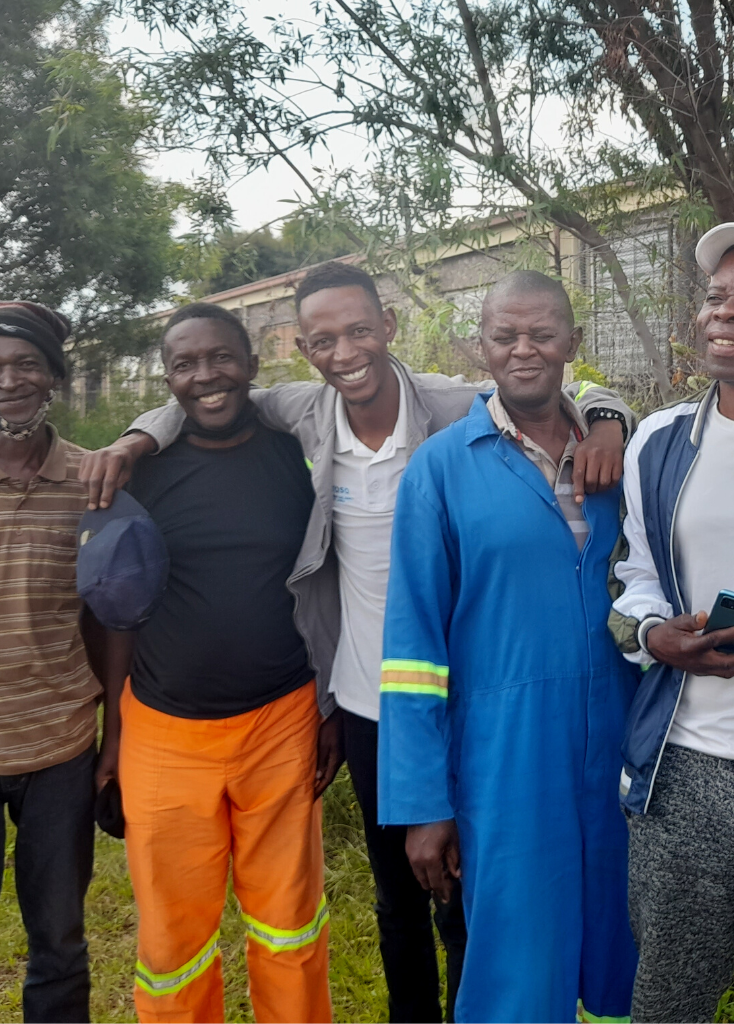
WHO WE ARE
Oupa Ramaila: “Pimville Farmers is made up of seven men. We work as a team but we are not a registered cooperative. We all did the same SocioTech BBL MyFood training session in 2021. Some of us knew each other before that and others not, but through that course we discovered that we have similar outlooks on life and shared goals.”
Dumisani Luvuno: “We lease and work across 3 school garden plots in the Pimville area and since doing the SocioTech course we farm in very similar ways so our needs are similar. It makes sense for us to work as a unit to support each other. So, that is what we do.”
Arnold Masuku: “What happens is that we come together to assist each other with the hard work stages that require significant labour. Things like digging trenches or collecting bones and cans. We have also come up with a plan to share resources like tools and use our brains together to deal with problems like pests.”
Albert Nkutha: “And, hopefully, working together will allow us to fill big orders for large customers.”
Sizwe Mahlambi: “Each of us wishes for a piece of land and peace of mind. We all have that dream of land we can live off, but we see that together we are stronger and more able to move forward towards that dream.”
WHAT MAKES OUR TEAM WORK WELL?
Wandile Madibane: “I think the arrangement works well because we have a shared understanding of how to behave and treat each other. We are careful to go forward with respect at all times. Respect for what we do and the people we do it with. Respect for the earth and the plants we work with. That is what we are all about.”
Oupa: “Group dynamics (in any sphere of life) are complicated, but I think the fact that we all bring distinct skills and distinct life experiences, but a shared love of farming, helps a lot. We value every contribution. We see that together we are a stronger team than any of us would be alone. There is a generous willingness to share knowledge and skills between us – for instance, this man (points to Albert Nkutha) he is my professor. Our plant leader. Each time I am with him, I learn something from him.”
Sizwe: “We don’t step on each other’s toes. We address each other respectfully. We recognize each individual and each position.”
Albert: “We have a shared passion for farming. We were all food gardening long before we formed this group. Most of us had been farming since childhood. It is something that we think of first thing in the morning and last thing at night. I think if we were suddenly all millionaires tomorrow we would all still be gardening. Watching those seedlings is in our souls and we recognize that quality in each other. That is why our alliance works so well.”
Oupa: “I think another thing that holds us together is our shared interest in seeing this community work. There are lots of problems in this area but there is also a lot of potential. In our own capacities we each of us gives our time and our skills to supporting various groups and schools in our area. In most cases that is how we met. We were all doing those things long before we decided to join forces and it is part of how we see our work going forward. Helping others is part of who we are.”
Dumisani: “We are also all greedy for knowledge and eager to learn. The more you learn, the more you produce and the more you produce the more you can help others. Like the birds for instance – we are all very aware of how much we are losing to them. Early in the morning and in the late afternoon especially. I think they wait for us to go home and then they strike. We are all wanting to learn more about how to control that issue as a matter of urgency. The other area I want to learn about is natural pest control. And natural soil improvers. Green manure. Fermented black jacks and so forth.”
Arnold: “I think we also have a similar attitude to work. It is all about looking at what we have and not what we don’t have. For instance - the schools have also been very generous to us. Thanks to them we have very low overhead costs. We have been given a lot of tins from the school feeding scheme which will improve our trenches. Those are all blessings. There is a potential to make profits with this set-up”
"Helping others is part of who we are. "

WE WANT TO BE INVOLVED IN EDUCATING THE YOUTH OF PIMVILLE; about farming, about business, about God.
Albert: “If everything goes according to plan, so that in five years’ time we all have places of our own and flourishing farming businesses, I would still see this school garden place as a training farm to build the kind of knowledge and behaviour we need to see in the next generation. Not just farming knowledge but more general knowledge about life can come from working in a food garden. “
Learning about business
Oupa: “Like I said, there is a shared commitment to community development amongst us. Being on the school grounds is part of that giving back ethos. We need to educate children to believe that they can shape and control their own lives but they need to understand that to do so requires hard work, commitment and patience. Farming is a very clear example that if you put in the work, you can sustain yourself. They don’t understand that, these youngsters. They want to earn quick money in a job. They don’t think of sustaining themselves through business that they start themselves. They don’t understand this yet, but we are working on a plan. I see this as a place of training. The teachers are very open to that idea.”
Albert: “Even if the students don’t stay in farming, the skills they could learn in a food garden would help them learn about doing business. I still remember my pride the first time I sold vegetables that I had grown myself. I grew up in Daggakraal, Mpumalanga and I don’t remember a time before I had my own vegetable patch. By the time I was 12, it was doing so well that a local shop owner (Mr Sangweni – we all called him Sportsman because he loved sport) who was the richest man I knew, came to my parents and said “I want to buy this little boy’s entire crop.” Before it was even ready to harvest, I had sold the lot. Of course all the money went to my parents, but I was so proud to helping my family.”
Learning about God’s love
Sizwe: “Working with vegetables is also a way for the children to discover God’s love. When I was a child, I grew up with my grand-mother and she gave me a few bean seeds to garden with, but I threw them away. But the amazing thing was that they grew anyway and my grandmother said to me: “You see. Look at that. It is growing even though you threw it away.” And I was really inspired by that. I see that as a sign of God’s love. He never throws us away. That is a message that all our children need to hear.”
Learning how to manage mental health
Wandile: “My dad taught me that gardens are sensitive to emotions. If you come to the garden angry, the plants can tell. They are like children. If you approach them in anger they wither and die. That feeling that the plants can feel your feelings puts control into what you do. You can’t give in to negative emotions while you are working with plants.”
Sizwe: “Gardening is like medicine. It heals troubled minds. You don’t take your distress into that space. In a complicated world, it makes structure.”
FUTURE PLANS
Oupa: Like Mr Masuku said, it is all about seeing what we have; not what we don’t have and using that to plot the way forward. There are a lot of possibilities here and a real potential to make good profits. The Soweto Hotel is right around the corner and they need flowers for the rooms and reception so we are looking into the possibility of cut flowers. Funeral services too.
Wandile: “Flowers and herbs are also important for health so perhaps that is something to explore. I remember as a child my grandmother planted flowers and herbs and when I was sick she would be straight into her garden searching for the right mix. She would mix it up and the taste was terrible, but it worked! That, I think, was my first inspiration and I think that same feeling is true for a lot of people round here. Beauty products too – oils with herbs in and the like. It also seems like we should be working with what comes to us free – there is thepe and other traditional plants all around this area. If we were picking it and drying it to sell as morogo, or even just turning it into green manure, that would be a good use of our resources.”
Arnold: “This group is quite new. It is just like a small child that must grow and, like any child, it will cry and even sometimes be full of nonsense but you know as a father what you hope for that child. We have all started this group as kids but our vision for maturation is there.“
(absent on the day: Vusi Nene).
"... it's all about seeing what you have; not what you don't have."
BBL PARTICIPANT: Nozuko Lusiki, Tsakane, Ekurhuleni, Gauteng
In a Nutshell
Through her participation in SocioTech’s Broad-Based Livelihoods (BBL) strategies to stimulate personal economic activity, Nozuko Lusiki has gained the skills to provide food for her family. Her business selling vegetables is gaining momentum and she has a five-year plan in place.
She says…
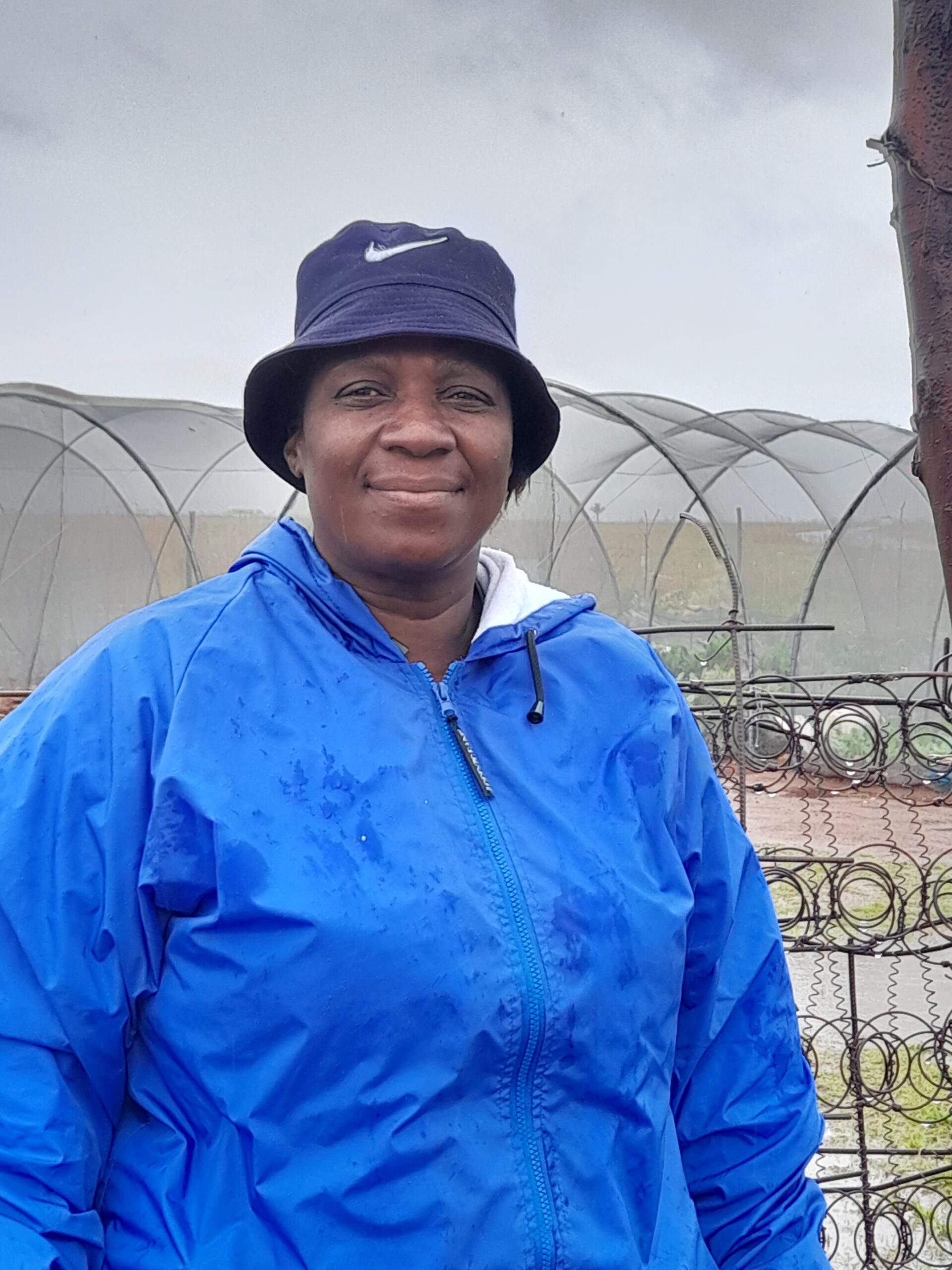
I grew up in Mthata in the Eastern Cape. In primary school, we had agriculture as part of the curriculum, and I really enjoyed it, but I gave it up in favour of sewing in grade 5. I really regret that now. Well, actually, I do and I don’t. For a long time, I worked at Edcon processing and quality controlling clothing manufacture, so sewing did become a part of my life. But then in 2020, along came COVID and I was retrenched.
I remember sitting at home watching TV feeling really depressed. Worrying about the future. Not really knowing what to do next. Because I had all this extra time, I started to walk around my neighbourhood, and I noticed a field that had been left to become an illegal dumping ground. It bothered me that every day this dirty, dangerous pile of rubbish was getting bigger and bigger. Not only was it dangerous but it was also a waste of good soil. I could see that under all that rubbish was potential.
I spoke to some friends, and we decided the if the land was cleared, we could start a food garden. This was at the start of COVID when money for food was so scarce. It seemed like the obvious way forward. The plan was to clear the waste off the land, then plant a food garden and through that to eliminate hunger in our area. At first, there were only 4 of us. People thought we were mad when they saw what we were doing, but as time has gone by and the results of our labours have become clear, others have seen the wisdom in our plan. Many of those who were sceptical at first have now joined us. We are 22 people now. The way we work is that we each have our own planting space, but we support each other, sharing tools and experience.
Somewhere along the way we heard about the SocioTech training, and we went along. That training changed everything. We learnt a lot about tunnels and irrigation and soil preparation but most of all, it changed the way we thought about our work. We went in thinking we were unemployed people growing vegetables. We came out understanding that we were small farmers providing an important service in the community.
"While I work in my garden I think about the future, and I am busy developing a five-year plan."
Things really took off when the tunnels came. Before that we had been very vulnerable to birds and heat but with the protection of the tunnels everything got better. The quality of the vegetables in those tunnels is beautiful. In our group we don’t yet have enough tunnels, so we grow inside and outside the tunnels. This means that we can very clearly see the difference. The different areas taste different too. I like cooking and the pumpkin leaves that come from inside the tunnel are so delicious. Green and juicy and a little bit sweet. Quite soon we are going to need more space – our vision is to start farming on a much larger scale and supply shops, hospitals, schools and so forth. The MyFuture training has helped us to shape that vision. The basic idea is that you should start small and once that small side hustle is working, expand and move as you see opportunities. While I work in my garden I think about the future, and I am busy developing a five-year plan. I don’t want dreams and fantasies that come to nothing. There is a lot of big talk in the world and usually that comes to nothing. I am making a clear plan with every step worked out.
Our sales are going really well. Some of our customers get to hear about us because they walk past and they see how beautiful the crops look. Other customers come to us via WhatsApp. We have a local WhatsApp group and when crops are ready photos are taken and put up. That system is working well but it would be wonderful to get some additional social media training. I am sure there are ways we could expand our business online.
I am not saying that everything is perfect. In our area of the township, the big problem is water. It’s not a new thing. At the council they tell us that this upper level has a small water valve so during the day the lower level doesn’t get water. We also desperately need more fencing. Pigs, cows, goats get into the crops and create problems.
All these food gardens have brought us together as a community. Last weekend we had a baby shower for my daughter. We set up long tables in the street and decorated them in a pretty yellow. Yellow napkins, yellow balloons. And all the vegetables for that feast came from our garden. The only things we had to buy were flour and sugar for the cakes and meat.
Even there, the meat had a garden element to it because Tsego who has a food garden in another part of the township brought some of her homemade chili sauce – she grows chilies in her tunnel – and we used that as a marinade.
Quite a lot of the people in our gardening group are pensioners. Mostly old ladies. I started off giving them vegetables, but it seemed better to empower them so that is what I have done. Training others is very fulfilling. I love seeing change happen. Especially with old people. There is special soft spot in my heart and soul for our elders. Some of the people involved are unrecognisable. When they started, they were sick and frail and now these old grannies say: “you have changed my life. I was tired and now I am fresh!”
I know just how they feel. When I started, I was full of fear for the future, but I have seen that with my own two hands I can improve things. If I have got this far, why not try to go further?