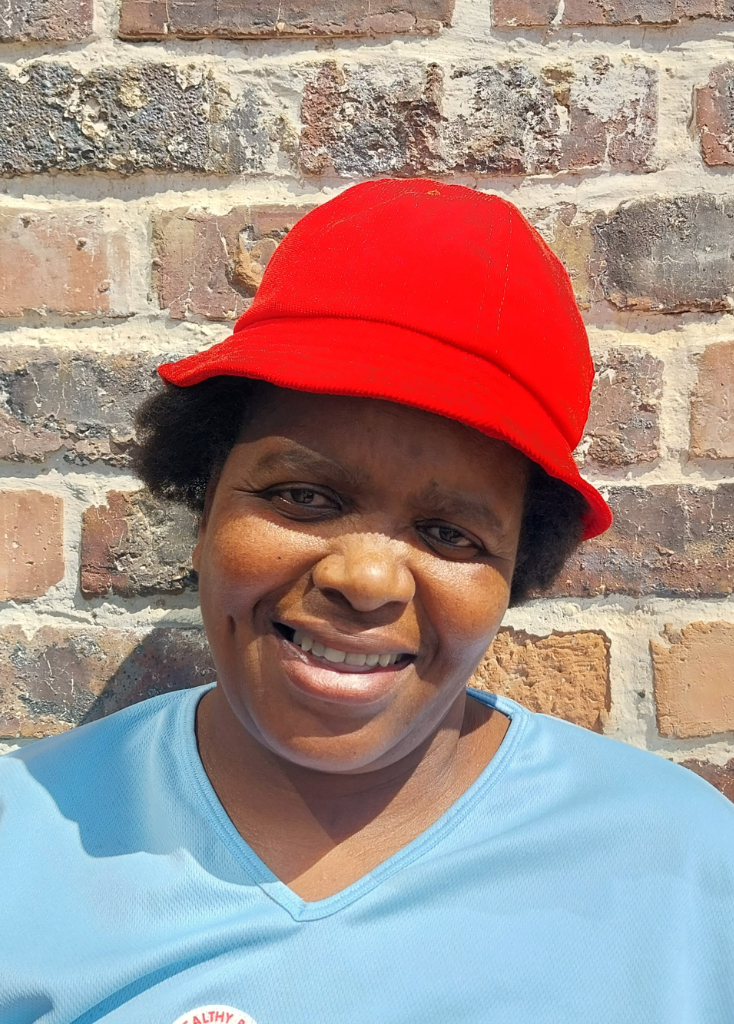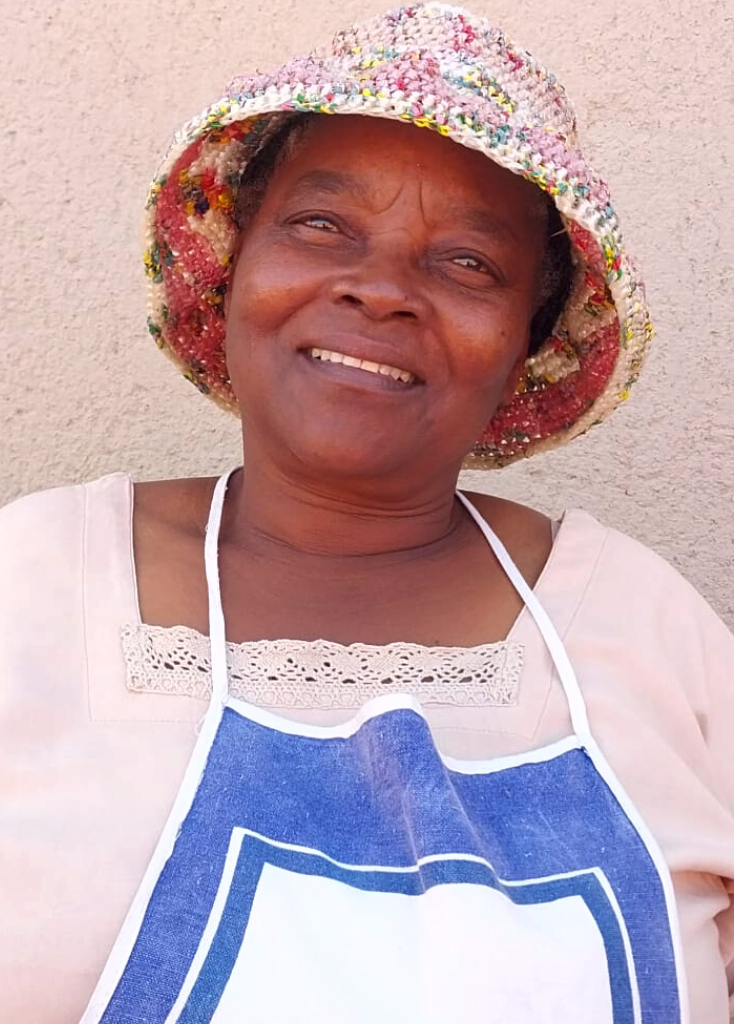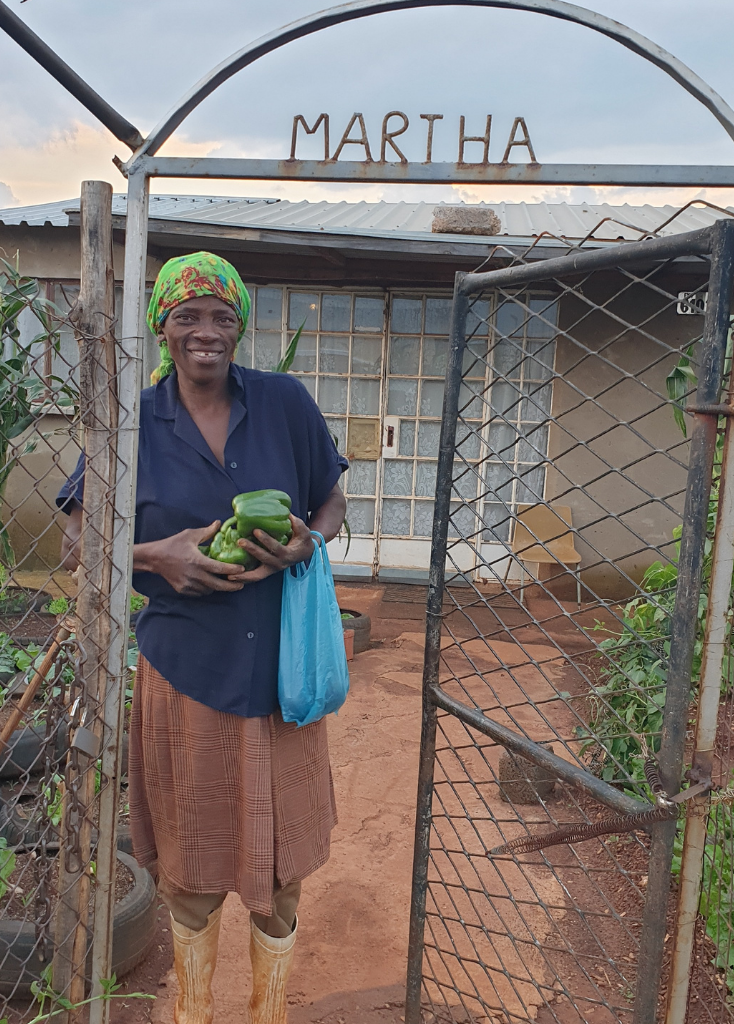
BBL PARTICIPANT: CHRISTINA CHEGO, MOJOKE MATSOGO COOPERATIVE, KEEROM, LIMPOPO
In a Nutshell
Through her participation in SocioTech’s Broad-Based Livelihoods (BBL) strategies to stimulate personal economic activity, Christina Chego from Keerom has rediscovered the value of traditional African foods and the power of creating income from the land.
She says…

I was born on a farm in Roossenekal and came here to Keerom when I got married. My parents were workers on that farm, but they also had a small food garden of their own. As a child I worked alongside my mother to grow our food. I did all the usual child jobs – watering, weeding, scaring birds away, helping to bring in the harvest. In one of our first SocioTech training sessions with Sizwe, we talked about the importance of good nutrition which is something that has been forgotten these days. It reminded me of my childhood, because in those days we grew healthy, traditional, African food. We ate a lot of mabele which I think tastes better than maize or bread. We made lerotse porridge that was so delicious. Sometimes we took the seeds, dried them and ground them up, sifted them and put that powder into the porridge. It was so rich and creamy.
When you stay on a farm and you are far from the shops, you learn to create everything yourself. When I grew up, there was no getting on a taxi and going to the mall. Even today I think that is a foolish thing to do. It is so expensive to go to the mall just to buy ingredients that you can grow at home.
The younger people dismiss that way of life, but, even if they don’t like the taste of those traditional foods, they should realise that there are business opportunities in that old knowledge that we learnt on the farms. Someone told me that in Johannesburg they will pay a lot of money for marula nuts. They are difficult to get out of the pip – you need to hit them with a rock and carefully extract them – but I know how to do it and if there is a market for them, I can definitely do it.
I joined the Mojoke Matsogo Cooperative last year. The name of our group means ‘food from our hands’ which tells you exactly what we do. We are trying to get back to those days of creating our own food with our own hands. We are creating our own income by selling our crops.
I like to sell door to door. I put a basket on my head or push a wheelbarrow full of vegetables. I find it is the best way to learn what the customers want. Sometimes I can make suggestions about how to cook an ingredient and advise people which things to buy together. That helps to make sales. For instance, if someone buys morogo from me, I always ask if they also want onion and tomato. In addition to selling fresh vegetables in season, we are also drying some of the leafy greens so that we can go on selling throughout the winter.
We have big plans for this cooperative and everyone in the group is determined to make it work. It hasn’t been easy. We had a few setbacks last year.
"....if you are far from the shops, you learn to create everything yourself. ...."
We didn’t make the profit that we had hoped for. Looking back, it is easy to see what we did wrong. We began cultivating in May on land that had not been used for more than a decade.
We bought some manure (but not enough) and we planted spinach and onion seedlings. That soil was very poor and those seedlings didn’t thrive. When Sizwe started to teach us about trenches, we dug trenches and planted more mustard spinach in those trenches but by then it was already July. There was a huge difference between the crops in our first beds and the ones we grew in the trenches. So, we learnt a big lesson there. Trenches are the way to go.
There was also a lack of water. We were bringing water from the river in buckets and we couldn’t bring enough. At the beginning of this year, we sat down with Sizwe and he helped us to understand where we had gone wrong. Soil preparation and a lack of water were our main issues. Even though we didn't have much money, we decided the only solution was to buy a pump. We started saving as a group. We each put in R50 a month so that we could buy a pump. A combination of our monthly contributions, the sales we made during December and a donation of R1500 meant that in March we bought our pump.
We dug trenches in good time and we are much better prepared for the winter season. We have made seedlings on time, and transplanted on time. I am hopeful that this season we will be much more successful. We are determined to make a profit from now on.
At the moment, we are only selling to local people, but our plan is to plough in more hectares so that we can start supplying supermarkets. We have applied at Spar to be a supplier. Things have been difficult, but I can see that we are now on the right path.
I believe that God will help us to stand together, working hard. Through Him and using our hands we can succeed.


BBL MyFood
BBL Mentoring & Monitoring
BBL Veg Tunnel self-build
BBL FruitTree Campaign
BBL MyFuture
BBL MyBusiness
BBL MyPoultry
BBL MyLivestock
BBL BusinessBuilders
BBL FoodEconomy
BBL OurMarket
BBL TalentShow
BBL GardenCompetition
BBL YouthSurvey
BBL SportsTournament


- Money management skills: The group learnt to save collectively and manage small monthly contributions, combining their funds with sales and a small donation to purchase a much-needed water pump.
- Business diversification: Christina and her cooperative members now sell both fresh and dried vegetables, extending their income beyond the growing season.
- Improved soil and water management: After poor yields in their first season, they adopted trench gardening and invested in irrigation, dramatically improving their soil quality and crop success.
- Local market development: Christina sells door to door, learning directly from customers and building trust through advice on cooking and product selection.
- Forward planning and growth: The cooperative now prepares seedlings and plants on time, with a long-term goal of expanding production to supply supermarkets like Spar.