BBL PARTICIPANT: OSCAR MADIMOLA, MONSTERLUS, LIMPOPO
In a Nutshell
Through his participation in SocioTech’s Broad-Based Livelihoods (BBL) strategies to stimulate personal economic activity, Oscar Madimola from Monsterlus has turned disappointment into determination. What began as a small family food garden on a reclaimed dumping site has grown into thriving vegetable and poultry businesses. Guided by SocioTech’s mentorship, Oscar rediscovered his love for science through farming - applying research, precision, and planning to grow both crops and confidence. Today, he stands as proof that with faith, knowledge, and teamwork, small beginnings can lead to great harvests.
He says…
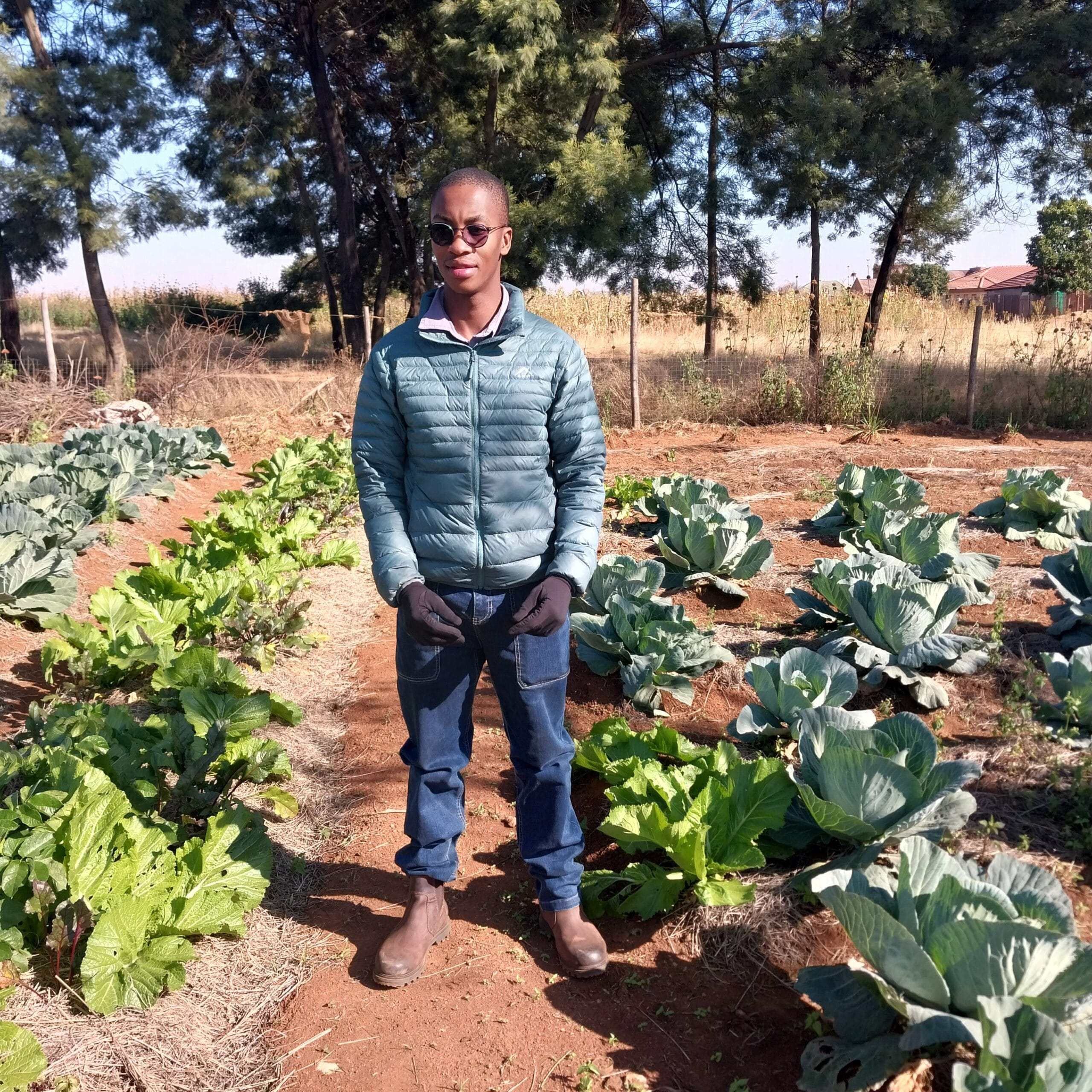
When I was a kid, my dream was to be a scientist. At school, I was good at physics, maths and biology. I liked doing research and applying knowledge to solve problems. I think in a different economy, where there were more bursaries around, I might have done engineering at university, but that is not how things panned out.
Farming found me at a stage in my life when I had tried and tested a lot of things and I had lost sight of my goals. I was feeling hopeless and confused. I had been raised to believe that if you worked hard at school, you would get a good job. That wasn’t happening, so I was finding foolish ways to suppress my disappointment.
For me, Covid was a big wake up call. That was a time when we all learnt what it felt like to sleep without food. It became clear to me that if I was going to improve my circumstances and those of my family, I couldn’t just wait around for things to happen to me. I needed to become proactive.
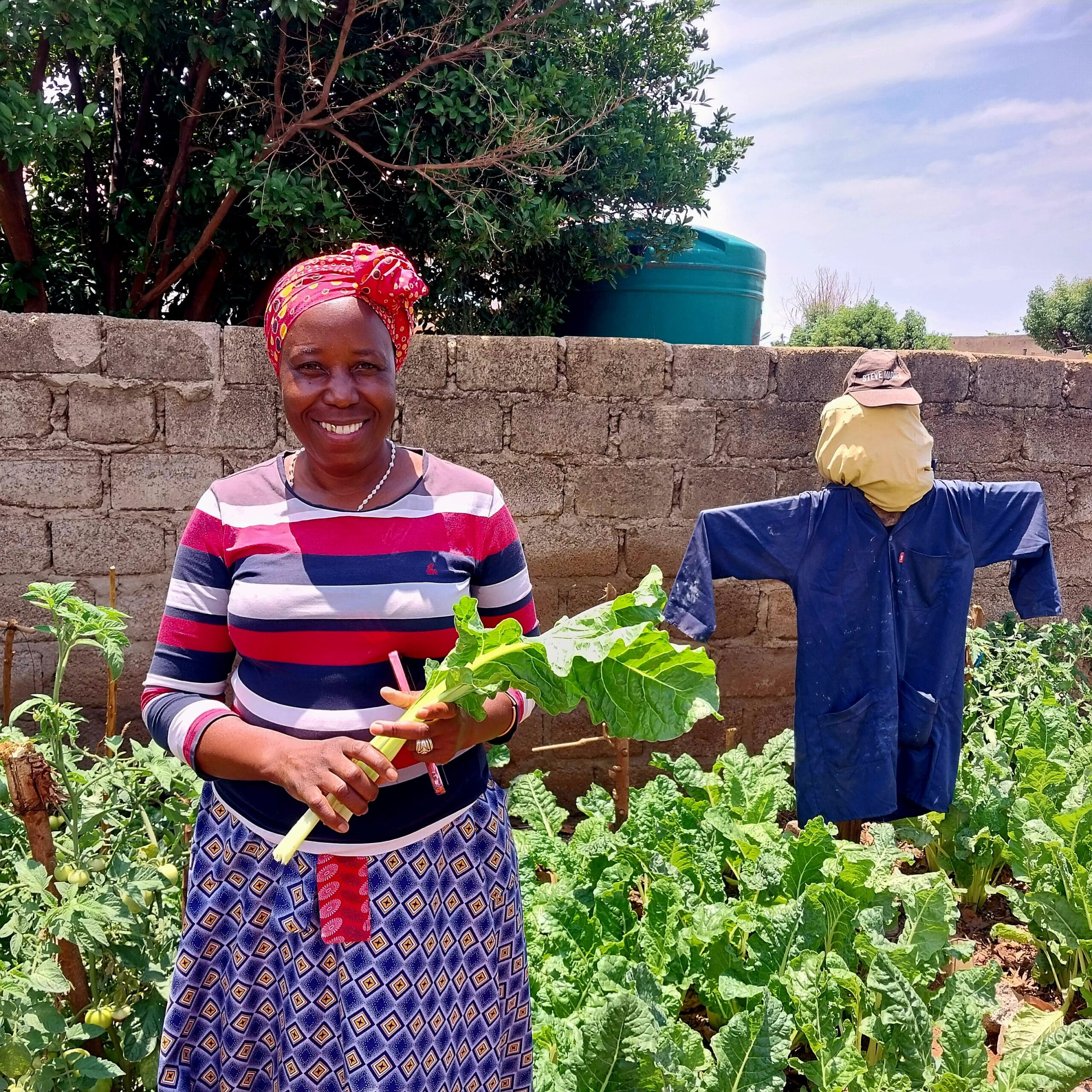
So, I spoke to my mother, sister and cousins and we decided to work as a team. We began by clearing an area of bush that had become a dumping ground in front of our house. Our thinking was that if we cleared all the broken bottles, rotting waste and dirty nappies, we could turn it into a food garden. Getting rid of all that rubbish and cutting back all that grass took a long time. It was hard work (and it was pretty disgusting at times) but once it was done, we planted.
When we started, I was basically clueless about farming. My mum knew a bit more than the rest of us, but none of us had much experience. We just cleared the ground, put seeds into the flat earth and carried water in buckets. Once the crops grew, we set up a small stall in front of the garden and sold tomatoes and spinach to people who walked by. It went okay, but we had so many questions! We didn’t understand why some areas had better yields than others. We weren’t clear about why some thrived, and others struggled.
Long ago, I was at Onane Primary School with Sizwe. About two years after we had started farming, I became aware that he was working for SocioTech and that he was knowledgeable about agriculture, so I called him and asked for advice. He taught us how to improve and protect soil. Very quickly we could see a big difference – with the deep trenches the crops doubled in size. Once we had a planting guide and understood seasonality, we had a much better idea of what we were doing. Crop rotation, intercropping, it all made a big difference.
Since then, we have doubled the amount of land we are working. Our yields are more than double. As the business has grown, my confidence has grown. So much so that I have even started a second garden and also a poultry business – the vegetable business is a family enterprise, but Prescar’s Poultry Farm is a solo enterprise and increasingly my main business.
I feel like both businesses are gradually moving forward out of the micro business stage. We are heading towards small and ultimately large-scale commercial farming. Recently Sizwe and I have been getting serious about calculating yields per square meter with precise distances between plants – that way sales can be predetermined. Square meter planning means that I can know in advance that one ten-meter bed will produce a certain amount of profit. All this allows me to plan and have a clearer sense of what the outcome will be.
The challenge is acquisition of assets. If you want to move from small-scale to medium and medium to large commercial farming, you
"....thank SocioTech and Schoeman Boerdery for the great work...."
need equipment. I feel like this is where the government could help more. I am not talking about handouts, but if we could hire machinery and vehicles at decent rates, that would allow us to grow. The other problem is financing. We don’t have the type of collateral that banks accept, and government funding institutions don’t seem to see the little guys. They seem to think we can’t or won’t ever progress out of being a micro enterprise, so they don’t bother with us. Maybe they are better able to help large scale farmers, but breaking into that space is really difficult. Even on the rare occasions when they might be able to help, their processes take such a long time... You apply now and maybe in five years’ time you might see some results.
If we could get proper veterinary support, that would be a huge help with the chickens. I know that there is the Department of Agriculture but when you phone, it is very hard to get hold of them. They are not very user friendly. Maybe they are good to the bigger guys but for people like us they don’t come out.
I also think that the Department of Agriculture could help to create connections, networks and markets. Networks and mentorship from others in the industry could be really useful. As a smaller player, I would love to know how other farmers do things, and to learn from their experience. Rather than learn from those who work in the Department of Agriculture (who know about things theoretically) I would love to be mentored by the bigger farmers. Learn from those who actually do agriculture on a daily basis. Those who do these things practically - not sit at a desk!
In my own small way, I am setting up those sorts of networks for myself. A group of us young farmers have formed a kind of support group in the Monsterlus area. We share resources, experience and expertise. Nhlanhla has a tractor, I have chickens which means I can help others with manure. If I meet someone who wants to buy in bulk, we can aggregate and supply as a group in a way that we couldn’t do on our own. We are investigating whether we could acquire key pieces of equipment (like a maize thresher, hammer mill, hand tractor, palletising machine and many more) as a group and own it collectively in order to minimise hard labour and time spent on other tasks.
Sizwe from SocioTech motivated my whole family, but especially me. He reminded me of who I am and where my talents lie. Through him I rediscovered the person I used to be – the one that was interested in science and problem solving. Those skills are very useful in my farming life. More and more, as the business grows, I find myself calculating yields, area, distance. I am not a scientist in a white coat the way I imagined it as a kid, but those talents are not wasted.
Lastly, I would like to thank SocioTech and Schoeman Boerdery for the great work they have done and the assistance they provide to small-scale farmers. I feel that there is a bright future with stakeholders of this nature.


BBL MyFood
BBL Mentoring & Monitoring
BBL Veg Tunnel self-build
BBL FruitTree Campaign
BBL MyFuture
BBL MyBusiness
BBL MyPoultry
BBL MyLivestock
BBL BusinessBuilders
BBL FoodEconomy
BBL OurMarket
BBL TalentShow
BBL GardenCompetition
BBL YouthSurvey
BBL SportsTournament


- Money management skills: Oscar now plans his finances with precision, tracking income, expenses, and profit to make informed business decisions.
- Business diversification: He expanded beyond vegetables to establish Prescar’s Poultry Farm, creating multiple income streams for long-term sustainability.
- Increased productivity: With BBL’s soil and trenching techniques, Oscar doubled both his land under cultivation and his yields.
- Community leadership: He co-founded a support group of young farmers in Monsterlus, sharing resources, skills, and market access.
- Scientific problem-solving mindset: Rediscovered his love for science through farming - using data, observation, and calculation to improve production.
- Restored confidence and purpose: Through BBL mentorship, Oscar rebuilt hope and direction, transforming challenges into opportunities for growth.
- Family empowerment: His entire household now works together in the family business, fostering unity, dignity, and self-reliance.