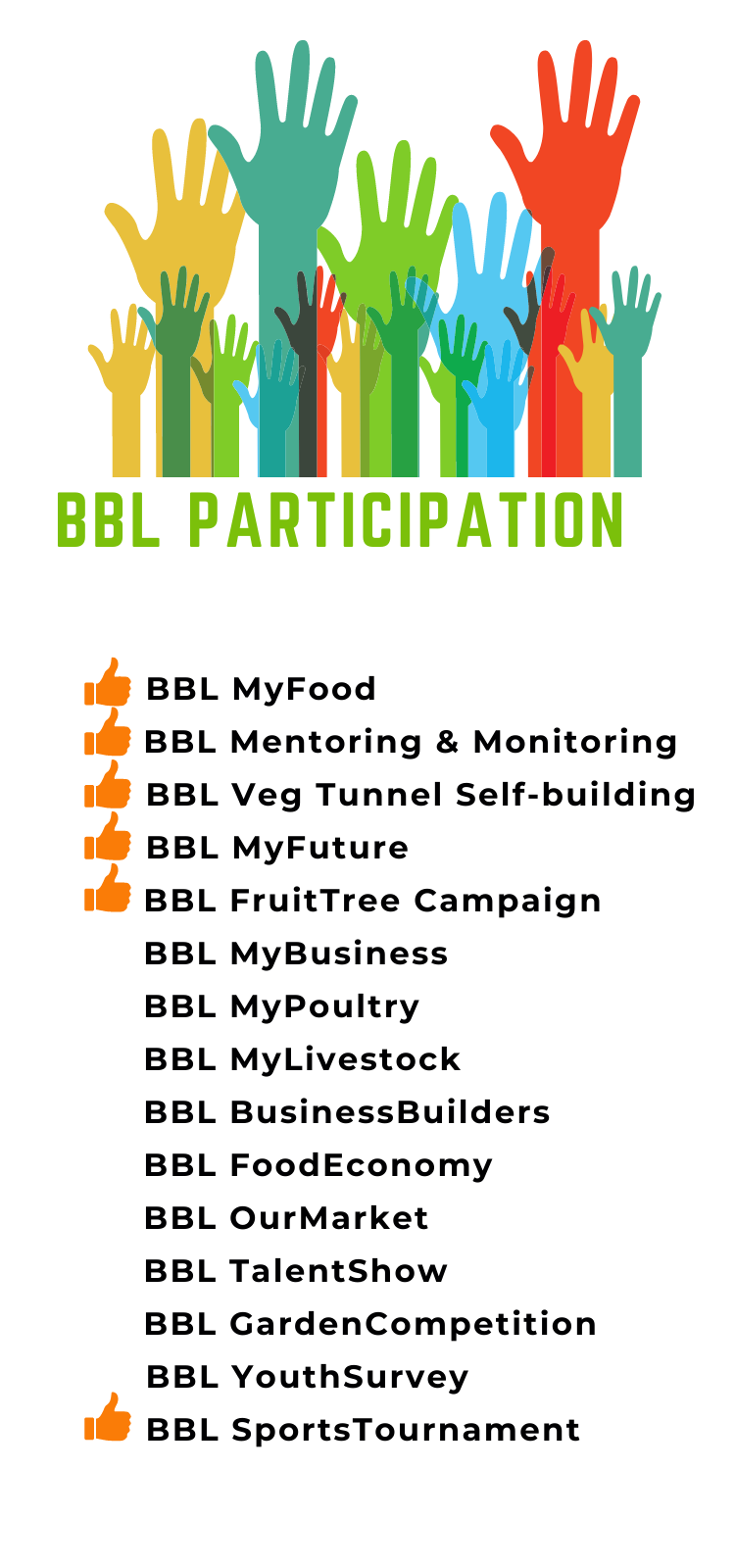
BBL MyFood
BBL Mentoring & Monitoring
BBL Veg Tunnel self-build
BBL FruitTree Campaign
BBL MyFuture
BBL MyBusiness
BBL MyPoultry
BBL MyLivestock
BBL BusinessBuilders
BBL FoodEconomy
BBL OurMarket
BBL TalentShow
BBL GardenCompetition
BBL YouthSurvey
BBL SportsTournament
- Money management skills
- Business diversification
BBL MyFood
BBL Mentoring & Monitoring
BBL Veg Tunnel self-build
BBL FruitTree Campaign
BBL MyFuture
BBL MyBusiness
BBL MyPoultry
BBL MyLivestock
BBL BusinessBuilders
BBL FoodEconomy
BBL OurMarket
BBL TalentShow
BBL GardenCompetition
BBL YouthSurvey
BBL SportsTournament
- Money management skills
- Business diversification
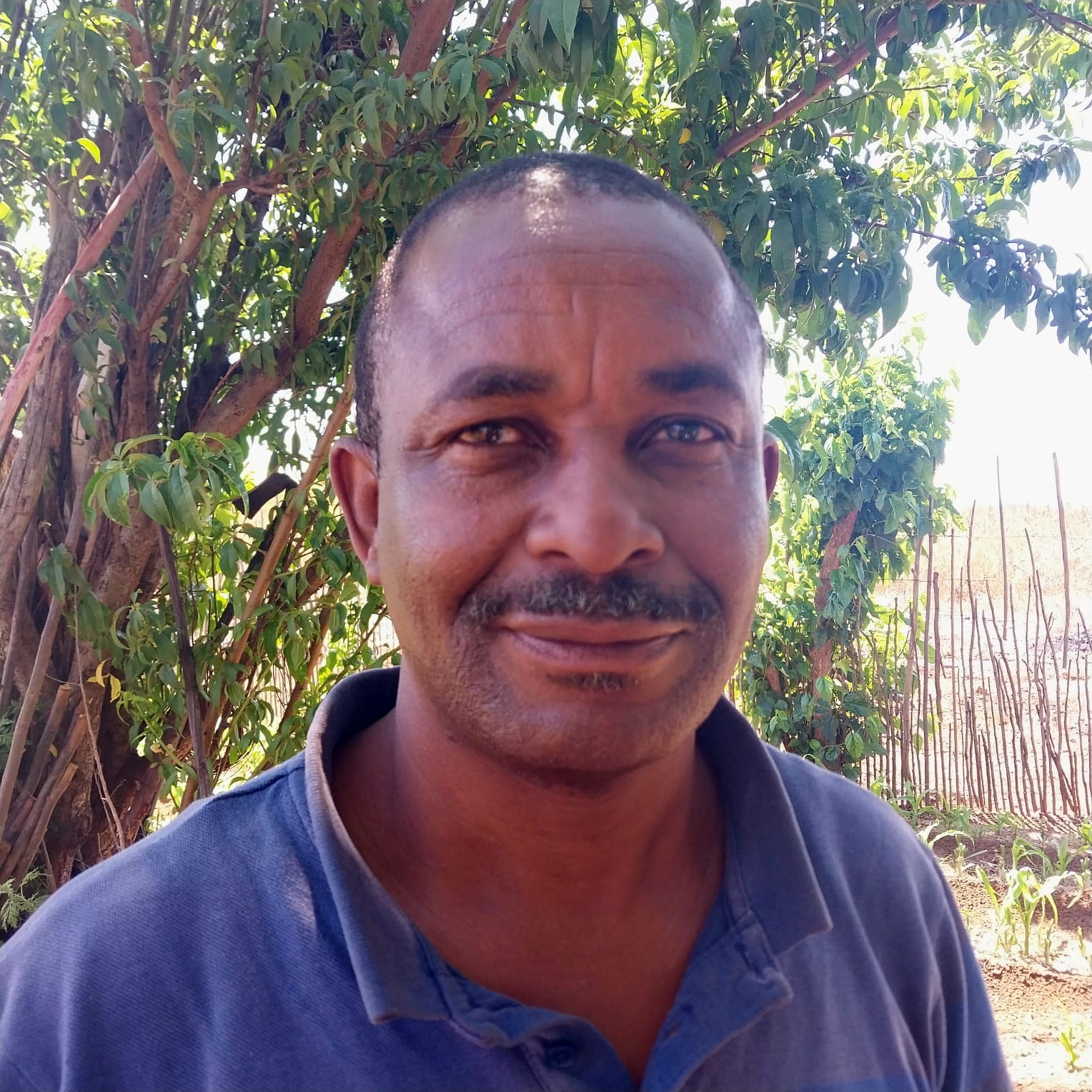
BBL PARTICIPANT: Obakeng Letebele, Tshepisong West, Soweto, Gauteng Province
In a Nutshell
Obakeng Letebele from Tsepisong West has added to his horticultural knowledge through SocioTech’s Broad-Based Livelihoods (BBL) programme. His farming business is flourishing, and his strawberry plants make his children very happy.
He says…
I was born in Disaneng, a settlement outside Mahikeng. All the boys at my school did agriculture. Our teacher was Mr Sejake. He was strict but fair. He wanted things done nicely and he wouldn’t settle for less. He would help you to get it right, but if it wasn’t right he would make you do it again and again until it was right. I liked his style. I liked agriculture. I liked that it gave us things to eat, but I also liked how it made me feel. There is a nice calm that comes over a person when they are working the soil. It is a peaceful place to be.
I wasn’t with Mr Sejake very long, because I left school in Standard Two. I went to herd cows. It was in the fields with those cows that I learnt about all the edible wild plants and animals that there are in South Africa. We herd boys would catch small birds with catapults. We set traps for bigger, ground dwelling birds such as impangele (guinea fowl). The little birds we would roast over a fire. Guinea fowl were so nice slowly cooked in a pot.
I came to Gauteng in 2000. I got work as a security guard and I still work in that industry. From the beginning I had a food garden, and I worked at it when I was not on shift. In the old days it was just for me and my family to eat, but now that I have surplus, it has become a business. SocioTech training made a big difference to me. They taught me about trenches, mulching, manure and seasonality. I was very enthusiastic right from the start. I met Charles on the Monday. On Tuesday I went to a training class. I was working Wednesday and Thursday, but on the Friday I was digging my trenches. I did it all by myself. I didn’t have any help. On that Saturday I finished digging at 3pm and I went straight out to collect tins and bones for my trenches.
I could see that this new SocioTech system was working well almost immediately. From the moment that I saw the onion seedlings growing big and strong I knew the method was good. Now I have spinach, tomatoes, onions, chilies, lettuce, cucumber and strawberries. Very quickly, people who were walking past started to notice that the garden was lovely. Like I said, in the old days, my garden was just for my family.
"....applying the SocioTech methods, I can achieve..."
I didn’t consciously start selling, it was just that people started to ask me if they could buy. It all happened so fast that I didn’t record any of those sales. I just put the money in my pocket and used it to buy things I needed. I have now done the MyFuture and the MyBusiness training and I do plan to record going forward. The problem with doing business around here is that everyone wants something for nothing. Mahala. Mahala. Mahala. I say no, but they keep asking. I have to keep strong about ensuring that people pay, because that is the way to business success. I have a dream of going home to the Northwest and that will never happen if I don’t budget and save. My dream is to own a big farm – I think 20 hectares – where I can look after my late father’s cattle, keep goats, have fields full of mielies. I want to be an employer having workers to help me expand my business. If I keep focused and keep applying the SocioTech methods, I can achieve this dream.
I have 5 children. They are 28, 27, 22, 14 and 3 years old. The 22-year-old has a job as a security guard in the Magaliesburg, but the rest are not working. They don’t like to garden. Occasionally they will help with selling but not a lot. Mostly they sit at home or sleep. They like to eat my strawberries. Especially my 14-year-old who always says ‘papa I need strawberries’.
The tunnel came at the end of August. It has made a big difference. Weather around here can be very harsh. The hot, hot sun and the hail. The pests – especially rabbits coming at night to eat the strawberries. You can really see the difference. Plants outside the tunnel grow less well than those inside. This tunnel of mine has allowed the hard work I do to be shown to its full extent.


BBL PARTICIPANT: Jacob Hlongwane, Tshepisong West, Soweto, Gauteng
In a Nutshell
Jacob Hlongwane from Tshepisong West, Soweto, has learnt about soil improvement and is planning for a future in food gardening.
He says…

This is
I come from Giyani in Limpopo and my family were subsistence farmers - mostly pumpkins and maize. As a child, I observed their planting but I was born disabled and so I couldn’t help work the land very much. Occasionally bird scaring but that was it.
In 2003 I came to Gauteng to complete my matric, after which I started a business studies course at South West College in Krugersdorp. That is how I ended up in this part of the world. After two years, I had to drop out because of a lack of finances but I liked the place, so I stayed in the area. In 2007, I asked the councillor for a stand which is when this land that is now my home was allocated to me.
There are many good things about this place. My children were born here. I have good friends here. On weekends we go to Kaizer Chiefs games together. My friend Justice spent his holidays helping me to dig my trenches – he had his own work to do but he took time out to help me.
I am not saying that things are perfect. One of the big challenges is the lack of tarred roads. When there are water leakages or heavy rains the roads get muddy. This wheelchair that I am using is not battery operated so I have to use my hands to push the wheels. Sometimes I don’t know what is in the mud and that is very unpleasant on my hands. I did have a battery powered wheelchair, but the batteries have been recharged so many times that they are now beyond recharging. I took it to the repair shop, but they say it can’t be done. I was quoted R4000 for new batteries so I am stuck using my hands until I can save that money.
I know that there are challenges in my life, but I can’t let them stop me from making progress. I am a husband and a father. I have responsibilities. My children need me to earn a living. I saw my friend farming and I asked him about it. He told me about SocioTech, so I went to the training. So far, I have done MyFood, MyFuture and MyBusiness. I took the training seriously and I have learnt many things. I loved all the new information.
In terms of the MyFood I was very interested in the health information. As a father, I want to ensure that my kids eat right. I keep and sell chickens – people buy these traditional chickens that I have for their ceremonies - but I never sell the eggs, because my little boys love eggs.
"....that won't be a problem for me."
All the eggs belong to my boys. I lived on my own for a long time before I married, so I can cook – simple things, but delicious things. I know that my wife will probably go on doing most of the cooking, but I am really looking forward to having more fresh vegetables and being able to follow The Food Robot teachings. Everyone in this community deserves easy access to vegetables, but for me, with my mobility issues, the change in my life is especially great. Getting to the supermarket from here is expensive and time consuming. Soon that won’t be a problem for me.
The information in MyFuture and MyBusiness is easier for me to apply directly than those teachings that require digging and mobility. I was impressed by the emphasis on taking responsibility for our own actions. It is important to stand up for myself. The money management training was very useful. How to sell. What to sell. How to save and budget.
I can’t physically dig trenches, collect tins or bones and my sons are still too young (11 and 3 years old) to help, so I had to employ an older boy to dig for me. It is an investment, but I know that once the trench soil is rich and fertile, it will last for a long time. Maybe as long as ten years – by which time both my boys will be big and strong enough to dig for me. Once my 3 trenches are complete, I hope to receive a SocioTech vegetable tunnel. The practical information on what to plant and when to plant was new to me.
I have been thinking about how I could be more hands on involved with the farming. I recently saw raised beds on the internet. If they were at the height of my chair, I could do more of the work myself. They could be layered with bones and tins and grass in the same way as the SocioTech deep trenches. I was wondering if perhaps farming inside old bathtubs might work as a raised bed for me. I was also wondering if there was a business opportunity in making raised beds. Not only for farmers in wheelchairs but also for elderly people with bad backs and painful knees. Perhaps SocioTech could train us how to make raised beds? That’s the thing about the SocioTech training, once you have got the right mindset, you start to see business opportunities everywhere.


BBL PARTICIPANT: Pimville Farmers, Soweto, Gauteng
In a Nutshell
Through their participation in SocioTech’s Broad-Based Livelihoods (BBL) strategies to stimulate personal economic activity, the Pimville Farmers from Soweto discovered shared values and aspirations, and respectfully crafted a mutually supportive alliance. Through their BBL Circle of Friends, they support each other with knowledge sharing, and pull together when hard work is needed in their respective gardens.
Their plan is to jointly fill big orders for large customers. They also share a passion to help youth to discover the power of self-reliance so that they too can carve out their own independent and successful futures.
They say…
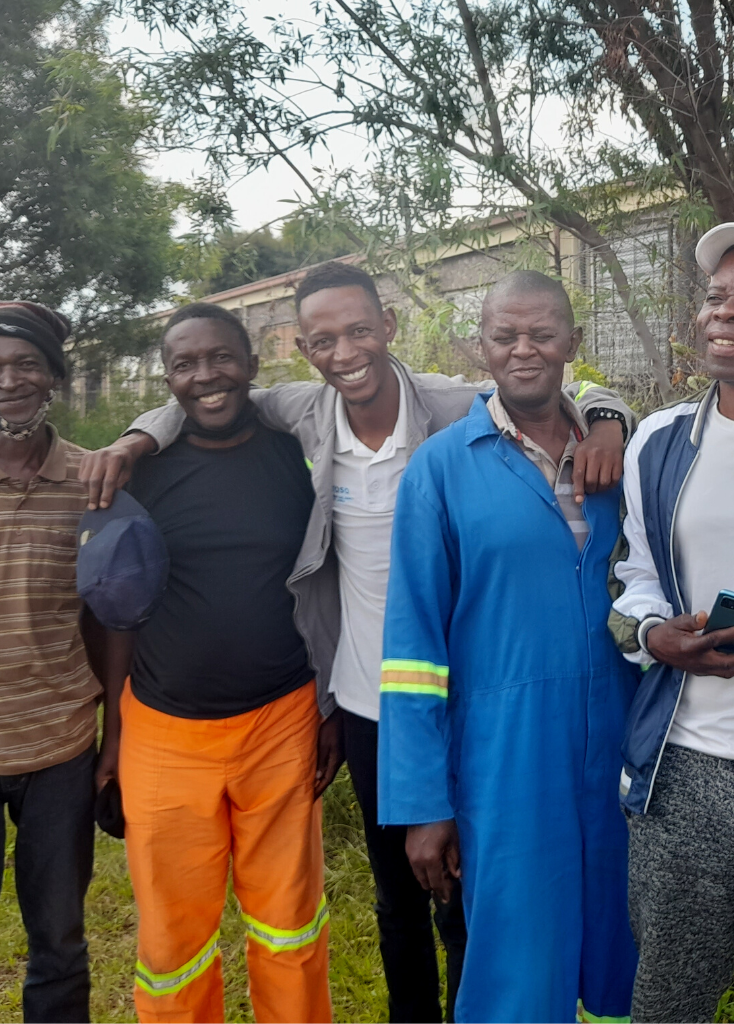
WHO WE ARE
Oupa Ramaila: “Pimville Farmers is made up of seven men. We work as a team but we are not a registered cooperative. We all did the same SocioTech BBL MyFood training session in 2021. Some of us knew each other before that and others not, but through that course we discovered that we have similar outlooks on life and shared goals.”
Dumisani Luvuno: “We lease and work across 3 school garden plots in the Pimville area and since doing the SocioTech course we farm in very similar ways so our needs are similar. It makes sense for us to work as a unit to support each other. So, that is what we do.”
Arnold Masuku: “What happens is that we come together to assist each other with the hard work stages that require significant labour. Things like digging trenches or collecting bones and cans. We have also come up with a plan to share resources like tools and use our brains together to deal with problems like pests.”
Albert Nkutha: “And, hopefully, working together will allow us to fill big orders for large customers.”
Sizwe Mahlambi: “Each of us wishes for a piece of land and peace of mind. We all have that dream of land we can live off, but we see that together we are stronger and more able to move forward towards that dream.”
WHAT MAKES OUR TEAM WORK WELL?
Wandile Madibane: “I think the arrangement works well because we have a shared understanding of how to behave and treat each other. We are careful to go forward with respect at all times. Respect for what we do and the people we do it with. Respect for the earth and the plants we work with. That is what we are all about.”
Oupa: “Group dynamics (in any sphere of life) are complicated, but I think the fact that we all bring distinct skills and distinct life experiences, but a shared love of farming, helps a lot. We value every contribution. We see that together we are a stronger team than any of us would be alone. There is a generous willingness to share knowledge and skills between us – for instance, this man (points to Albert Nkutha) he is my professor. Our plant leader. Each time I am with him, I learn something from him.”
Sizwe: “We don’t step on each other’s toes. We address each other respectfully. We recognize each individual and each position.”
Albert: “We have a shared passion for farming. We were all food gardening long before we formed this group. Most of us had been farming since childhood. It is something that we think of first thing in the morning and last thing at night. I think if we were suddenly all millionaires tomorrow we would all still be gardening. Watching those seedlings is in our souls and we recognize that quality in each other. That is why our alliance works so well.”
Oupa: “I think another thing that holds us together is our shared interest in seeing this community work. There are lots of problems in this area but there is also a lot of potential. In our own capacities we each of us gives our time and our skills to supporting various groups and schools in our area. In most cases that is how we met. We were all doing those things long before we decided to join forces and it is part of how we see our work going forward. Helping others is part of who we are.”
Dumisani: “We are also all greedy for knowledge and eager to learn. The more you learn, the more you produce and the more you produce the more you can help others. Like the birds for instance – we are all very aware of how much we are losing to them. Early in the morning and in the late afternoon especially. I think they wait for us to go home and then they strike. We are all wanting to learn more about how to control that issue as a matter of urgency. The other area I want to learn about is natural pest control. And natural soil improvers. Green manure. Fermented black jacks and so forth.”
Arnold: “I think we also have a similar attitude to work. It is all about looking at what we have and not what we don’t have. For instance - the schools have also been very generous to us. Thanks to them we have very low overhead costs. We have been given a lot of tins from the school feeding scheme which will improve our trenches. Those are all blessings. There is a potential to make profits with this set-up”
"Helping others is part of who we are. "

WE WANT TO BE INVOLVED IN EDUCATING THE YOUTH OF PIMVILLE; about farming, about business, about God.
Albert: “If everything goes according to plan, so that in five years’ time we all have places of our own and flourishing farming businesses, I would still see this school garden place as a training farm to build the kind of knowledge and behaviour we need to see in the next generation. Not just farming knowledge but more general knowledge about life can come from working in a food garden. “
Learning about business
Oupa: “Like I said, there is a shared commitment to community development amongst us. Being on the school grounds is part of that giving back ethos. We need to educate children to believe that they can shape and control their own lives but they need to understand that to do so requires hard work, commitment and patience. Farming is a very clear example that if you put in the work, you can sustain yourself. They don’t understand that, these youngsters. They want to earn quick money in a job. They don’t think of sustaining themselves through business that they start themselves. They don’t understand this yet, but we are working on a plan. I see this as a place of training. The teachers are very open to that idea.”
Albert: “Even if the students don’t stay in farming, the skills they could learn in a food garden would help them learn about doing business. I still remember my pride the first time I sold vegetables that I had grown myself. I grew up in Daggakraal, Mpumalanga and I don’t remember a time before I had my own vegetable patch. By the time I was 12, it was doing so well that a local shop owner (Mr Sangweni – we all called him Sportsman because he loved sport) who was the richest man I knew, came to my parents and said “I want to buy this little boy’s entire crop.” Before it was even ready to harvest, I had sold the lot. Of course all the money went to my parents, but I was so proud to helping my family.”
Learning about God’s love
Sizwe: “Working with vegetables is also a way for the children to discover God’s love. When I was a child, I grew up with my grand-mother and she gave me a few bean seeds to garden with, but I threw them away. But the amazing thing was that they grew anyway and my grandmother said to me: “You see. Look at that. It is growing even though you threw it away.” And I was really inspired by that. I see that as a sign of God’s love. He never throws us away. That is a message that all our children need to hear.”
Learning how to manage mental health
Wandile: “My dad taught me that gardens are sensitive to emotions. If you come to the garden angry, the plants can tell. They are like children. If you approach them in anger they wither and die. That feeling that the plants can feel your feelings puts control into what you do. You can’t give in to negative emotions while you are working with plants.”
Sizwe: “Gardening is like medicine. It heals troubled minds. You don’t take your distress into that space. In a complicated world, it makes structure.”
FUTURE PLANS
Oupa: Like Mr Masuku said, it is all about seeing what we have; not what we don’t have and using that to plot the way forward. There are a lot of possibilities here and a real potential to make good profits. The Soweto Hotel is right around the corner and they need flowers for the rooms and reception so we are looking into the possibility of cut flowers. Funeral services too.
Wandile: “Flowers and herbs are also important for health so perhaps that is something to explore. I remember as a child my grandmother planted flowers and herbs and when I was sick she would be straight into her garden searching for the right mix. She would mix it up and the taste was terrible, but it worked! That, I think, was my first inspiration and I think that same feeling is true for a lot of people round here. Beauty products too – oils with herbs in and the like. It also seems like we should be working with what comes to us free – there is thepe and other traditional plants all around this area. If we were picking it and drying it to sell as morogo, or even just turning it into green manure, that would be a good use of our resources.”
Arnold: “This group is quite new. It is just like a small child that must grow and, like any child, it will cry and even sometimes be full of nonsense but you know as a father what you hope for that child. We have all started this group as kids but our vision for maturation is there.“
(absent on the day: Vusi Nene).
"... it's all about seeing what you have; not what you don't have."
BBL PARTICIPANT: Mooketsi (Max) Nkwana, Soweto, Gauteng Province
In a Nutshell
Through his participation in SocioTech’s Broad-Based Livelihoods (BBL) strategies to stimulate personal economic activity, Mooketsi (Max) Nkwana from Soweto has learnt the skills to become a successful urban farmer.
His excellent record-keeping skills convinced the judges to award him a tender to manage an aquaponics business with his partners. He continues to train many others and donates seedlings to local schools.
He says…
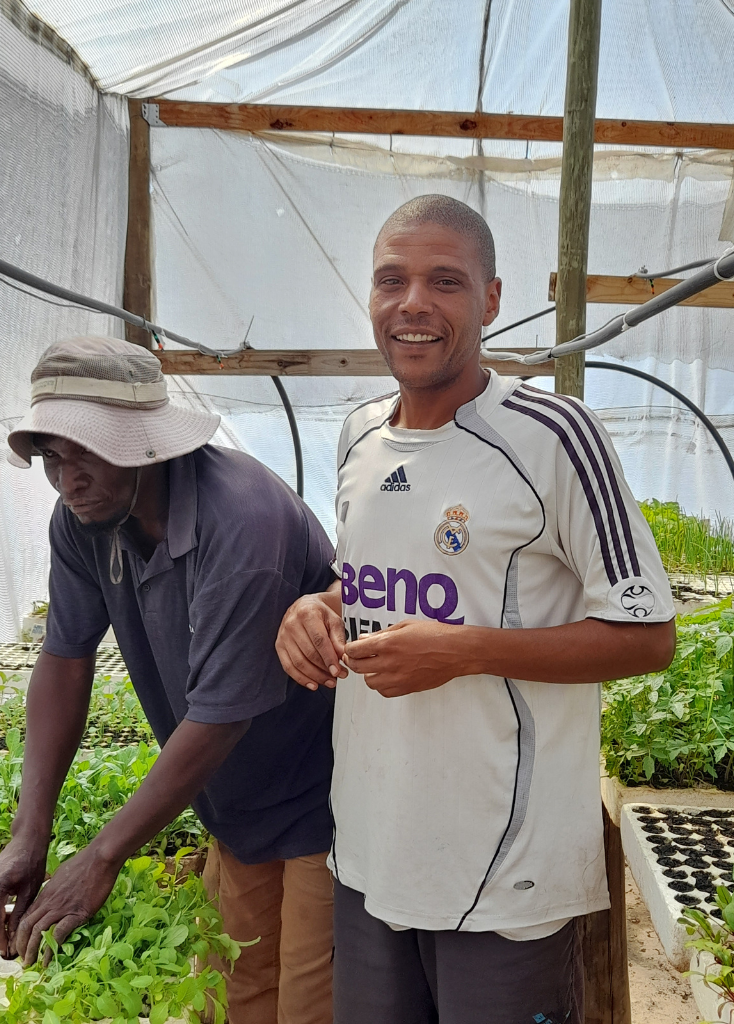
I grew up in Meadowlands, Soweto with my grandparents - both of whom were avid gardeners. When you are a kid, you watch and (most of the time) you do what you’re told, and the knowledge is absorbed in that way. You learn by doing and you don’t realize it’s happening. It’s like learning to walk. Once you know how to do it, it is always there with you, and you take it for granted. You don’t think about it because it is just part of who you are.
My grandparents used to have a little food garden. They had that classic maize and pumpkin and bean Three Sisters interplanting arrangement. My grandfather also worked as a gardener in the suburbs, so he would bring home cuttings of all those fancy flowers and plant them. Our garden was always so bright and beautiful.
In addition to that Soweto gardening, I also used to spend school holidays with relatives in the North West. My family are originally from a little settlement between Hebron and Letlhabile called Kgabalatsane. It was there that I learnt those old-time skills like seed saving (mielies and even watermelons).
As an adult, I didn’t start off working in farming – I worked for SAA and COMAIR as part of the cabin crew for a long time, but I got frustrated by the lack of opportunities for professional growth. When I stopped flying, I coached kids’ soccer. Because I was at the schools coaching, I became aware of opportunities to farm on land set aside for school vegetable gardens. I hadn’t worked with plants and soil for years but, like I say, all that knowledge comes back.
It was while I was running the food garden at Tsietsi Masinini Primary School that I met the people from SocioTech and Umsizi. Through them I did the MyFood and MyFuture training. Later I did the MyBusiness training too. I started going to farmers’ meetings in the township and over time I met like-minded people. I knew I wanted to work collectively, so I went about choosing farming partners much as I did when I picked a soccer team as a coach. You look for talent but also commitment and stamina.
Together we registered as a cooperative in 2018. Working within a cooperative is not always easy but we are careful and respectful with our interpersonal relationships, and we talk through and resolve any difficulties that come up along the way. Group dynamics can be hard. Lots of coops die, but ours has survived because we are a good team with a nice mix of skills, personalities, and ages. There are 6 of us. 5 men, 1 woman. I think one of our strengths is our mix of old and young people. The youngest member of the cooperative was born 1990 and oldest 1955. The funny thing is that our 1955 member is the person who works the hardest out of all of us! So, we went as a team to the Kwa Phalo Primary and asked for a lease to farm on their land. We ran the Kwa Phalo garden as a business and an education project. We sold vegetables, but we also taught the kids how to plant, and donated food to the school. We won all sorts of trophies through organizations like EduPlant. In 2019 we won the Food and Trees for Africa Gauteng’s Best School Garden competition, which is sponsored by Tiger Brands.
We did the SocioTech MyBusiness training as a group and it has been such a solid foundation for us. It gave us the base in bookkeeping and data collection that we needed to be ready and able to take on our next challenge. That challenge was aquaponics. We heard about an opportunity sponsored by Mondelēz International Foundation whereby they wanted to train Soweto farmers to run an aquaponics system. Our cooperative saw it as an opportunity to expand our business and our skills set, so we applied. A lot of other people also applied but because we had the SocioTech templates and had been keeping such meticulous records we could show the funders that we had the skills and the knowhow to do the job. When the people from Mondelez came to interview us and said: “Can we see your records?” a lot of other people had a problem, but our records were all there. Because we were using those SocioTech templates they could see exactly where we were at with our business. We were the successful applicants.

"Our Cooperative has several income streams."
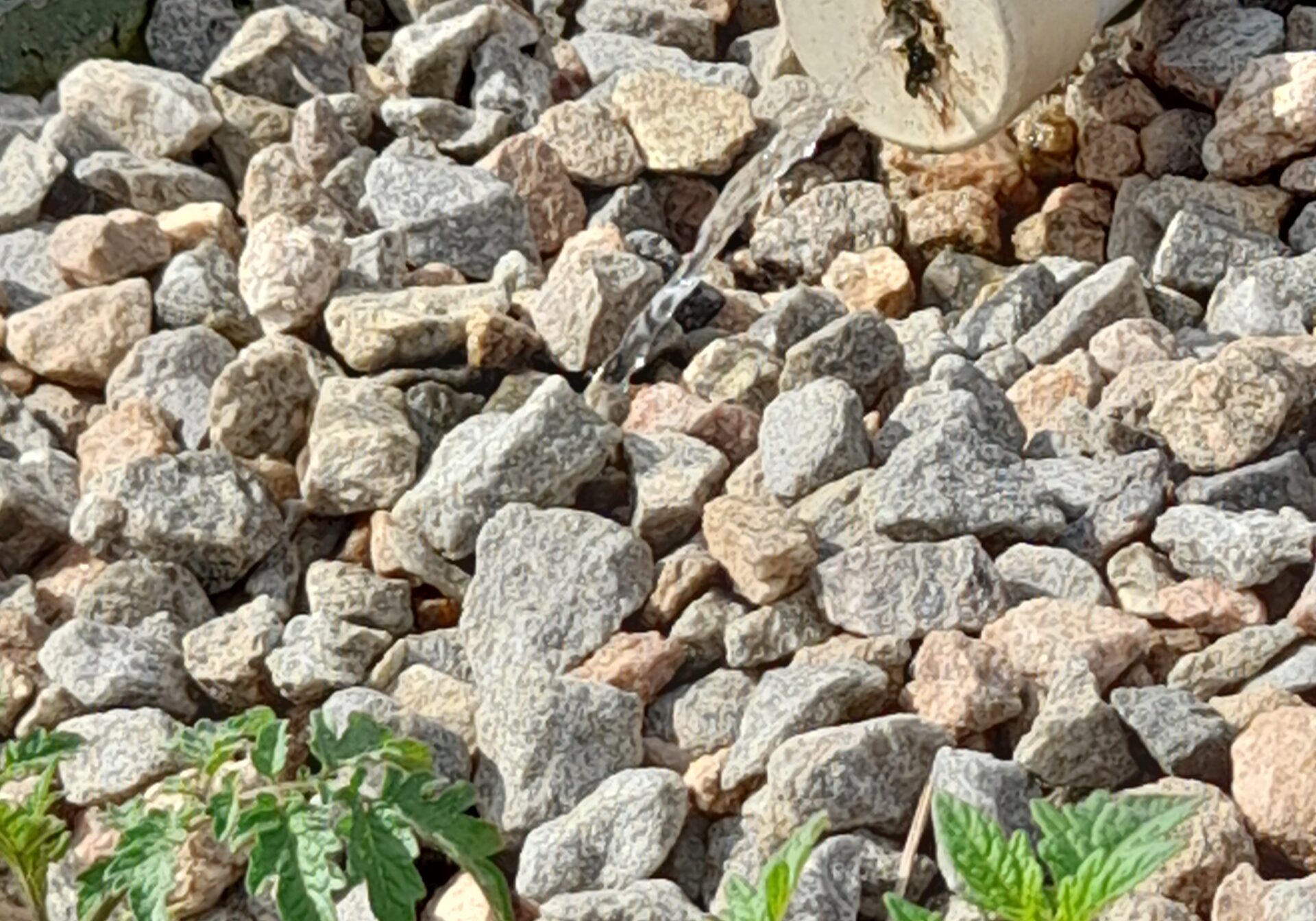
In an aquaponics system, water from fish tanks is fed into plant grow beds and the fish waste is converted into nutrient-rich food that the plants absorb. The plants then provide a natural filter to purify the water, and this brings clean water back into the fish tanks. As a result, aquaponics uses about 90% less water than traditional farming methods and is much better for the environment.
We run our system completely off the grid using solar power to generate energy. Which is great but not without challenges. This is not always an easy community to work in. There is lots of crime – our first solar panels got stolen. After that we upped our security and told the funders that we would replace the panels ourselves because we didn’t want charity. I was so angry with those thieves. I know that people are poor and, if they were stealing cabbages I would understand, but it is never cabbages people steal…
It has been quite a steep learning curve. None of our group had worked with fish before. We had problems with the tilapia fish that we initially put into the tanks. Now we have catfish and it is all going much better. We have the 2 tunnels – (one for fish, one for plants). There are 10 growing beds and 5 tanks. Each tank supplies 2 growing beds. Each of these tanks has 4000 litres of water and there are 400 fish per tank. So, that is a big responsibility.
The plant tunnel currently has tomato, lettuce and brinjals. There are also the wild plants around the edge of the property. You see this thepe that grows all around the fences? Old people in the community come and collect it to eat as morogo but once it flowers the leaves are too bitter for human consumption. When that happens, we also use it to create liquid manure (it’s full of nutrients) and it works well as part of a brew with garlic and chili and sunlight soap to keep insects away. You let the plant tea sit for about 48 hours and then sieve it, dilute it and spray the mix on the plants.
Our cooperative has several income streams. We are selling vegetables to locals in the community for domestic use. The elderly support us most, because they know about good, healthy eating. Unlike young people who eat a lot of junk food, our elders still know the right ways. We also sell vegetables to hawkers. We have started to sell seedlings too. People were always asking us to sell them seedlings, so we saw it was a gap in the market and it has turned into quite good business.
So far, we haven’t managed to get regular contracts with restaurants, but that is where we would like to be heading, business wise. As I see it, we could plant specifically for them whatever they wanted. So, for instance, if a chef told us he wants heritage plants, we could do that. We are also trying to design and develop a small aquaponic system that we could sell to other people. At the moment we have made a prototype and it works well, but we are still costing it out. It is made using repurposed drums from a cattle feedlot and a few pipes that we bought from Cashbuild. It sounds strange, but it works.

One of our key challenges is learning how to make the catfish fish market profitable. A lot of older South Africans are very suspicious of all fish. And even young South Africans (who know about going to restaurants and having the seafood platter) are unfamiliar with eating catfish. We need to find ways to connect with the people who love catfish. West and Central African communities have a history of eating catfish, so they are the market we plan to target. It is all about making the right connections.
I love teaching and I see it as an important part of what we do. Across the road from us there is the Golden Ark after-school programme for the children who attend the Vezokuhle Primary School. We have helped them to start a garden, we teach the kids and sponsor seedlings. Working with children has to be the way to create a better tomorrow. Teaching food gardening a key part of the fight against poverty.
My motto is food gardens rather than food parcels. Parcels you eat today, and they are gone tomorrow. Gardening skills are forever. It is not just the fight against poverty. It is also about health. Fish and vegetables are so much better for you than kotas and chips.
The funders of this aquaponics project have been very clear, we are here to learn and then move on in order to give others a chance to learn. Our cooperative is determined to make the most of this opportunity so that when our time is up, we can be ready to take the next step into mainstream commercial fish farming.
BBL PARTICIPANT: Esther Mabotja, Khaukelo, Naledi, Soweto
In a Nutshell
Through her participation in SocioTech’s Broad-Based Livelihoods (BBL) strategies to stimulate personal economic activity, Esther Mabotja from Naledi has gained the skills to provide food for her family. Her small business selling vegetables is gaining momentum and she has a five-year plan in place.
She says…
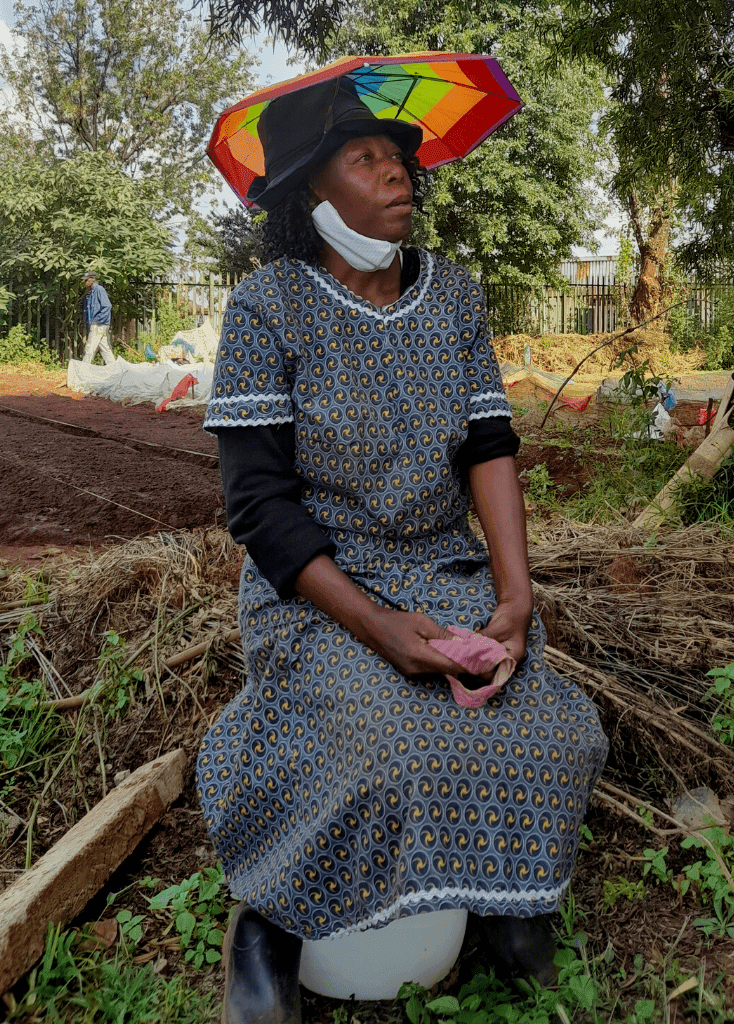
Through the seed and the soil, I see the power of God. When you put a seed in the ground and it first puts up a shoot that is like God showing himself. And then, as that plant grows into a vegetable or a fruit, you can eat it or sell it which I see as a manifestation of God’s love. He supports you through that plant. The nature of that support is potentially endless. Inside each pumpkin are the seeds to make at least 10 more pumpkins. And that cycle can go on forever. All the doctors at the clinic say that eating fresh vegetables is important for health, so that is another way that the support from a garden shows itself.
Skill and hard work are also part of what you need. I met Jabu Hlongwane from SocioTech at the end of 2019. Right from the start the people doing the training were so kind and supportive. Through Jabu I learnt about trenches filled with bones and tins and this has made my crop yields improve. Before, I just dug and poured water and hoped. I didn’t realize I was throwing money away.
At first, I was working in a cooperative group but that didn’t suit me. I am not judging anyone else and how they like to work. All I am saying is that for me there is a wonderful freedom that comes from being able to rely on my own efforts. I prefer knowing what has been done and not done, because I did it or didn’t do it. I can focus on what I am doing and not doubt myself or my garden output. I find it much less stressful because there are no personal politics to deal with. You just work at your own pace.
"Slowly but surely, I think it is coming together."
I have been in this new space for about 5 months now. I have set up 12 trench beds and I am beginning to see my efforts coming together. I am starting to be able to sell. I have spinach and onions and tomatoes ready for sale. Also next to my beds, there is a huge patch of thepe that grew wild. I have been picking that and selling it for R20 per Checkers packet. It is a wonderful plant. The more you pick, it the more it grows. It is a wild, generous gift from God.
Through BBL I have been working to create a five-year plan. I hope to slowly but surely expand my business, and Mohale Matsuma have been encouraging me. I am already having customers come to the garden and I do deliveries for people who are close by. I also intend to start a small stall outside my house to sell my produce. Over time, I want to get to the point where I can supply big shops. Slowly but surely, I think it is coming together. Every day this garden helps me to understand my relationship with God and the plans he has for me.
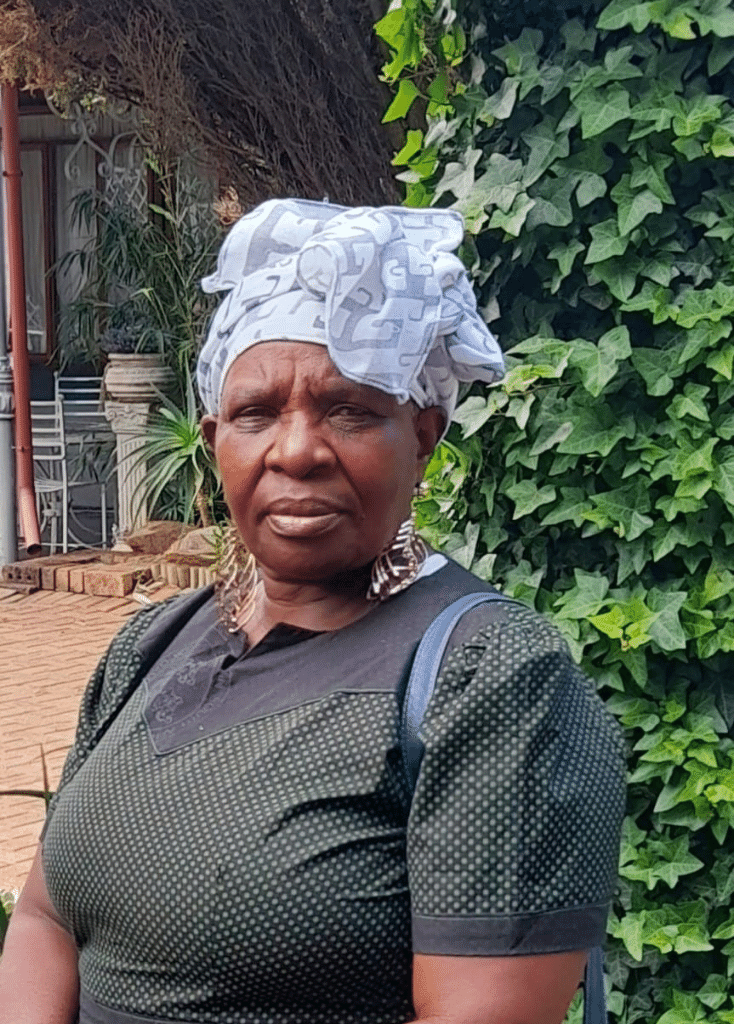
BBL PARTICIPANT: Zoliswa Malata, Diepsloot, Soweto, Gauteng - MamZoli
In a Nutshell
Through her participation in SocioTech’s Broad-Based Livelihoods (BBL) strategies to stimulate personal economic activity, Zoliswa Malata learnt the skills to become a successful urban farmer. She donates 10% of her harvest to needy children.
In 2021, MamZoli joined SocioTech on a trip of a lifetime to Pofadder area in Northern Cape, where she inspired the BBL communities there as an excellent judge in their BBL GardenCompetition.
She says…
I come from Umzimkhulu in the Eastern Cape. My father’s eldest brother brought me up, and I often worked in his food garden. He had a small amount of maize, pumpkins, beans – just enough to feed our family. In the school holidays I sometimes went to stay with my mother’s family, and my maternal grandfather had quite a lot of land with cattle, orchards and fields full of crops. He was so strict that he had us kids working from early morning up until 3am the next day! I remember finding those visits somewhat overwhelming.
So, I became an urban teacher, not a rural farmer! For thirty years, I taught geography in Diepkloof, Soweto. I grew a few roses in that time, but that was about it. I think though that the pull of the land was always there, and while I was still teaching, I did a diploma in environmental studies at RAU which underlined for me that ecological issues and the way we humans work with the earth, are important to me.
Because I taught for so long in Diepkloof, I had been with and around the families who live there for a long time. I saw that two key problems were drug abuse and poverty, and that they were often interconnected. I saw families dependent on handouts for food, and young people who had been A-students roaming the streets and falling into drug abuse. It troubled me that people who had great potential had somehow succumbed to the blows of life. I thought, perhaps a waste recycling initiative and a gardening project that helped people put food on their tables, could provide nutrition and dignity. I also saw that it had the potential to create small food gardening businesses, and act as a diversion strategy for those struggling with addiction. And that is how the first garden project, DK Magesig Urban farmers, was born.
"..first grow to feed their families, and then expand enough to feed others."
DK Magesig started in 2019. Our garden is based at the Thabisile Primary School in Zone 5, Diepkloof. The aim is for participants to first grow to feed their families, and then to expand enough to sell to others. We have 11 consistent, committed members and 10% of the harvest goes to needy children at the school. The rest we sell to the local community at very reasonable prices. Our biggest customers are the local crèches. We deliver a box of fresh vegetables once a week, and they pay us at the end of each month.
At first, I was very nervous, because I thought I didn’t know anything about growing vegetables but, you know, quite a lot of that early childhood training started to come back to me. It was almost like a muscle memory. Even so, the first few months of DK Magesig, we were fumbling around, not really sure what to do.
It was then that Kgothatso from SocioTech came into our lives. Wow, wow, wow! For those who believe in scripture, let me say that he was placed on our food gardening path by The Provider. It was Kgothatso who really got us on the right track. He saw that we were floundering, and he invited us to a training session. He taught us about how to build deep trenches – who knew that tin cans could be so useful! Or bones! Those trenches have been amazing. They are so good that we did them once in 2019, and since then we haven’t had to fertilize. He also taught us about healing the soil with beans and peanuts and polished my understanding of crop rotation. We used to practice crop rotation in Umzimkhulu, but through Kgothatso, I got a more refined understanding of the issues. We worked hard. Even during the COVID-19 lockdown, we were in our garden every day, and by the end of 2020 we were not only feeding ourselves, but bringing in a significant profit.
Our only real problem has been with pests. Kgothatso has helped us with the cutworm problem – he showed us how to make a potion from aloe and chili that keeps most of them away, but the birds are a big problem. What I have learnt is that urban birds are so clever. Much more so than rural birds. They have to be, because we humans have destroyed their habitat. I know when I was a child that scarecrows did the trick, but not with these clever, brave Soweto birds. They are fearless.
Because we are working on the school site, the students often come and watch what we are doing. We can’t let them help because we don’t have safety equipment, but we do take them round the garden and show them what we are doing. Many of them know nothing about how vegetables are grown. They see potatoes coming out of the ground and they are shocked. They are excited by it. It makes me so sad that they don’t have agricultural science in their school curriculum. It seems silly not to include it in the LO (life orientation) syllabus, because growing food is the ultimate life skill. Without food, there is no life to orientate.
I know that the children would benefit from working in food gardens as part of their education. I know from personal experience that gardening can be so empowering. Where there was nothing, consistent hard work and applying teachable skills brings vegetables and nutrition and potentially also income.
DK Magesig Urban Farmers worked well, but food gardens require space and many more people were also interested in participating. So, in 2020 we formed the Reja Mobung Farming initiative which works from land that was previously a vacant lot full of rubbish and rats. Reja Mobung means ‘we are eating from the soil’ in Sesotho and that is how it is. We cleared the rubbish and the rats away, and now it is a beautiful, productive space.
At Reja Mobung the people who help in cleaning the area and weed removal get given vegetables. Those who don’t, buy at extremely reasonable prices. “Nothing for mahala” is our policy. As long as a person has hands, no dependency syndrome is tolerated.
"The gardening makes me feel healthy, happy and stress free."
I work in both DK Magesig and also Reja Mobung because I have the contacts to act as the connection between the two farming initiatives. I have relationships with the parents at the primary school (many of them were my students when I was a teacher) and also sound connections with the community at large.
The gardening makes me feel healthy, happy and stress free. I don’t have time to think about my problems when I get home in the late afternoon. I used to lie awake at night worrying and getting headaches, but not anymore. Now I think about what I need to do in the garden tomorrow and then I fall into a deep sleep for at least 8 hours. I wake up full of energy and keen to get back to the soil.
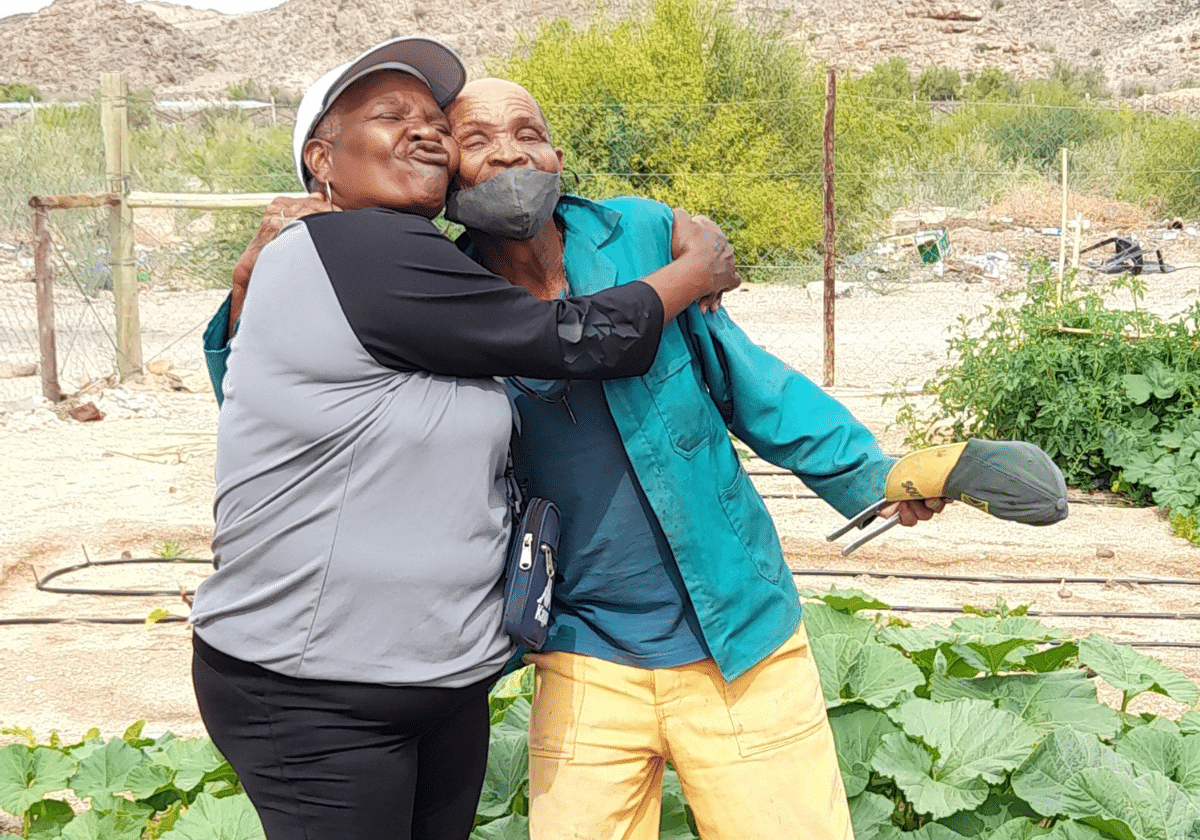
BBL PARTICIPANT: Pontsho Mohapi, Diepkloof, Soweto
In a Nutshell
Pontsho Mohapi has embraced SocioTech's Broad-Based Livelihoods (BBL) ideas to stimulate his personal economic activity.
He has cultivated a flourishing family food garden. He has also started to make and sell delicious atchar. He says....
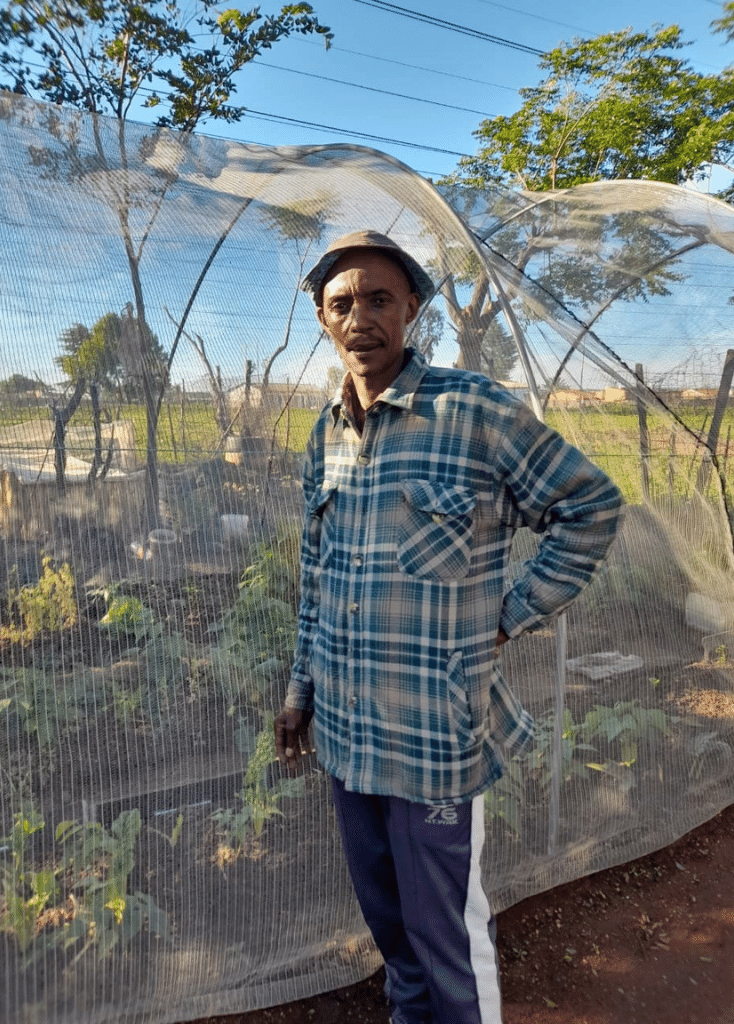
My food gardening journey began when I was inspired by some of my neighbours who were working together under the name Reja Mobung Farmers. Reja Mobung means ‘we are eating from the soil’. At the time I was an unemployed, married man with two teenage sons to provide for, so I joined the group.
When I first started, I didn’t have much garden experience. I had a bit of an idea of what to do, because I had done agricultural science at primary school, but that was all. My garden is on open land, under the electricity pilons, behind my house. I didn’t know about soil preparation then, so I just loosened the topsoil and put in the seeds. I watered every day but only a few beans grew. The other seeds never came up. I now know that those early setbacks were because the soil was full of underground roots that needed to be removed.
Soil preparation is key. It is hard when you are putting in lots of work and there are no immediate results. I would come home after a long day in the garden with nothing, but even then, I had confidence that one day I would get something from the garden.
Little by little things improved. I learnt first from the other members of Reja Mobung and then later, we met KG from SocioTech who taught us about deep trenches, which really helped to increase our output. It is wonderful when you start to get results. I say to my sons "let’s go to the garden and get whatever you want." I love being able to make my family smile.
"if you have farming skills you can make your own business."
There is a special feeling eating something from your own garden. Something that you put in effort, pride, skill and dedication to, and it came right. What is amazing is that my garden is organic. I am harvesting first grade, delicious, healthy veggies which makes me so happy. I love that there is no travelling, no going to the shop to buy. The veggies are right there, straight from the garden to the pot.
My boys and I inspire each other. My sons help me a lot in the garden, and as we are working together, we talk. I say to them "you might go to varsity and then sit at home without a job because often employers want candidates to have experience that new graduates don’t have. If you have farming skills you can make your own business. That is a valuable life lesson.
I only started this a year ago and until recently my main priority has been feeding my family. I do sell a bit from the garden gate, but I haven’t yet got into full scale production as a commercial venture. As I work in the garden, I think about the future and how I can expand and start doing business from my garden. I want to increase the amount of land I have under cultivation and divide it up so that there is a section for my family’s needs and another section of vegetables that are for sale to the community.