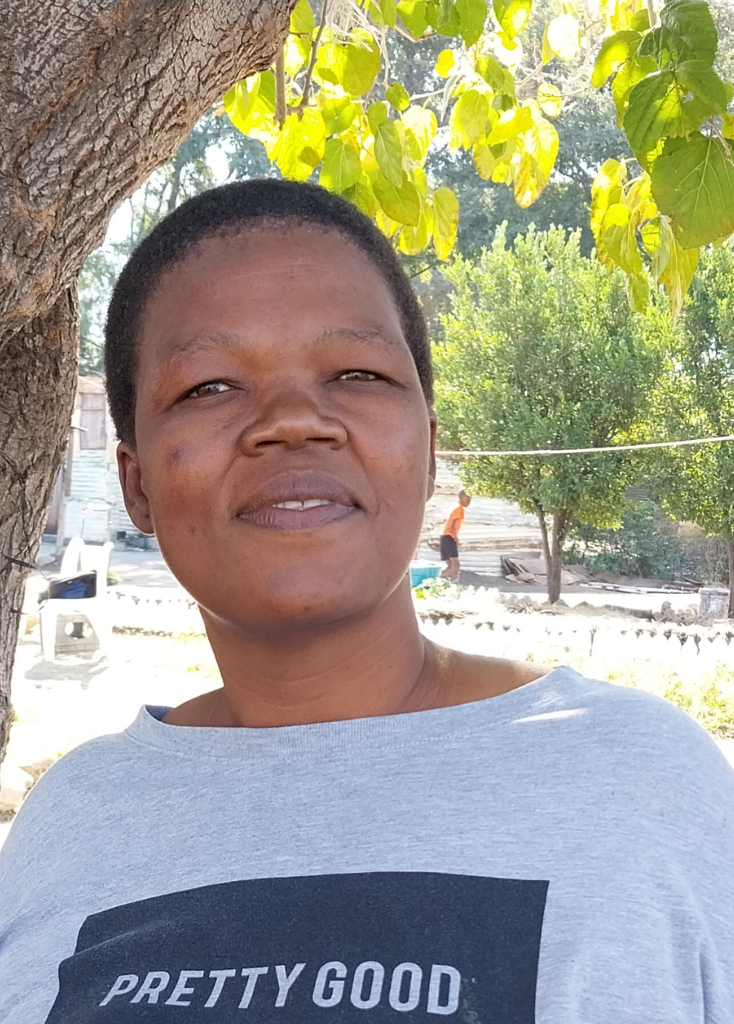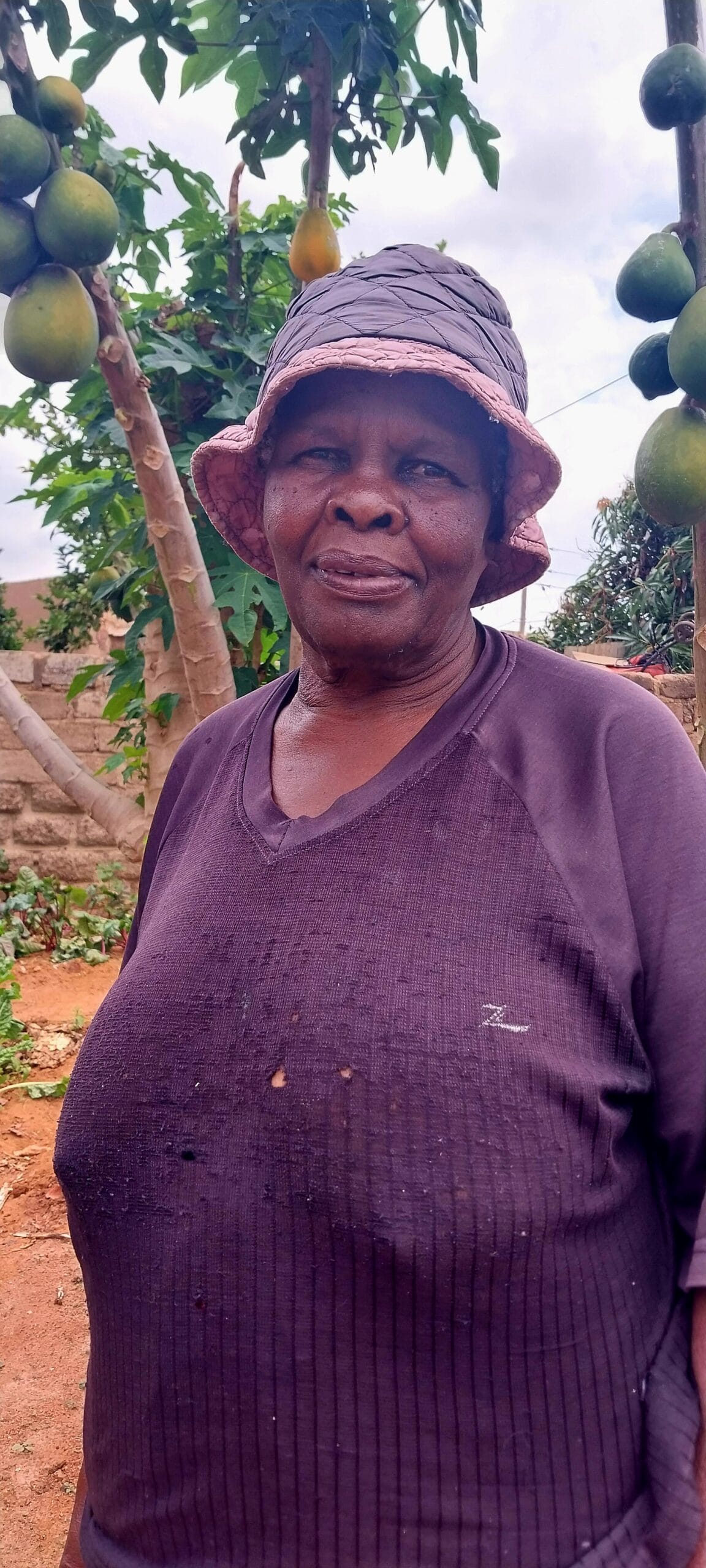
BBL PARTICIPANT: JOSEPHINE MAKULANE, SEHLAKWANE, KEEROM VILLAGE, LIMPOPO
In a Nutshell
Through her participation in SocioTech’s Broad-Based Livelihoods (BBL) strategies to stimulate personal economic activity, Josephine Makulane from Sehlakwane, Keerom Village has revived her community’s farming spirit through the Mojoke Matsogo Cooperative - creating jobs, improving productivity, and building a future grounded in planning, persistence, and faith.
She says…
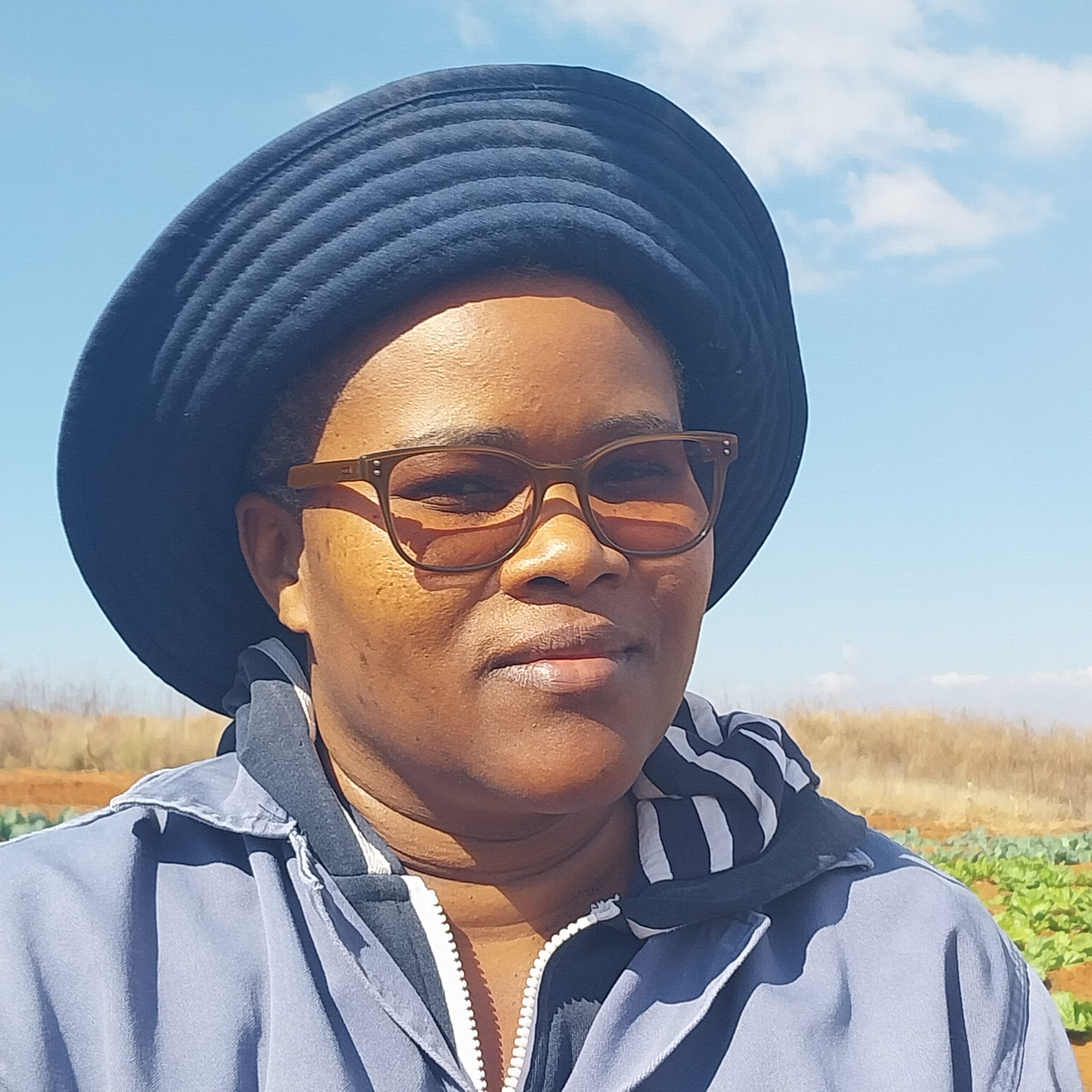
I was born here in Keerom. My grandparents farmed and the whole family got involved. I remember that when I was still in primary school, my grandfather bought me my own gum boots, a sun hat and a work suit just like his. It made me feel like a grownup farmer. I was so proud to be part of providing food for my family. My story is not unusual. In those days everyone around here ploughed their land. These days if you look out over what were working fields, there are now lots of empty spaces. It is really sad. I don’t know how that happened. In the olden days people knew how to make money, they didn’t just wait for it to be handed to them.
So many things have changed around here. If I think about the way we played when I was a child – picking wild berries (and sometimes having to fight the monkeys for those berries), hunting for crabs in the river, rabbits in the fields and birds in the trees. Occasionally, in the dry season, we even caught a small antelope. Very little of that happens anymore. If I think about the life my children lead, they are always busy with schoolwork. There is no time to just play.
I moved away to do my high school studies in Middelburg and then after school I studied to be an IT engineer in Witbank. For a long time, I worked at the HP Service Centre in Midrand, but my heart wasn’t in it. I have always wanted to be involved in developing this community. My community. I believe that we were all born to make a difference and that my calling is to work right here where I was born. There are lots of ladies in this area without work. God led me to do something to change that.
In early 2024 I gathered local people (mostly women) together and we started the Mojoke Matsogo Cooperative. The name of our group means ‘food from our hands’ which is an indication of who we are and what we do. We started with 19 people and right now there are 17 of us. We met SocioTech’s facilitator, Sizwe Skhosana, that year and over the past year-and-a-half, our group has participated in three SocioTech programmes; MyFood, MyFuture and MyBusiness. It is so important to have all three, because how will you be prosperous at work if your soul feels bankrupt at home?
Almost everyone in our group had experience of farming with their families, but we didn’t know about the benefits of digging trenches. We just dug over the soil a bit and planted. Once we were introduced to the SocioTech methods and we learnt about proper soil improvement, our crops were much better - both in yield and quality. Digging those trenches is a lot of work and we are only part of the way through, so we can clearly see the difference. The plants in the trenches are much bigger and they can tolerate a lack of water better. That is very important, because this environment is harsh.
One of the things I like most about the SocioTech approach is that it encourages us to set goals, and then plan how to reach those goals. Planning at every stage. It is a way of thinking that applies to all aspects of life. It can be about setting a personal, relationship goal with your children, or the planting guides that help you plan crops and know how many months to harvest. It is all about proper planning.
At first, I don’t think we really understood that message. We heard Sizwe say it, but it was only learning the hard way that made it really stick in our minds and change our business strategy.
"....our plan is to plough in more hectares so that we can supply supermarkets...."
Some of the crops we planted last year made no profit – which was a terrible shock – but when we looked at why that was, we saw that it was about a lack of planning on our part. So, we sat down and worked it all out this January. We realised something must change. Now we are much more focused, and we have proper plans in place.
For instance – last year water was a real issue. We were collecting water from the river in buckets. So, we looked at the costs of a water pump and put together a plan to purchase one. We each put R50 a month and after a few months we went out and bought a pump. That has really helped. We have applied for full water rights. It is a lot of filling in forms online, but we have done it. Last week I received verbal confirmation that our water use can be approved under the general water authorisation, so that is a good start.
Our next challenge is fencing to keep animals out and netting to keep the birds off our crops. We also need to build a shed so we can safely store our equipment. Again, planning is the key. You must do your budgets, save, keep careful records and that goal will be reached.
Currently we are only selling within our local community, but we are hoping to get into supplying supermarkets next. We have applied at Spar supermarket to be a supplier. We have submitted all the forms so all that has to happen now is for the Spar Group to send a representative to see what we are doing. We have also approached Boxer supermarket – they want samples of our spinach, so that is the next step.
The key issue with big groups like Spar and Boxer is that they want you to be able to supply in bulk. That means increasing the amount of land under cultivation. We are already moving in that direction. We started with one hectare and already this season we have increased to three hectares: two hectares for maize and beans, and one hectare for vegetable crops (cabbage, onion, beetroot, onions, spinach – both mustard spinach and Swiss Chard). In August we will plant potatoes. We have done our sums, and we are planning to increase the area we have under cultivation so that we could confidently meet the demands of a supermarket.
In addition to our relationship with SocioTech and Schoeman Boerdery, we are also receiving mentorship from the National Movement of Rural Women and the Limpopo Economic Development incubation programme. We have also registered with the Department of Agriculture in the hopes of getting support for the coop – although we have been told that because they had bad experiences in the past with cooperatives, the government doesn’t like to fund them anymore. Even if none of that funding comes through, we have our 5-year plan. Our plan is to be farming 10 hectares by then. We have the knowledge, determination, faith and support. So, now we just have to do the work. We are true to our name. Everyday Mojoke Matsogo Cooperative is building this business with our hands.


BBL MyFood
BBL Mentoring & Monitoring
BBL Veg Tunnel self-build
BBL FruitTree Campaign
BBL MyFuture
BBL MyBusiness
BBL MyPoultry
BBL MyLivestock
BBL BusinessBuilders
BBL FoodEconomy
BBL OurMarket
BBL TalentShow
BBL GardenCompetition
BBL YouthSurvey
BBL SportsTournament


- Money management skills: Josephine and her cooperative members now budget carefully, save collectively, and track every expense — enabling them to invest in essentials like a water pump.
- Business diversification: The group cultivates maize, beans, and vegetables, with plans to expand into potatoes and bulk supermarket supply.
- Increased productivity: By adopting SocioTech’s trenching and soil improvement techniques, they have seen stronger, more drought-resistant crops.
- Goal-driven planning: Applying lessons from MyFood, MyFuture, and MyBusiness, Josephine now leads the cooperative with clear 5-year targets and step-by-step strategies.
- Women’s empowerment: Mojoke Matsogo has created work and purpose for 17 local women, turning shared determination into a thriving enterprise.
- Community revival: The cooperative is restoring pride in farming and self-reliance in Keerom, proving that progress grows from disciplined, local effort.